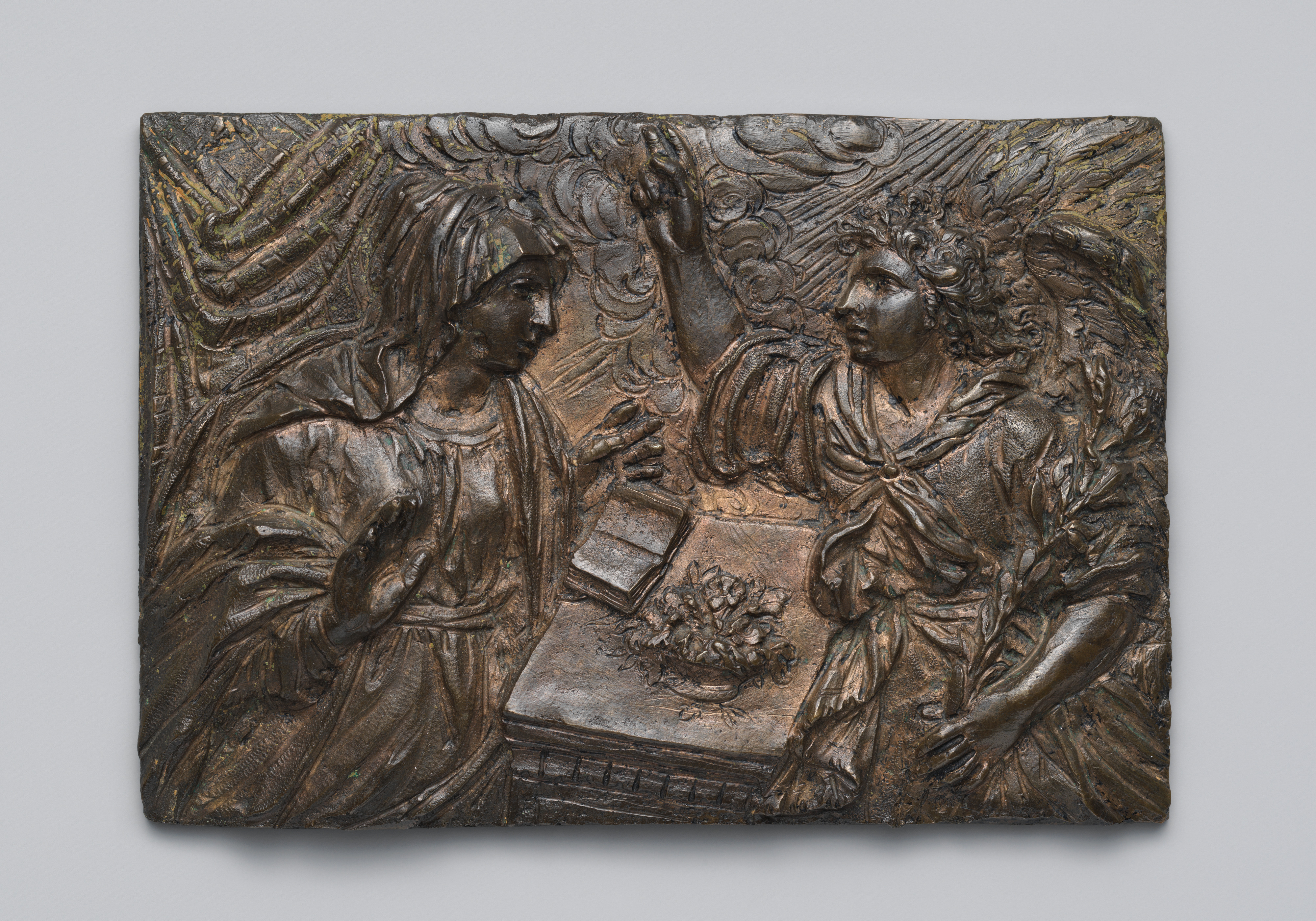
Shrine of the Virgin, Unknown

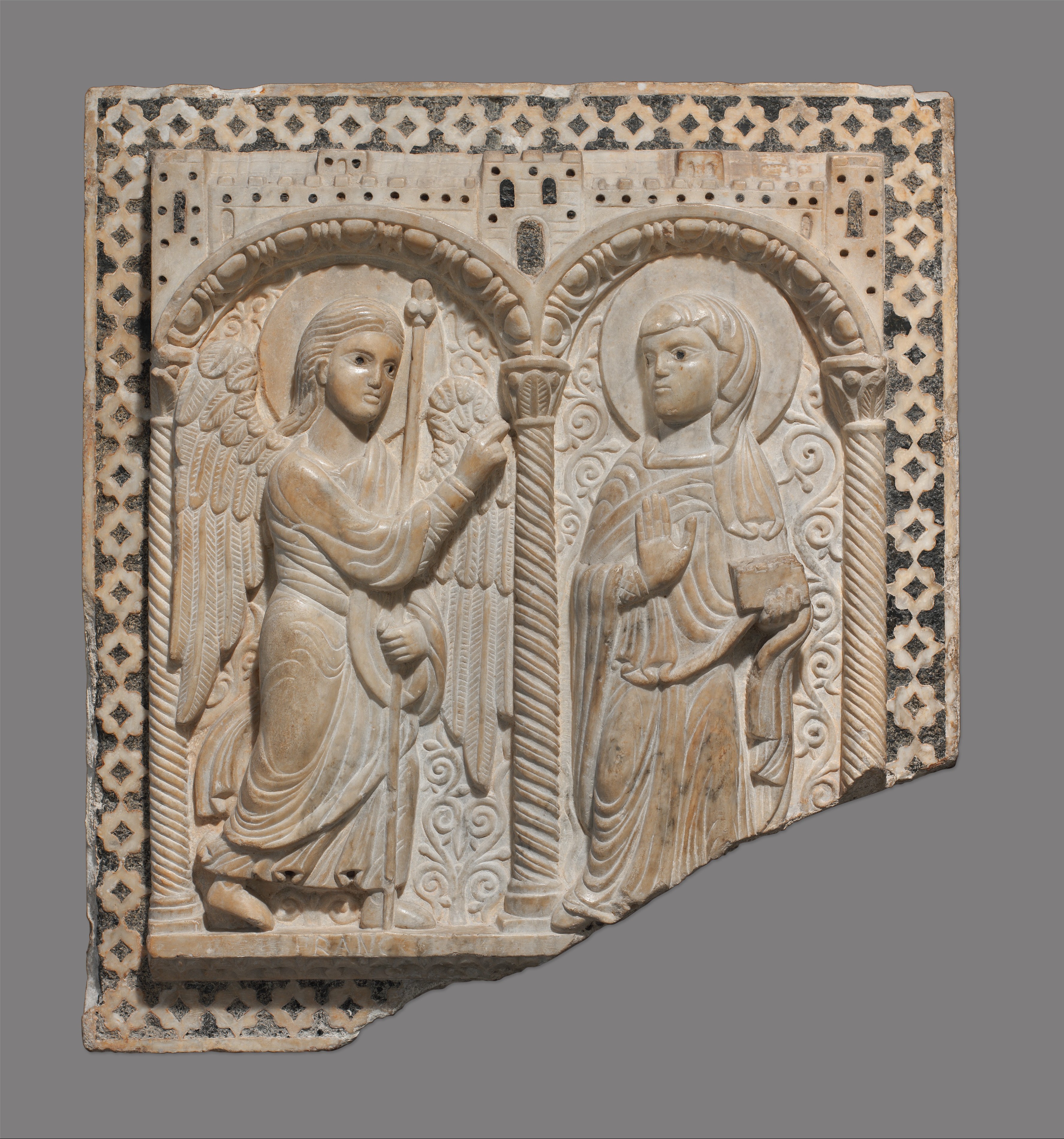
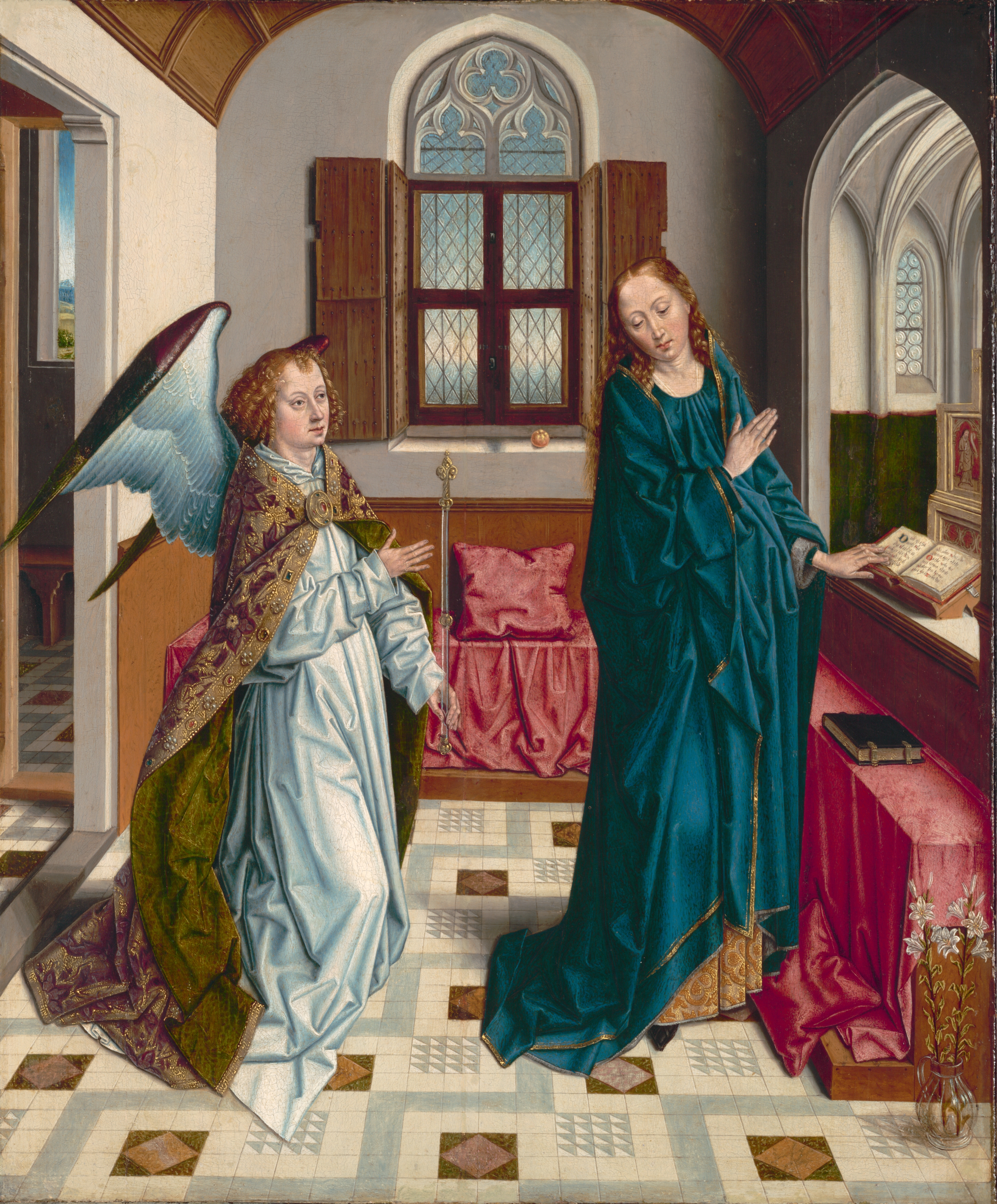
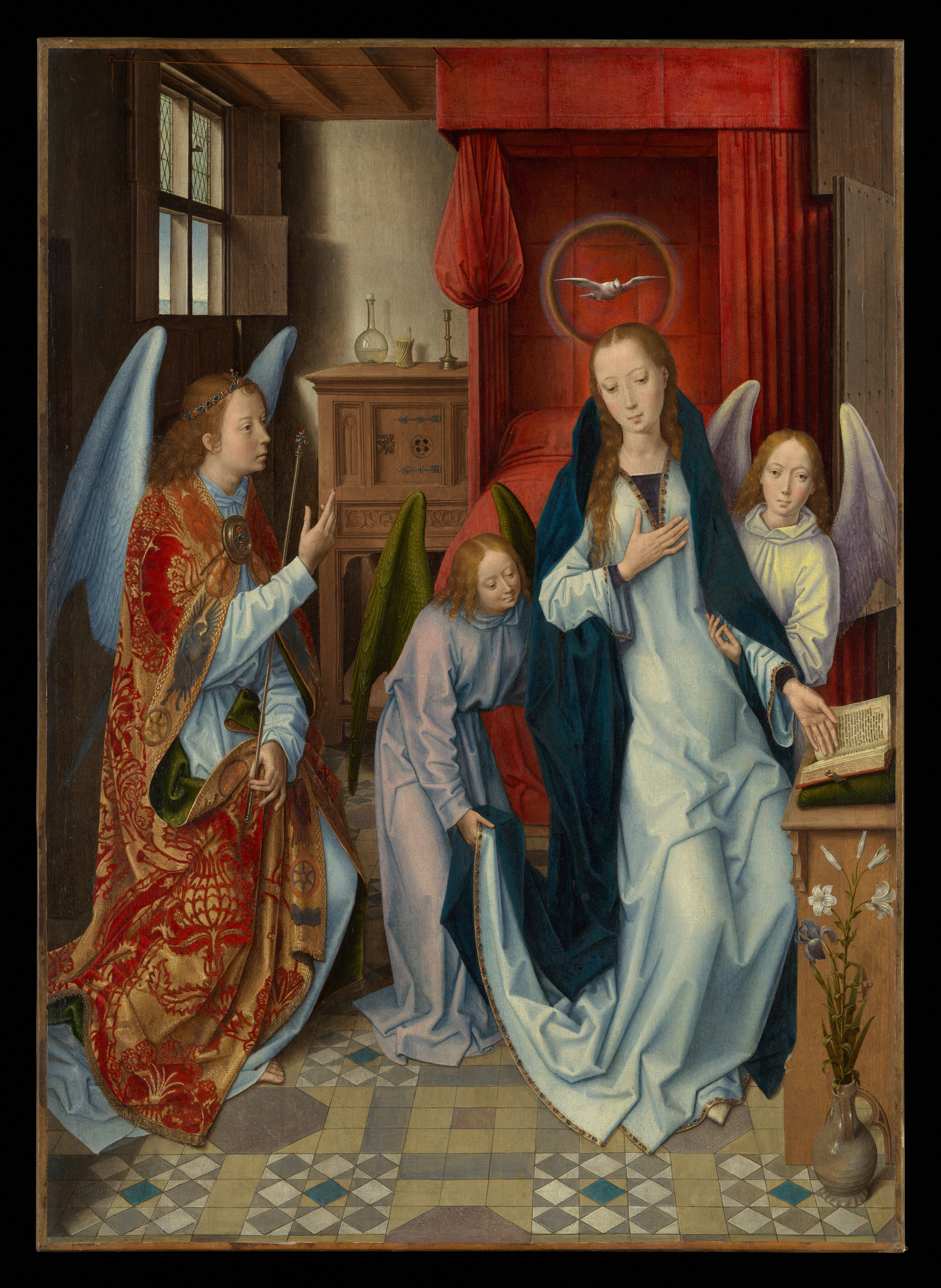
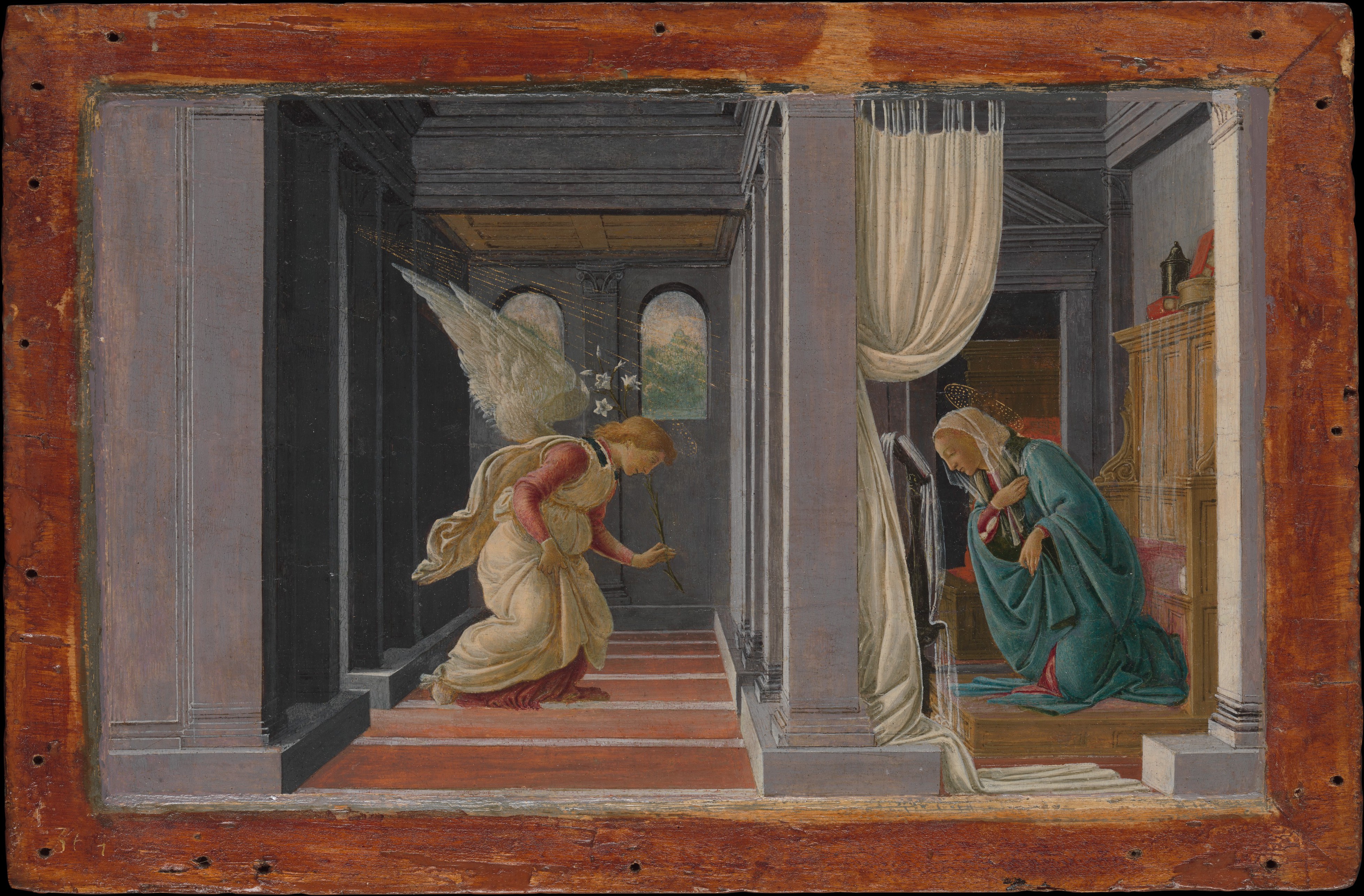
The AnnunciationLuke 1:26-38

10 hands · 1177–1887

And in the sixth month, the angel Gabriel was sent from God into a city of…Luke 1:26

  1. Relief with the Annunciation, Unknownca. 1180–1200Unknown
  2. Shrine of the Virgin, Unknownca. 1300UnknownThis record
  3. The Hours of Jeanne d'Evreux, Queen of France, Jean Pucelleca. 1324–28Jean Pucelle
  4. Annunciation Triptych (Merode Altarpiece), Robert Campinca. 1427–32Robert Campin
  5. The Annunciation, Albert Bouts (Netherlandish, 1451/55–1549)c. 1480Albert Bouts (Netherlandish, 1451/55–1549)
  6. The Annunciation, Hans Memling1480–89Hans Memling
  7. The Annunciation, Botticelli (Alessandro di Mariano Filipepi)ca. 1490Botticelli (Alessandro di Mariano Filipepi)
  8. Christ Is Born as Man's Redeemer (Episode from the Story of the Redemption of Man), Unknown1500–1520Unknown
  9. Annunciation, Niccolò Roccatagliataearly 17th centuryNiccolò Roccatagliata
  10. The Annunciation, George Hitchcock1887George Hitchcock

What it depicts

Matthew 2:1-12Opened by a notation lookup, not by an editor. Iconclass 73B5 glosses this subject as “the story of the three Wise Men (kings or Magi) (Matthew 2:1-12)”, and this library reads the Douay-Rheims, where the passage stands at Matthew 2:1-12. Named the Adoration of the Magi by Abe Garcia, 2026-09-07. Iconclass hedges its title because the gospel does not say how many the wise men were or that they were kings. The hedge is right and it is not a name.

1When Jesus therefore was born in Bethlehem of Juda, in the days of king Herod, behold, there came wise men from the east to Jerusalem.

2Saying, Where is he that is born king of the Jews? For we have seen his star in the east, and are come to adore him.

3And king Herod hearing this, was troubled, and all Jerusalem with him.

4And assembling together all the chief priests and the scribes of the people, he inquired of them where Christ should be born.

5But they said to him: In Bethlehem of Juda. For so it is written by the prophet:

6And thou Bethlehem the land of Juda art not the least among the princes of Juda: for out of thee shall come forth the captain that shall rule my people Israel.

7Then Herod, privately calling the wise men, learned diligently of them the time of the star which appeared to them;

8And sending them into Bethlehem, said: Go and diligently inquire after the child, and when you have found him, bring me word again, that I also may come to adore him.

9Who having heard the king, went their way; and behold the star which they had seen in the east, went before them, until it came and stood over where the child was.

10And seeing the star they rejoiced with exceeding great joy.

11And entering into the house, they found the child with Mary his mother, and falling down they adored him; and opening their treasures, they offered him gifts; gold, frankincense, and myrrh.

12And having received an answer in sleep that they should not return to Herod, they went back another way into their country.

Read it in Matthew


Seen

Not yet checked

Suggested by an AI model, 2026-09-08 (hf.co/mradermacher/iconclass-vlm-GGUF:Q4_K_M), asked “Generate Iconclass labels for this image”. No one has checked these against the picture yet.

Iconclass
11I4273D56The crucifixion of Christ: prelude to Christ's death on the cross

Of

The subjects are the library’s own joins, each marked with who made it. The other rows are claims by the holder and by Wikidata, read 2026-09-04, and join nothing until an editor confirms them.

Subject
Story of the birth of ChristLuke 2:1-20joined by Abe GarciaThe Adoration of the MagiMatthew 2:1-12joined by Abe GarciaThe AnnunciationLuke 1:26-38joined by Abe Garcia
Holder's headings
Christ, Virgin Mary, Adoration of the Magi, Annunciation, Nativity
Wikidata depicts
Mary, Nativity of Jesus, Annunciation, adoration of the Magi, Christ

Means

No reading yet.


Rights

Credit
Gift of J. Pierpont Morgan, 1917
Licence
CC0-1.0
Evidence
metmuseum.org collection api v1: isPublicDomain=true on object 464142 (read 2026-08-27)
Record
https://www.metmuseum.org/art/collection/search/464142
Shrine of the Virgin, Unknown
Shrine of the Virgin — Unknownca. 1300

How this join was made

This join is editorial: no notation was involved, and an editor anchored the picture to the passage directly.

The same shrine, whose interior also carries the Adoration of the Magi.

Also by Unknown

5442
Relief Fragment with a Ship Under Sail, Unknown
Relief Fragment with a Ship Under SailUnknownca. 2465–2458 BCEMetropolitan Museum of Art, New York, NY
Tomb Chapel of Raemkai: South Wall, Unknown
Tomb Chapel of Raemkai: South WallUnknownca. 2446–2389 BCEMetropolitan Museum of Art, New York, NY
West wall of the chapel of the mastaba Kaemsenu with niches for Iretnub, Kaemsenu and Werdjedptah, Unknown
West wall of the chapel of the mastaba Kaemsenu with niches for Iretnub, Kaemsenu and WerdjedptahUnknownca. 2420–2250 BCEMetropolitan Museum of Art, New York, NY
Relief of Nyankhnesut Seated, Unknown
Relief of Nyankhnesut SeatedUnknownc. 2311–2281 BCECleveland Museum of Art
Design amulet, Cow and Calf on the Back, Device showing Antithetical Falcons Flanking an Ankh Sign over a Crouching Lion, Unknown
Design amulet, Cow and Calf on the Back, Device showing Antithetical Falcons Flanking an Ankh Sign over a Crouching LionUnknownca. 2150–2100 B.C.Metropolitan Museum of Art, New York, NY
Design Amulet, Pyramidal Back with Horizontal Piercing, Device showing Two Falcons Flanking what is meant to be an Ankh Sign, Unknown
Design Amulet, Pyramidal Back with Horizontal Piercing, Device showing Two Falcons Flanking what is meant to be an Ankh SignUnknownca. 2150–2010 B.C.Metropolitan Museum of Art, New York, NY
Design Amulet, Cow Nursing Calf and also a Kneeling Suckling Man Visible on Opposite Side on the Back, Device showing Antithetical Falcons with an Ankh Sign over a Lion, Unknown
Design Amulet, Cow Nursing Calf and also a Kneeling Suckling Man Visible on Opposite Side on the Back, Device showing Antithetical Falcons with an Ankh Sign over a LionUnknownca. 2150–2100 B.C.Metropolitan Museum of Art, New York, NY
Design Amulet, Back in the Form of a Woman Suckling a Child, Device showing Two Lizards Head-to-tail, Unknown
Design Amulet, Back in the Form of a Woman Suckling a Child, Device showing Two Lizards Head-to-tailUnknownca. 2100–2080 B.C.Metropolitan Museum of Art, New York, NY

Within fifty years of ca. 1300

30
Vase with Dragon and Bonghwang (Mythical Birds) Motifs, Korea
Vase with Dragon and Bonghwang (Mythical Birds) MotifsKoreaGoryeo dynasty (918–1392), late 13th–early 14th centuryThe Art Institute of Chicago
Poem by Wang Wei in the Cursive Script Style, Song Lizong (Chinese, 1205–1264)
Poem by Wang Wei in the Cursive Script StyleSong Lizong (Chinese, 1205–1264)1256Cleveland Museum of Art
Bamboo, Rocks, and Lonely Orchids, Zhao Mengfu (Chinese, 1254–1322)
Bamboo, Rocks, and Lonely OrchidsZhao Mengfu (Chinese, 1254–1322)1271–1368Cleveland Museum of Art
Table of Bigamy, from the Summa Super Titulis Decretalium Completa, Henry of Segusio
Table of Bigamy, from the Summa Super Titulis Decretalium CompletaHenry of Segusio1275/99The Art Institute of Chicago
Virgin of the Annunciation, French
Virgin of the AnnunciationFrench1275–1300The Art Institute of Chicago
Yang Pu Moving His Family, Artist Unknown
Chinese
Yang Pu Moving His FamilyArtist Unknown ChineseYuan dynasty (1279–1368) 元朝The Art Institute of Chicago
Bishop at Mass in a Historiated Initial "P" from a Choirbook, Master Honoré
Bishop at Mass in a Historiated Initial "P" from a ChoirbookMaster Honoréc. 1300The Art Institute of Chicago
Praying Saint (Moses?) with Christ in a Historiated Initial "L", from a Choirbook, Neri da Rimini
Praying Saint (Moses?) with Christ in a Historiated Initial "L", from a ChoirbookNeri da Riminic. 1300The Art Institute of Chicago

Also at Metropolitan Museum of Art, New York, NY

623
Marble female figure, Bastis Master
Marble female figureBastis Master2600–2400 BCEMetropolitan Museum of Art, New York, NY
Terracotta aryballos (oil flask), Nearchos
Terracotta aryballos (oil flask)Nearchosca. 570 BCEMetropolitan Museum of Art, New York, NY
Terracotta psykter (vase for cooling wine), Oltos
Terracotta psykter (vase for cooling wine)Oltosca. 520–510 BCEMetropolitan Museum of Art, New York, NY
Terracotta amphora (jar), Berlin Painter
Terracotta amphora (jar)Berlin Painterca. 490 BCEMetropolitan Museum of Art, New York, NY
Terracotta kylix (drinking cup), Hieron
Terracotta kylix (drinking cup)Hieronca. 480 BCEMetropolitan Museum of Art, New York, NY
Terracotta lekythos (oil flask), Achilles Painter
Terracotta lekythos (oil flask)Achilles Painterca. 440 BCEMetropolitan Museum of Art, New York, NY
Mask, Condorhuasi-Alamito artist(s)
MaskCondorhuasi-Alamito artist(s)400 BCE–700 CEMetropolitan Museum of Art, New York, NY
Mask, Condorhuasi-Alamito artist(s)
MaskCondorhuasi-Alamito artist(s)400 BCE–500 CEMetropolitan Museum of Art, New York, NY

Similar picturesFound by visual likeness

1 pictures

Visual resemblances suggested by the model. A match does not establish a shared subject or historical connection.

Madonna and Child with Angels, Antonio Rossellino
Madonna and Child with AngelsAntonio Rossellinoca. 1455–60Metropolitan Museum of Art, New York, NY
0.84

Connections

Depicts

  • Story of the birth of ChristThe same shrine, third scene. Its interior carries the Nativity beside the Annunciation and the Magi, on the Met's own heading. One object, three moments of the same infancy.
  • The Adoration of the MagiThe same shrine, whose interior also carries the Adoration of the Magi.
  • The AnnunciationA shrine that opens: the Virgin's body is a cupboard, and the scenes are painted inside the wings. The Annunciation is one of them, on the Met's heading. True of the object rather than of a single field of view.

Next

Other hands on The Adoration of the Magi, the passage Shrine of the Virgin shows.

Other hands on Story of the birth of Christ, the passage Shrine of the Virgin shows.

Made in the fourteenth century, like Shrine of the Virgin.

0:00–0:00