Story of the birth of ChristLuke 2:1-20
9 hands · 1300–1612
And it came to pass, that in those days there went out a decree from Caesar…
Luke 2:1
 ca. 1300Unknown
 ca. 1324–28Jean Pucelle
 15th centuryUnknown
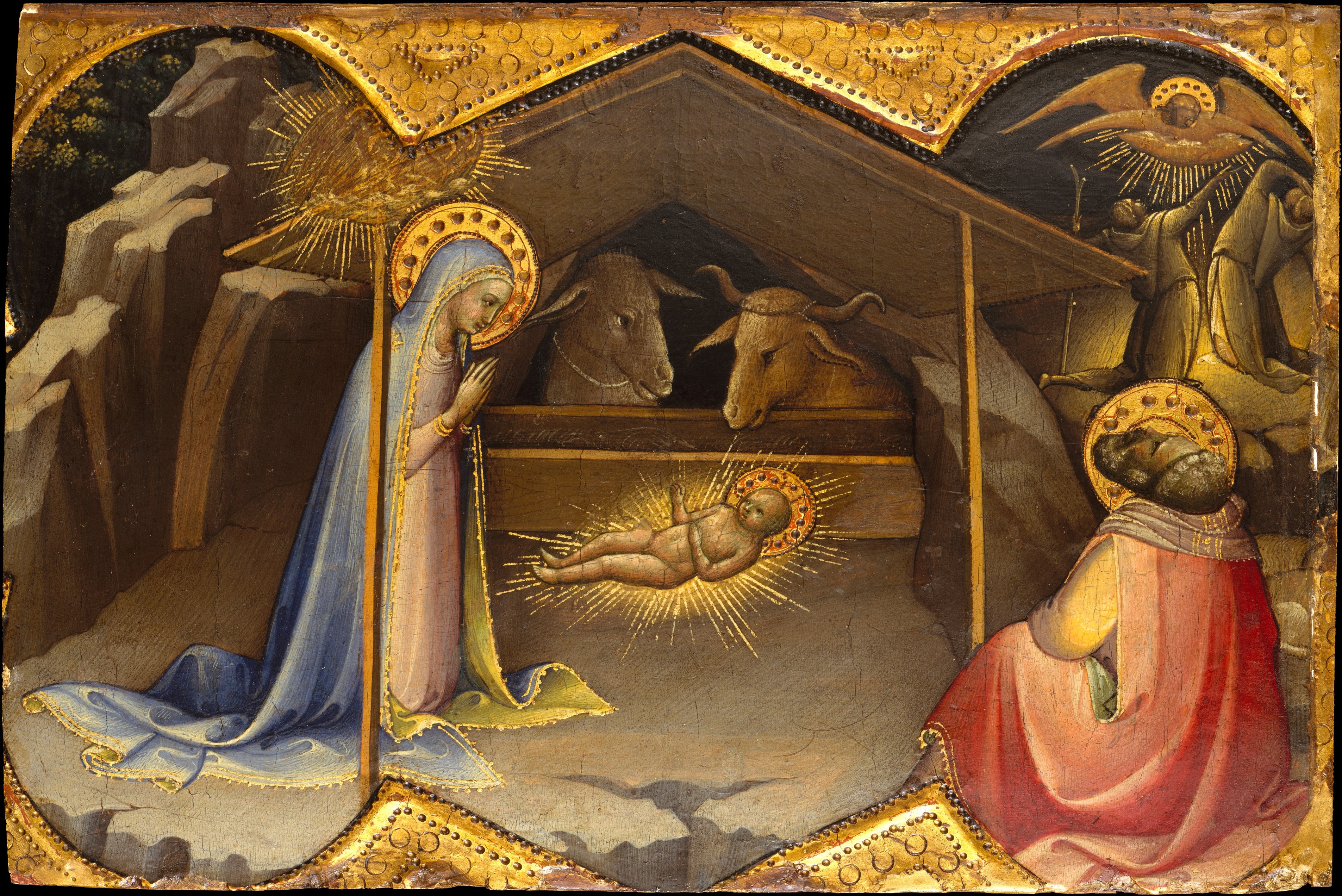 ca. 1406–10Lorenzo Monaco (Piero di Giovanni)
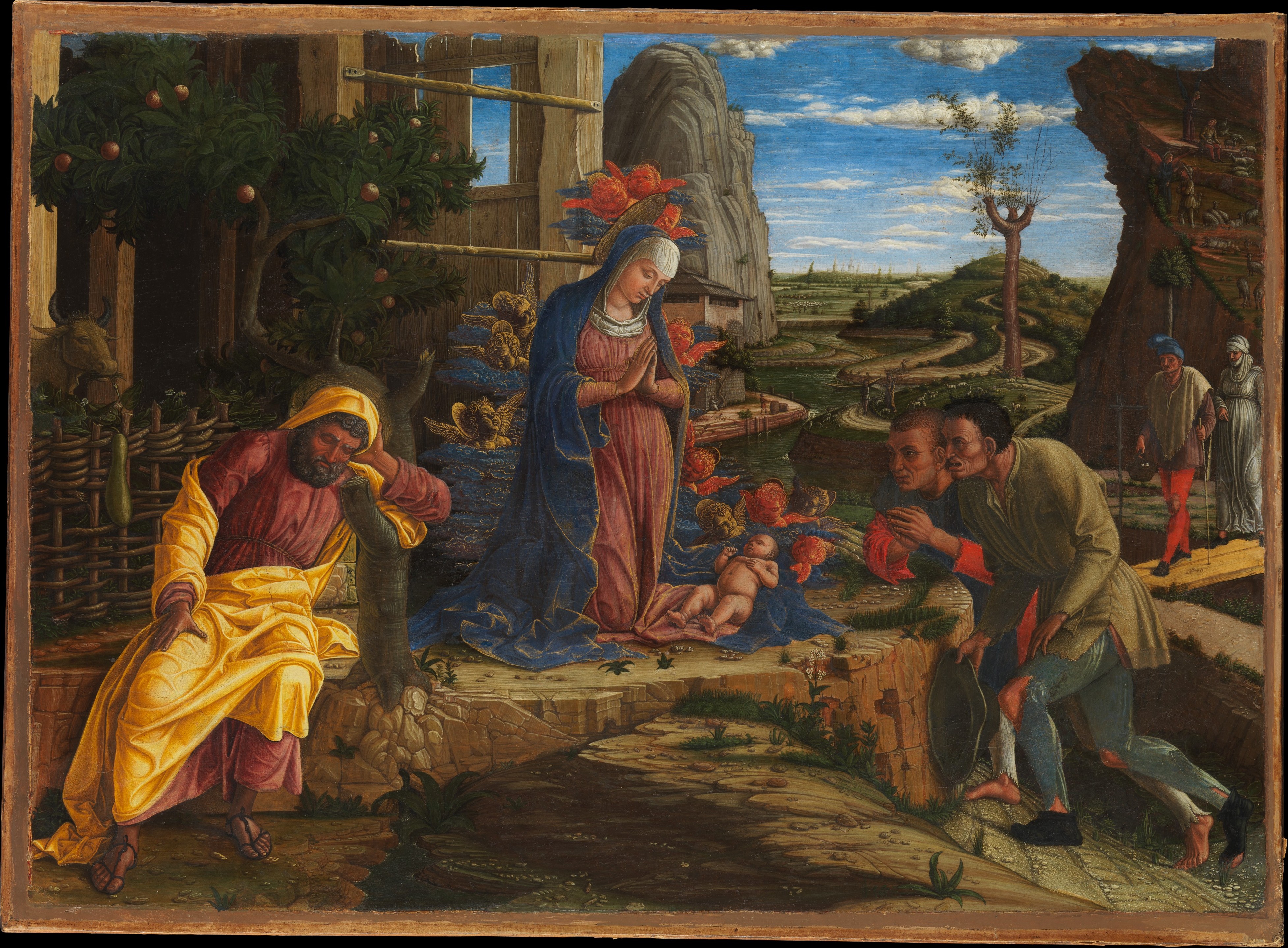 shortly after 1450Andrea Mantegna
 1500–1520Unknown
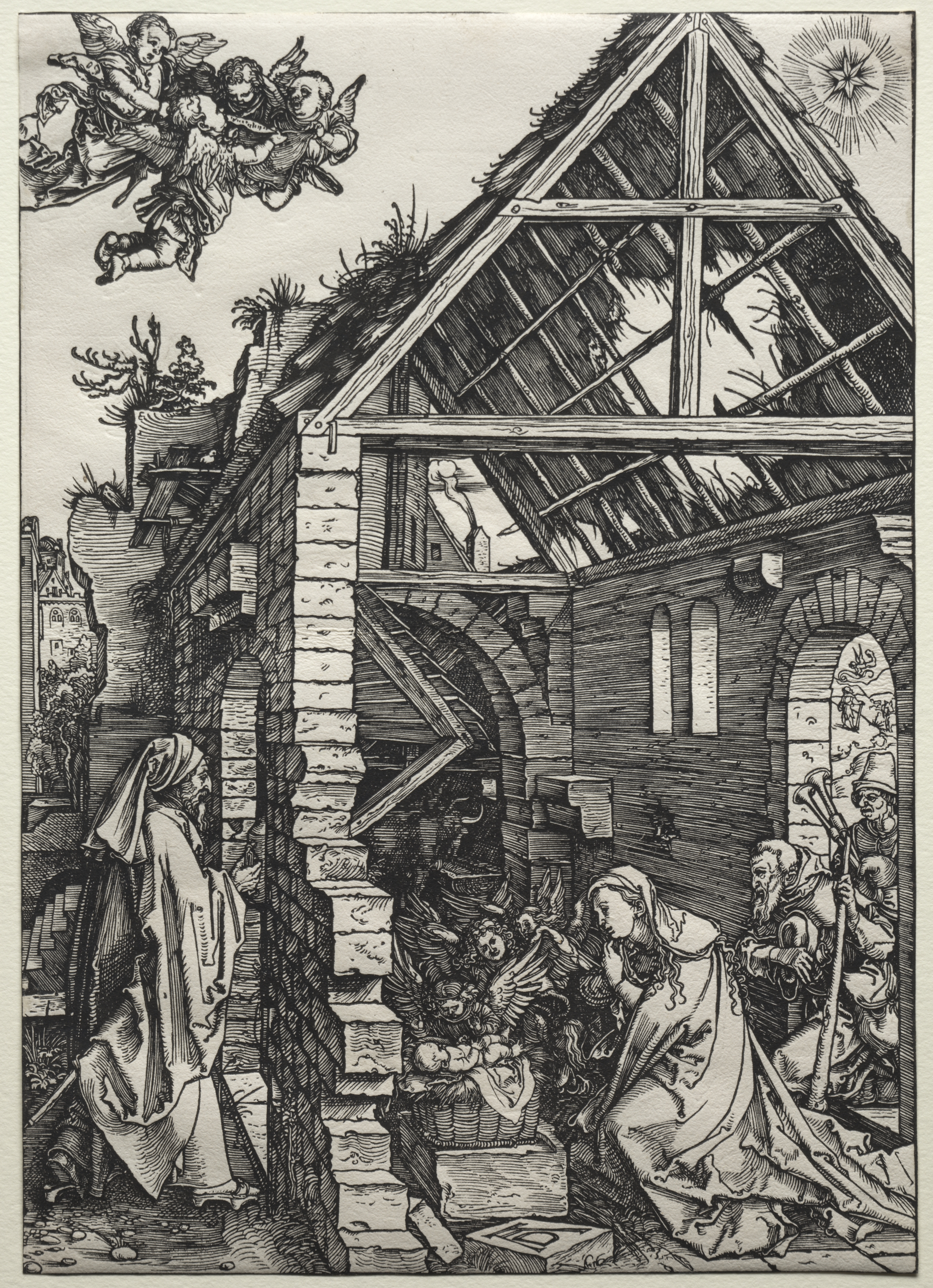
- c. 1502–3Albrecht Dürer (German, 1471–1528)This record
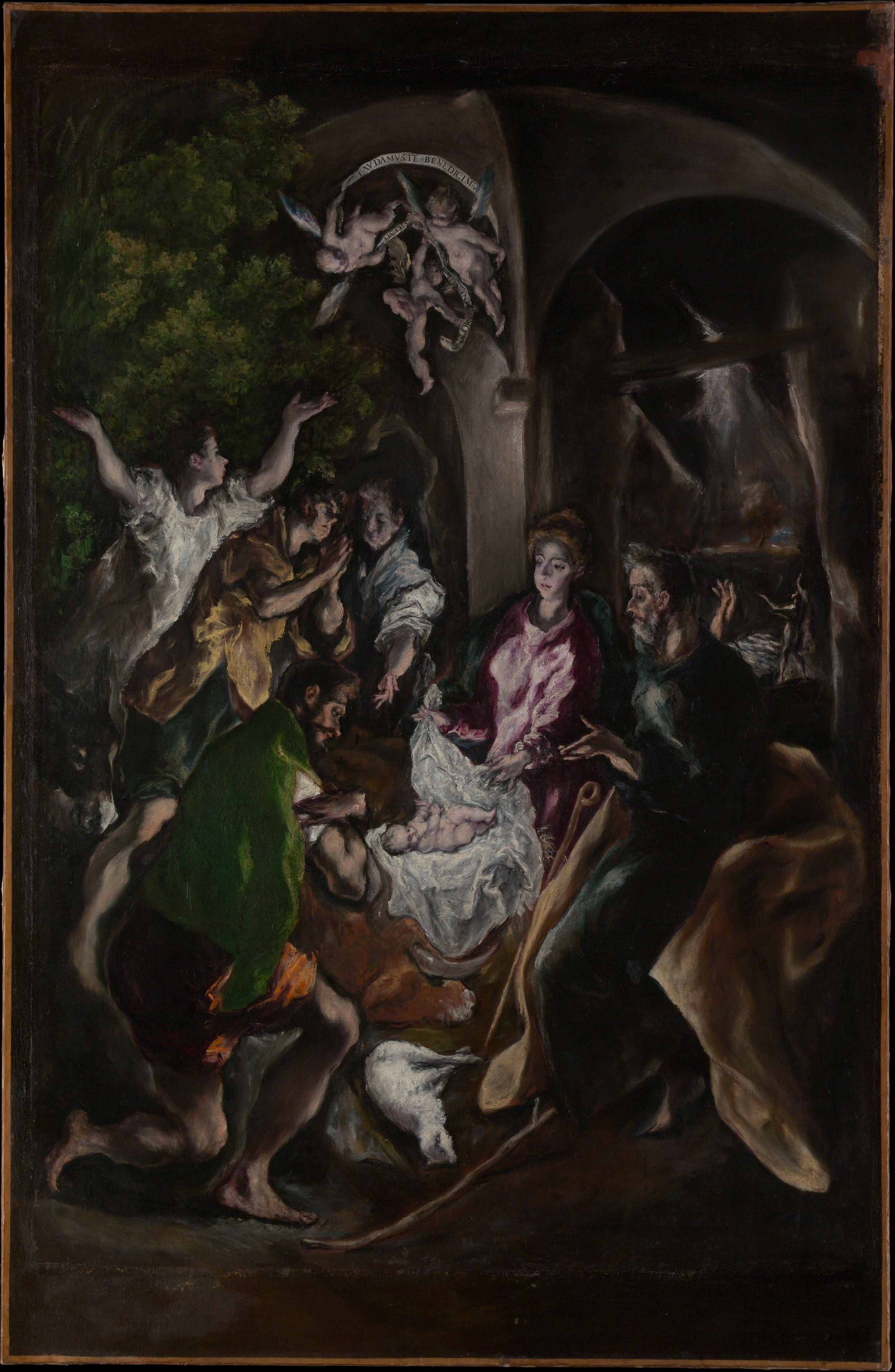 ca. 1605–10El Greco (Domenikos Theotokopoulos)
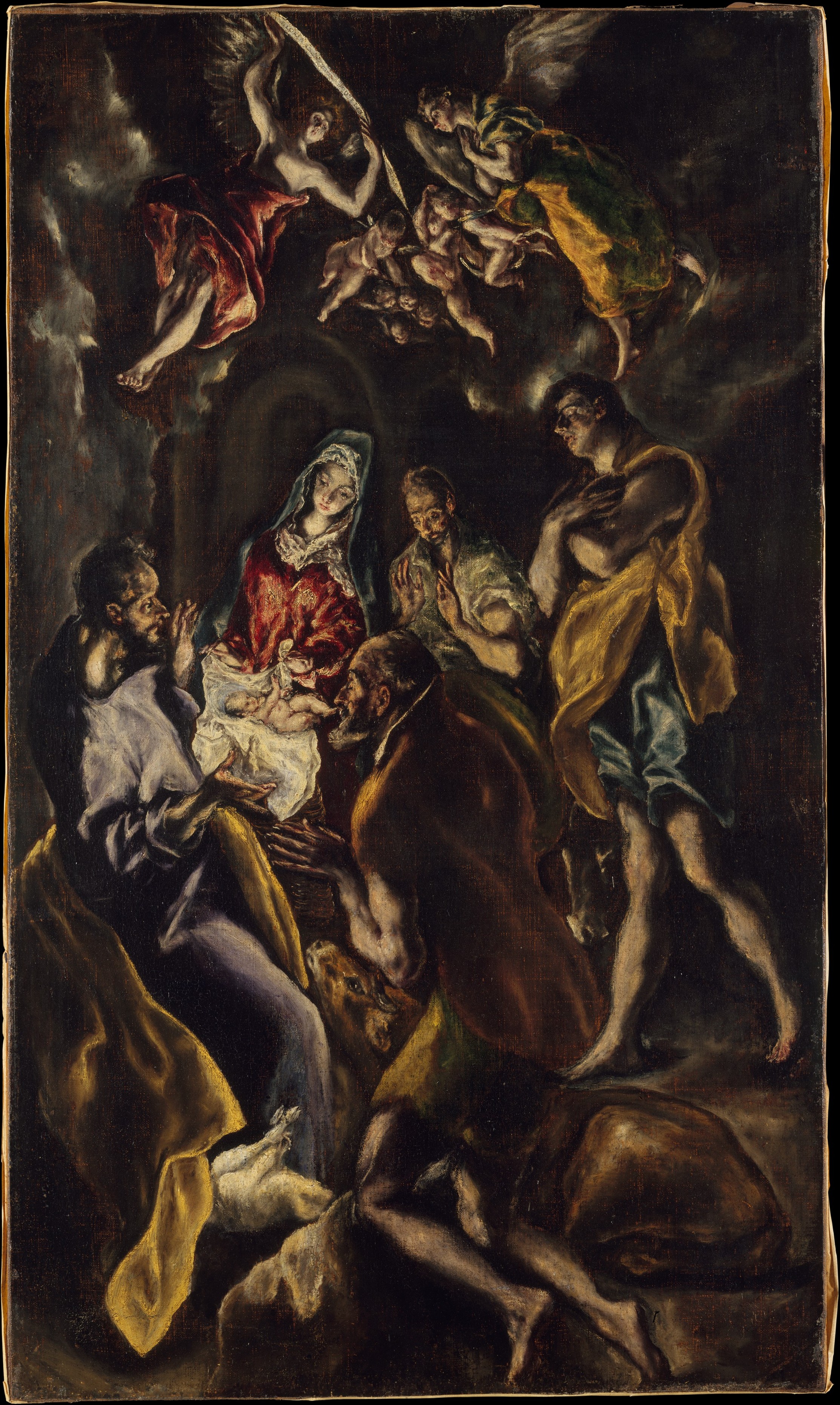 ca. 1612–14El Greco (Domenikos Theotokopoulos) and Workshop
What it depicts
Luke 2:1-20Opened by an editor anchoring a notation that states no passage of its own. Iconclass glosses 73B2 as "adoration of the Christ-child ~ Christ’s birth" and states no reference, because the reference is its neighbour’s: 73B1 is the story of the birth of Christ, Luke 2:1-20. The adoration is what happens in those verses, so it opens that subject rather than a new one.
1And it came to pass, that in those days there went out a decree from Caesar Augustus, that the whole world should be enrolled.
2This enrolling was first made by Cyrinus, the governor of Syria.
3And all went to be enrolled, every one into his own city.
4And Joseph also went up from Galilee, out of the city of Nazareth into Judea, to the city of David, which is called Bethlehem: because he was of the house and family of David,
5To be enrolled with Mary his espoused wife, who was with child.
6And it came to pass, that when they were there, her days were accomplished, that she should be delivered.
7And she brought forth her firstborn son, and wrapped him up in swaddling clothes, and laid him in a manger; because there was no room for them in the inn.
8And there were in the same country shepherds watching, and keeping the night watches over their flock.
9And behold an angel of the Lord stood by them, and the brightness of God shone round about them; and they feared with a great fear.
10And the angel said to them: Fear not; for, behold, I bring you good tidings of great joy, that shall be to all the people:
11For, this day, is born to you a Saviour, who is Christ the Lord, in the city of David.
12And this shall be a sign unto you. You shall find the infant wrapped in swaddling clothes, and laid in a manger.
13And suddenly there was with the angel a multitude of the heavenly army, praising God, and saying:
14Glory to God in the highest; and on earth peace to men of good will.
15And it came to pass, after the angels departed from them into heaven, the shepherds said one to another: Let us go over to Bethlehem, and let us see this word that is come to pass, which the Lord hath shewed to us.
16And they came with haste; and they found Mary and Joseph, and the infant lying in the manger.
17And seeing, they understood of the word that had been spoken to them concerning this child.
18And all that heard, wondered; and at those things that were told them by the shepherds.
19But Mary kept all these words, pondering them in her heart.
20And the shepherds returned, glorifying and praising God, for all the things they had heard and seen, as it was told unto them.
Seen
Not described yet.
Of
The subjects are the library’s own joins, each marked with who made it. The other rows are claims by the holder and by Wikidata, read 2026-09-17, and join nothing until an editor confirms them.
- Subject
- Story of the birth of ChristLuke 2:1-20joined by editor pass delegated by Abe Garcia, 2026-09-18
- Iconclass
- 73B1473B21(+31)
- Wikidata depicts
- Jesus Christ, Mary
Means
No reading yet.
Rights
- Credit
- Dudley P. Allen Fund
- Licence
- CC0-1.0
- Evidence
- openaccess-api.clevelandart.org: share_license_status=CC0 on artwork 136174 (read 2026-09-16)
- Record
- https://clevelandart.org/art/1959.99.10
How this join was made
Cleveland Museum of Art gives this object the Iconclass notation73B14 73B21(+31), and the library's map reads that notation as Luke 2:1-20. An editor has checked the picture against the passage and confirmed it.
Confirmed: the object's own title names the scene and the matched notation or heading is specific to it.
Also by Albrecht Dürer (German, 1471–1528)
15


Within fifty years of c. 1502–3
349


Also at Cleveland Museum of Art
546


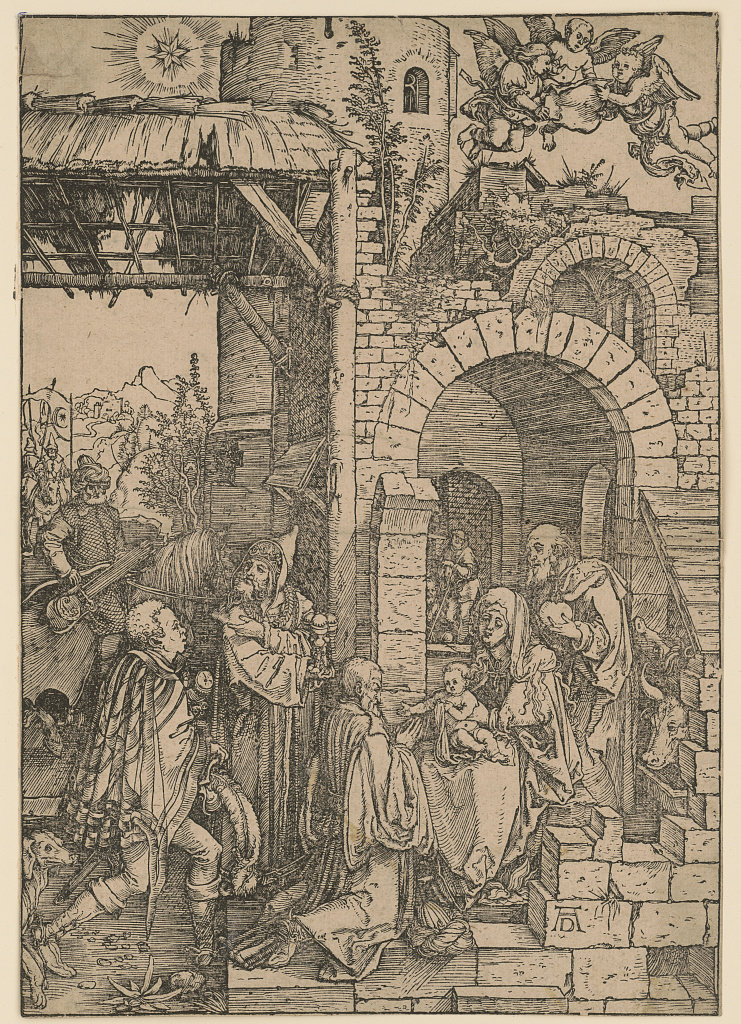
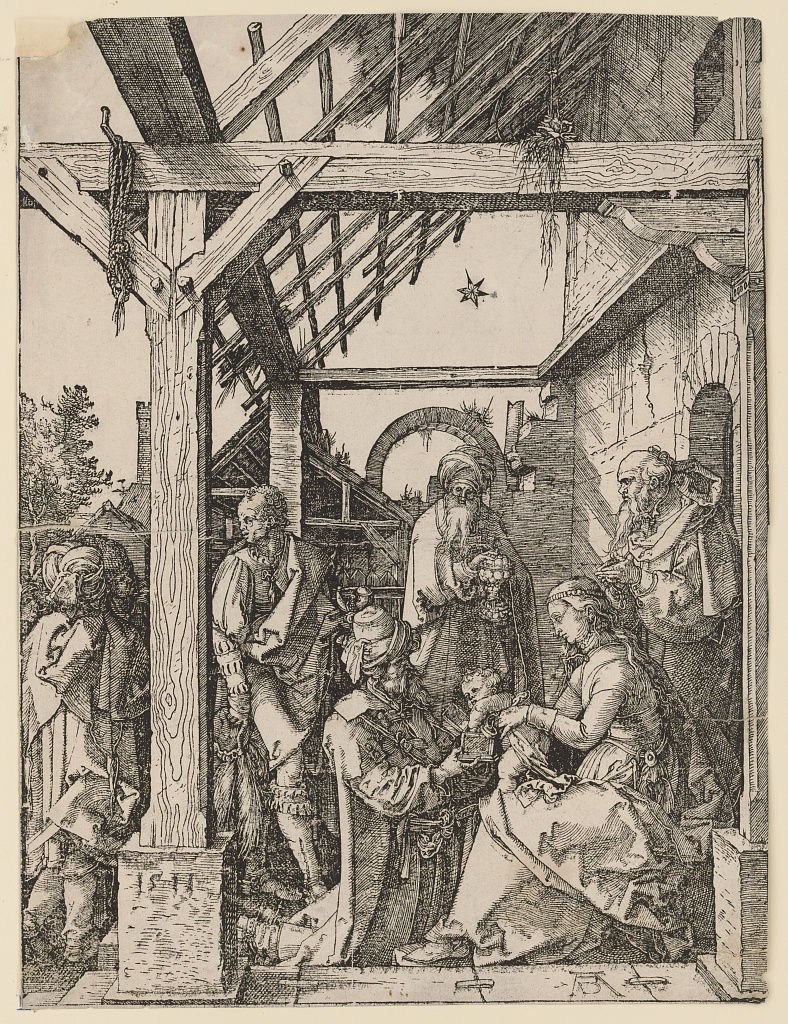
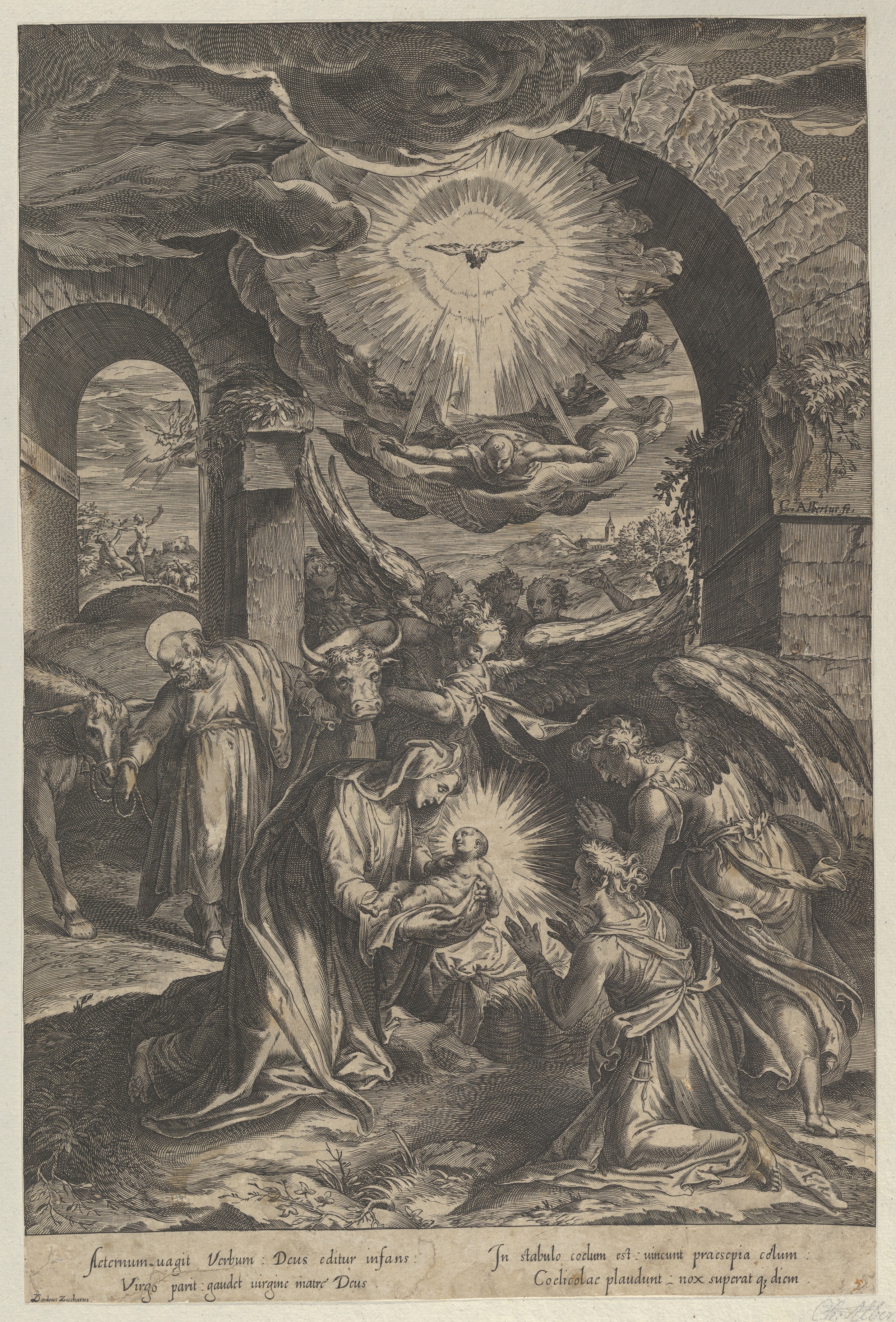
Similar picturesFound by visual likeness
8 picturesVisual resemblances suggested by the model. A match does not establish a shared subject or historical connection.


In the stacks
Not yet checked4Passages in the library’s own holdings that name this maker. The model ranked them; nobody has checked that the name means this person.
Drawing still retained something of the blunt, almost brutal frankness of statement, together with the sense of the characteristic which marked its earlier period. And it is perhaps this inheritance of Gothic directness of statement, this Gothic realism, that accounts for what is ultimately of most value in Dürer’s work. There exists in the Kunsthistorisches Akademie at Vienna a painting of a man, dated 1394, which shows how much of Dürer’s portraiture was already implicit in the Nuremberg school. In this remarkable work, executed, if we may trust the date,
0.73What, then, lies at the root of Dürer’s art is this Gothic sense of the characteristic, already menaced by the professional bravura of the late Gothic craftsman. The superstructure is what Dürer’s industry and intellectual acquisitiveness, acting in the peculiar conditions of his day, brought forth. It is in short what distinguishes him as the pioneer of the Renaissance in Germany. This new endeavour was in two directions, one due mainly to the trend of native ideas, the other to Italian influence. The former was concerned mainly with a new
0.72Up to the end of the fifteenth century the Gothic and ornamental feeling is still dominant in the treatment of the design of woodcuts in books, and most instructive and suggestive they are in simplicity of method and line, and directness of expression. Characteristic German work of Gothic feeling and considerable graphic force is seen in the woodcuts of the Nuremberg Chronicle (1493) designed by Michael Wolgemuth, the master of Albert Dürer. In these vigorous cuts we may plainly see the tradition of that Gothic feeling and style of graphic
0.72Dürer patterns do not coincide with objective facts, but for all that, they are lines, clear, ornamental patterns which are intended to be seen for themselves, which do not merely assert themselves in the impression of the whole but can hold their own even at the closest range. Therein lies the difference from the painterly foliage painting of the seventeenth century. If we wish to speak of premonitions of the painterly style, we shall find them rather in the fifteenth century than in the sixteenth. We find there, indeed, in
0.71
Connections
Depicts
- Story of the birth of ChristConfirmed: the object's own title names the scene and the matched notation or heading is specific to it.