A subject
Story of the birth of Christ
Luke 2:1-201300–16129 hands
Opened by an editor anchoring a notation that states no passage of its own. Iconclass glosses 73B2 as "adoration of the Christ-child ~ Christ’s birth" and states no reference, because the reference is its neighbour’s: 73B1 is the story of the birth of Christ, Luke 2:1-20. The adoration is what happens in those verses, so it opens that subject rather than a new one.
And it came to pass, that in those days there went out a decree from Caesar…
Luke 2:1
An editor has read 9 pictures against this passage and confirmed them.
 1300Unknown
 1324Jean Pucelle
 1400Unknown
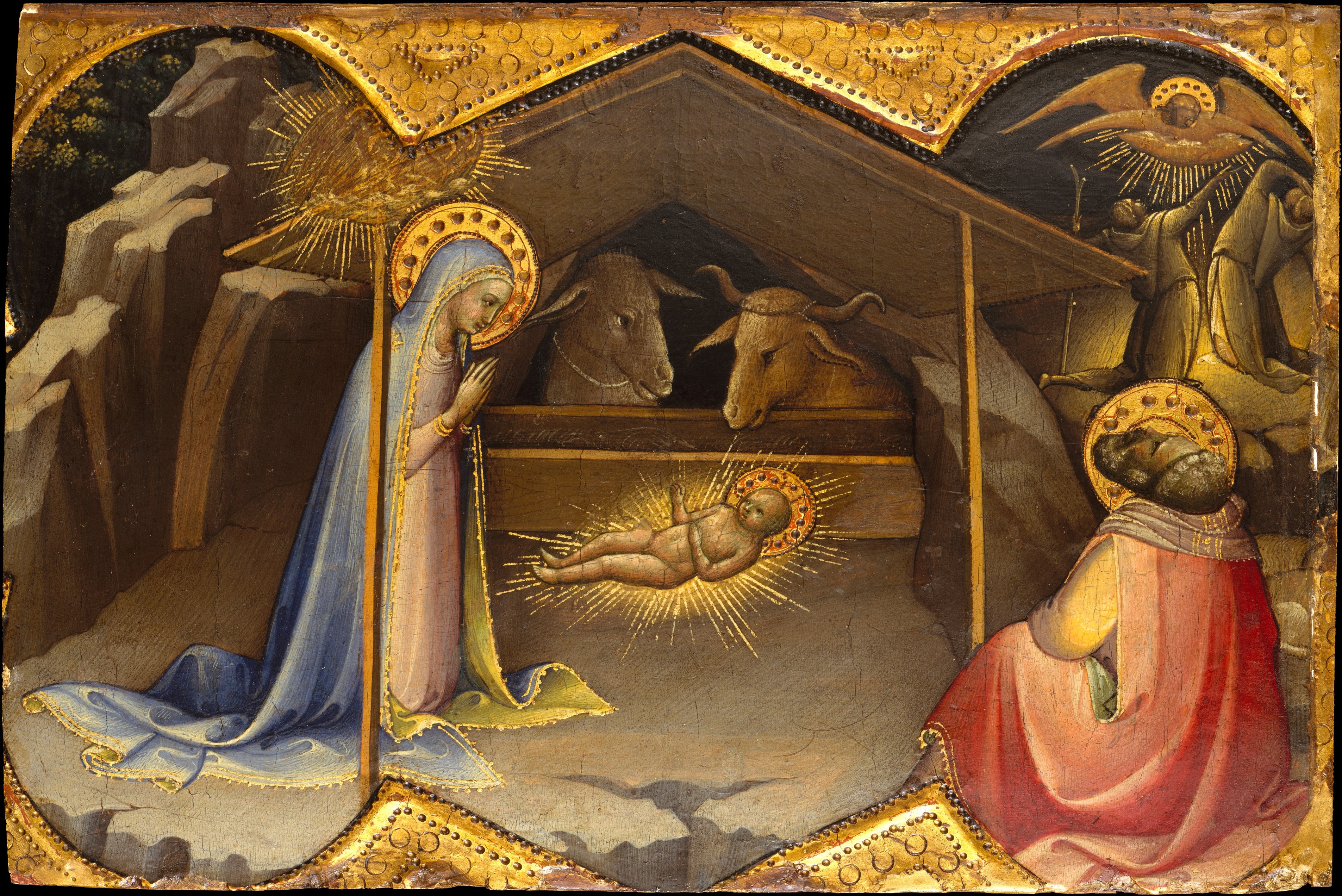 1403Lorenzo Monaco (Piero di Giovanni)
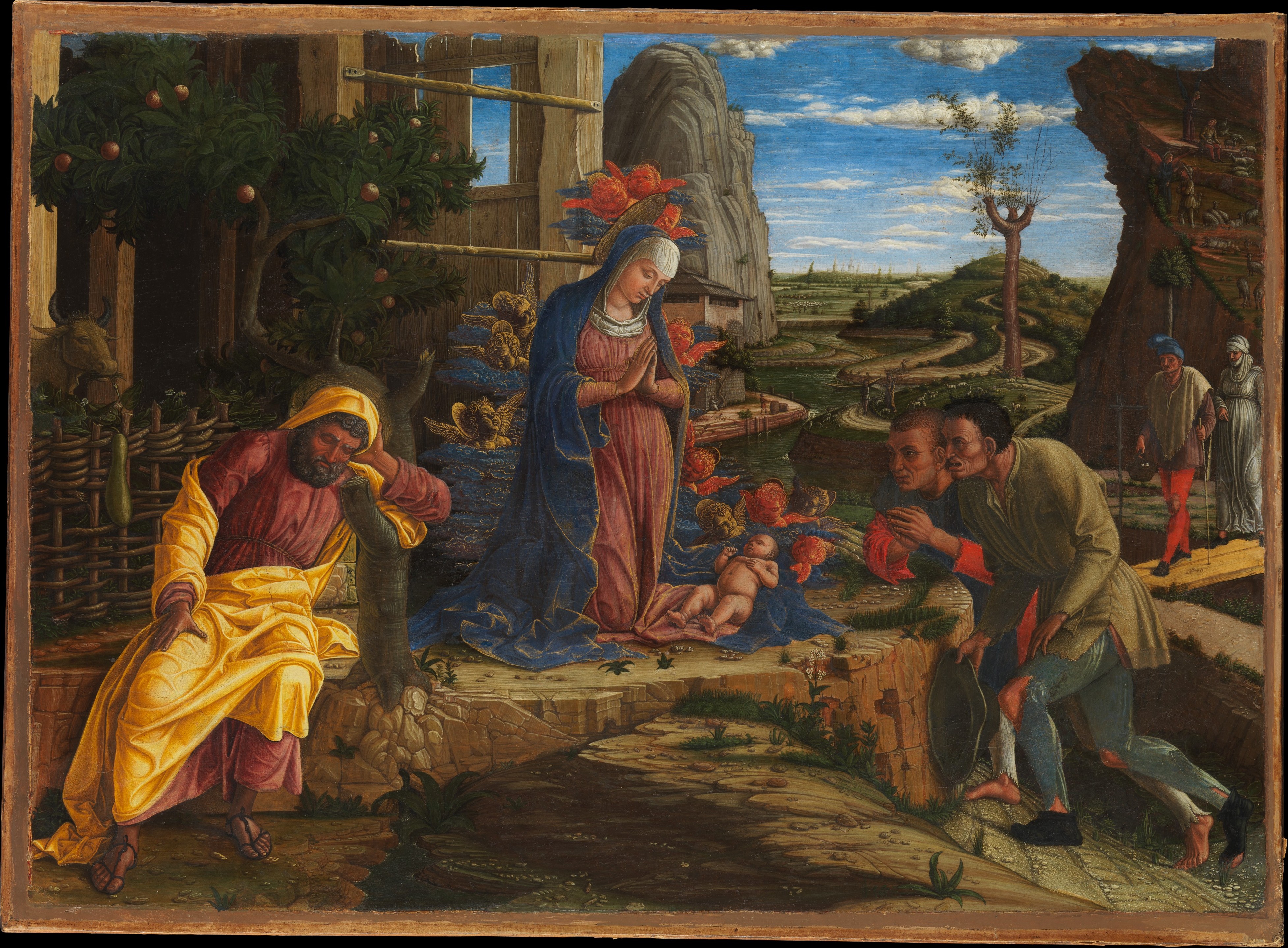 1450Andrea Mantegna
 1500Unknown
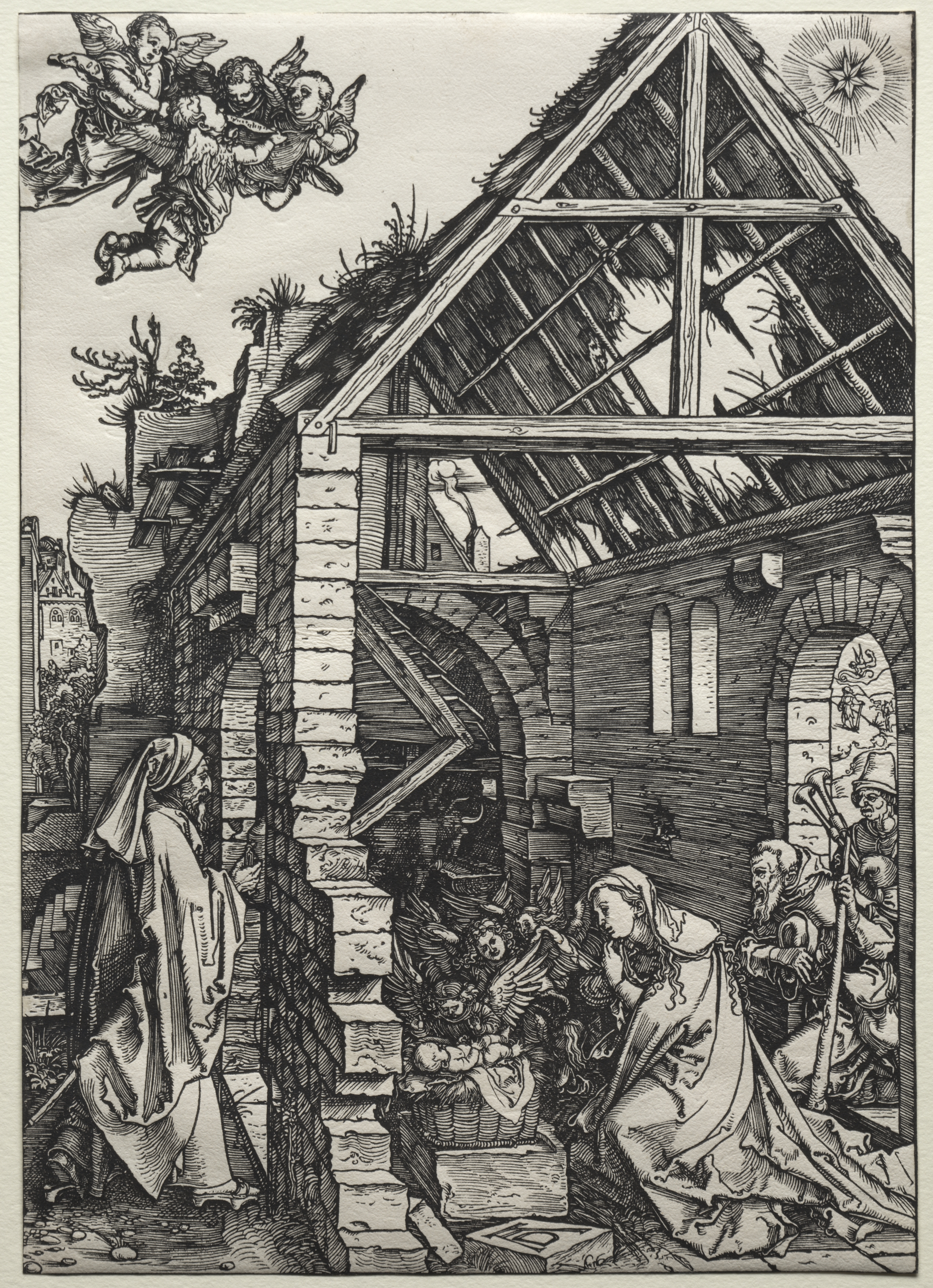 1502Albrecht Dürer (German, 1471–1528)
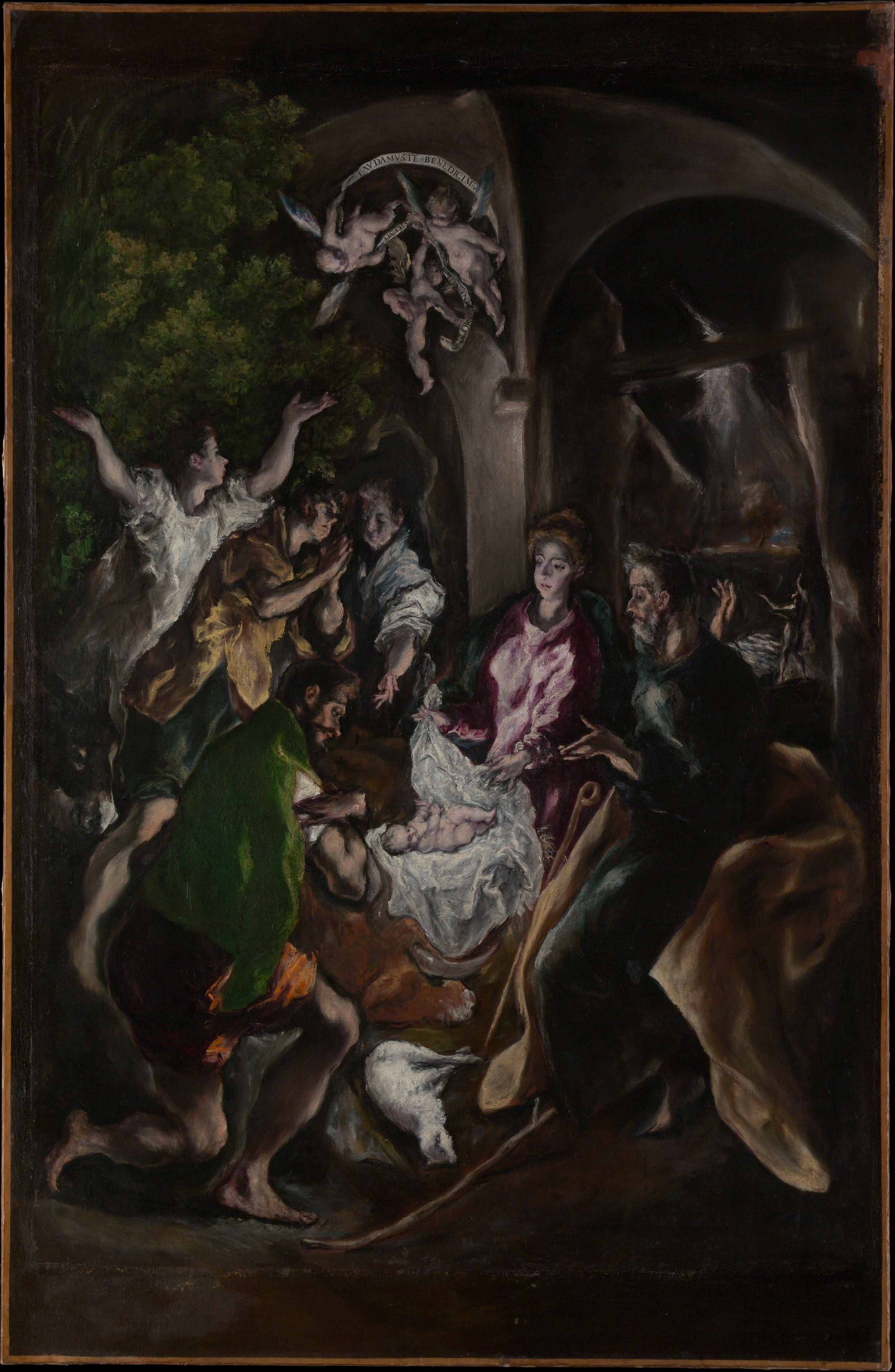 1605El Greco (Domenikos Theotokopoulos)
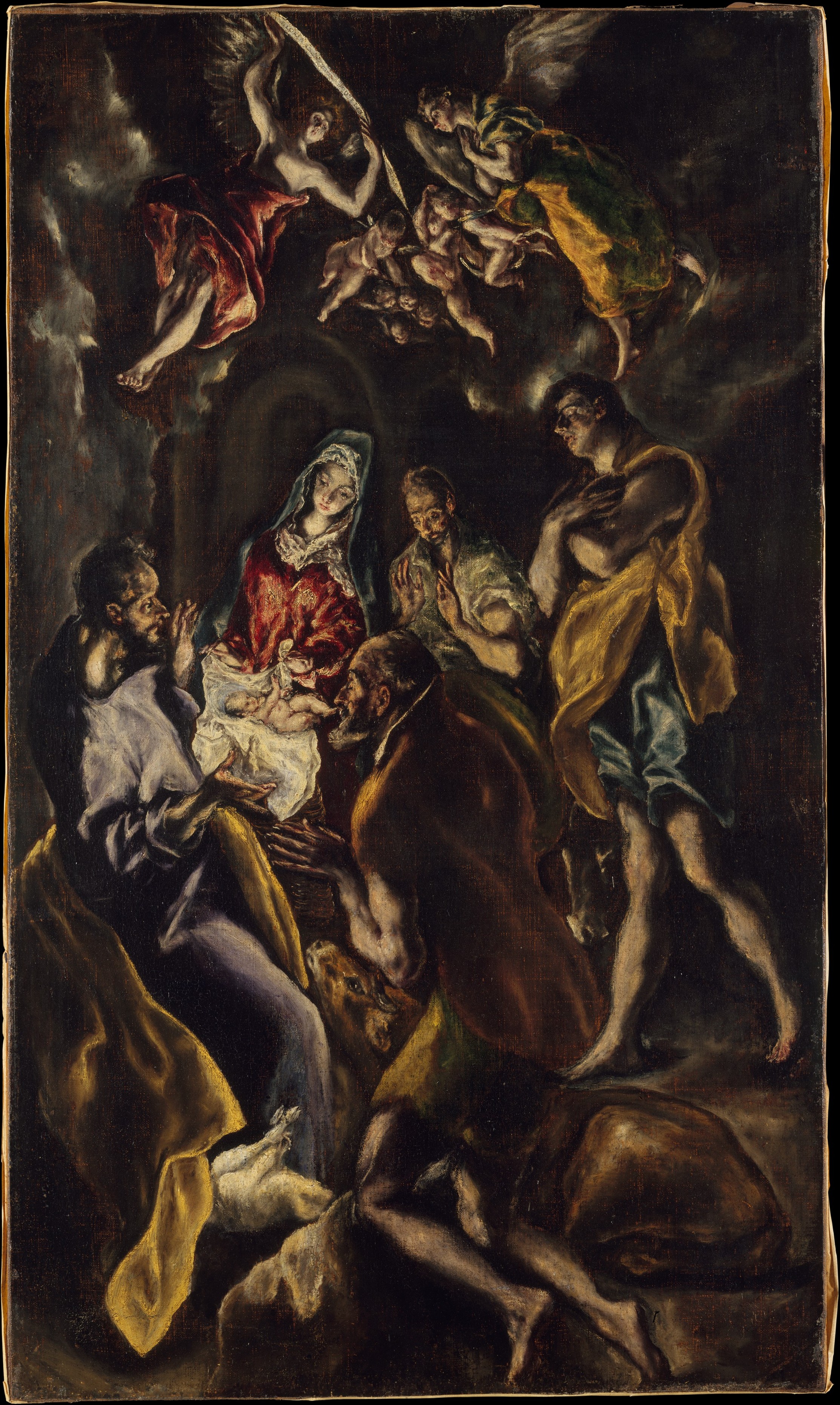 1612El Greco (Domenikos Theotokopoulos) and Workshop
9 hands, 1300 to 1612
The hands
9Unknownca. 1300Shrine of the VirginGift of J. Pierpont Morgan, 1917. CC0-1.0The same shrine, third scene. Its interior carries the Nativity beside the Annunciation and the Magi, on the Met's own heading. One object, three moments of the same infancy. Jean Pucelleca. 1324–28The Hours of Jeanne d'Evreux, Queen of FranceThe Cloisters Collection, 1954. CC0-1.0The Hours of Jeanne d'Evreux, fourth scene. Its heading here is the Adoration of the Shepherds, which Iconclass files at 73B25, inside Luke 2:1-20. Anchored to the birth rather than given a subject of its own, because the shepherds are a moment of those verses. Unknown15th centuryCrib of the Infant JesusGift of Ruth Blumka, in memory of Leopold Blumka, 1974. CC0-1.0A crib made to hold a Christ-child figure, so the birth is the thing it is for. The Met's heading names the Nativity. Lorenzo Monaco (Piero di Giovanni)ca. 1406–10The NativityRobert Lehman Collection, 1975. CC0-1.0 Andrea Mantegnashortly after 1450The Adoration of the ShepherdsPurchase, Anonymous Gift, 1932. CC0-1.0 Unknown1500–1520Christ Is Born as Man's Redeemer (Episode from the Story of the Redemption of Man)Purchase, Fletcher and Rogers Funds, and Bequest of Gwynne M. Andrews, by exchange, 1938. CC0-1.0The Redemption of Man tapestry, whose title says exactly this: Christ is born as man's redeemer. Of its several scenes this is the one it is named for. Albrecht Dürer (German, 1471–1528)c. 1502–3The NativityDudley P. Allen Fund. CC0-1.0 El Greco (Domenikos Theotokopoulos)ca. 1605–10The Adoration of the ShepherdsRogers Fund, 1905. CC0-1.0 El Greco (Domenikos Theotokopoulos) and Workshopca. 1612–14The Adoration of the ShepherdsBequest of George Blumenthal, 1941. CC0-1.0Metropolitan Museum of Art catalogues this picture under its own subject heading “Adoration of the Shepherds”. Wikidata states that concept’s Iconclass notation as 73B25 (Q1029715), and the library’s map reads that notation as this passage.
The passage
20 verses1And it came to pass, that in those days there went out a decree from Caesar Augustus, that the whole world should be enrolled.
2This enrolling was first made by Cyrinus, the governor of Syria.
3And all went to be enrolled, every one into his own city.
4And Joseph also went up from Galilee, out of the city of Nazareth into Judea, to the city of David, which is called Bethlehem: because he was of the house and family of David,
5To be enrolled with Mary his espoused wife, who was with child.
6And it came to pass, that when they were there, her days were accomplished, that she should be delivered.
7And she brought forth her firstborn son, and wrapped him up in swaddling clothes, and laid him in a manger; because there was no room for them in the inn.
8And there were in the same country shepherds watching, and keeping the night watches over their flock.
9And behold an angel of the Lord stood by them, and the brightness of God shone round about them; and they feared with a great fear.
10And the angel said to them: Fear not; for, behold, I bring you good tidings of great joy, that shall be to all the people:
11For, this day, is born to you a Saviour, who is Christ the Lord, in the city of David.
12And this shall be a sign unto you. You shall find the infant wrapped in swaddling clothes, and laid in a manger.
13And suddenly there was with the angel a multitude of the heavenly army, praising God, and saying:
14Glory to God in the highest; and on earth peace to men of good will.
15And it came to pass, after the angels departed from them into heaven, the shepherds said one to another: Let us go over to Bethlehem, and let us see this word that is come to pass, which the Lord hath shewed to us.
16And they came with haste; and they found Mary and Joseph, and the infant lying in the manger.
17And seeing, they understood of the word that had been spoken to them concerning this child.
18And all that heard, wondered; and at those things that were told them by the shepherds.
19But Mary kept all these words, pondering them in her heart.
20And the shepherds returned, glorifying and praising God, for all the things they had heard and seen, as it was told unto them.
In the stacks
Not yet checked6Suggested by an AI model from books the library holds but has not yet set as editions. A passage here is a place to read, not a citation.
The Myth of the Birth of the Hero
And they came with haste, and found Mary and Joseph, and the babe lying in a manger. And when they had seen it they made known abroad the saying which was told them concerning this child. And all they that heard wondered at those things which were told them by the shepherds. But Mary kept all these things and pondered them in her heart. And the shepherds returned glorifying and praising God for all the things which they had heard and seen, as it was told unto them.” We now
0.79Religious art in France, 13 century
Another and a very ingenuous legend relating to the birth of Christ is also seen at times in the cathedrals. Near to the Virgin who is lying on her bed two women, one of them sometimes with her arm in a sling,1 are assiduously caring for the Child, perhaps washing Him in a basin.5 They are the mid- wives spoken of in the " Gospel of Pseudo-Matthew," where it is related that Joseph had gone to seek a midwife and when he returned to the cave the Virgin was already
0.75The Works of Aurelius Augustine, a New Translation, Vol. IX- On Christian Doctrine, the Enchiridon
Cuar. xu.— Christ's birth through the Holy Spirit manifests to us the ' grace of God. And, therefore, as one thing may be born of another, and yet not in such a way as to be its son, and as not every one who is called a son was born of him whose son he is called, it is clear that this arrangement by which Christ was born of the Holy Spirit, but not as His son, and of the Virgin Mary as her son, is intended as a manifestation
0.74The Myth of the Birth of the Hero
Then Herod, when he saw that he was mocked of the wise men, was exceeding wroth, and sent forth, and _slew all the children that were in Bethlehem, and in all the coasts thereof, from two years old and under_, according to the time which he had diligently enquired of the wise men. But when Herod was dead, behold, an angel of the Lord appeared in a dream to Joseph in Egypt, saying arise and take the young child and his mother, and go into the land of Israel: _for
0.73The Works of Aurelius Augustine, a New Translation, Vol. IX- On Christian Doctrine, the Enchiridon
’ Cuap. xx11.—Of the six ages of the world. 39. “ Five ages of the world, accordingly, having been now completed (there has entered the sixth). Of these ages the first is from the beginning of the human race, that is, from Adam, who was the first man that was made, down to Noah, who constructed the ark at the time of the flood? Then the second extends from that period on to Abraham, who was called? the father indeed of all nations? which should follow the example of his
0.73The Golden Bough
In this he may have been mistaken. If Adonis was indeed, as I have argued, the spirit of the corn, a more suitable name for his dwelling-place could hardly be found than Bethlehem, "the House of Bread," and he may well have been worshipped there at his House of Bread long ages before the birth of Him who said, "I am the bread of life." Even on the hypothesis that Adonis followed rather than preceded Christ at Bethlehem, the choice of his sad figure to divert the allegiance of Christians
0.72
How this subject was made
The subject was opened by an Iconclass notation. The library's map reads 73B2, whose own gloss is adoration of the Christ-child ~ Christ's birth
, as Luke 2:1-20; a picture reaches this page when the notation a cataloguer put on it resolves here, whether the cataloguer wrote the notation down or wrote a subject heading that carries one. The authority is iconclass.org/73B2.
4 pictures Confirmed: the object's own title names the scene and the matched notation or heading is specific to it.
Connections
Painted
- Shrine of the Virgin1300The same shrine, third scene. Its interior carries the Nativity beside the Annunciation and the Magi, on the Met's own heading. One object, three moments of the same infancy.
- The Hours of Jeanne d'Evreux, Queen of France1324The Hours of Jeanne d'Evreux, fourth scene. Its heading here is the Adoration of the Shepherds, which Iconclass files at 73B25, inside Luke 2:1-20. Anchored to the birth rather than given a subject of its own, because the shepherds are a moment of those verses.
- Crib of the Infant Jesus1400A crib made to hold a Christ-child figure, so the birth is the thing it is for. The Met's heading names the Nativity.
- The Nativity1403Confirmed: the object's own title names the scene and the matched notation or heading is specific to it.
- The Adoration of the Shepherds1450Confirmed: the object's own title names the scene and the matched notation or heading is specific to it.
- Christ Is Born as Man's Redeemer (Episode from the Story of the Redemption of Man)1500The Redemption of Man tapestry, whose title says exactly this: Christ is born as man's redeemer. Of its several scenes this is the one it is named for.
- The Nativity1502Confirmed: the object's own title names the scene and the matched notation or heading is specific to it.
- The Adoration of the Shepherds1605Confirmed: the object's own title names the scene and the matched notation or heading is specific to it.
- The Adoration of the Shepherds1612Metropolitan Museum of Art catalogues this picture under its own subject heading “Adoration of the Shepherds”. Wikidata states that concept’s Iconclass notation as 73B25 (Q1029715), and the library’s map reads that notation as this passage.