A subject
The Adoration of the Magi
Matthew 2:1-121300–14727 hands
Opened by a notation lookup, not by an editor. Iconclass 73B5 glosses this subject as “the story of the three Wise Men (kings or Magi) (Matthew 2:1-12)”, and this library reads the Douay-Rheims, where the passage stands at Matthew 2:1-12. Named the Adoration of the Magi by Abe Garcia, 2026-09-07. Iconclass hedges its title because the gospel does not say how many the wise men were or that they were kings. The hedge is right and it is not a name.
When Jesus therefore was born in Bethlehem of Juda, in the days of king Herod, behold,…
Matthew 2:1
An editor has read 7 pictures against this passage and confirmed them.
 1300Unknown
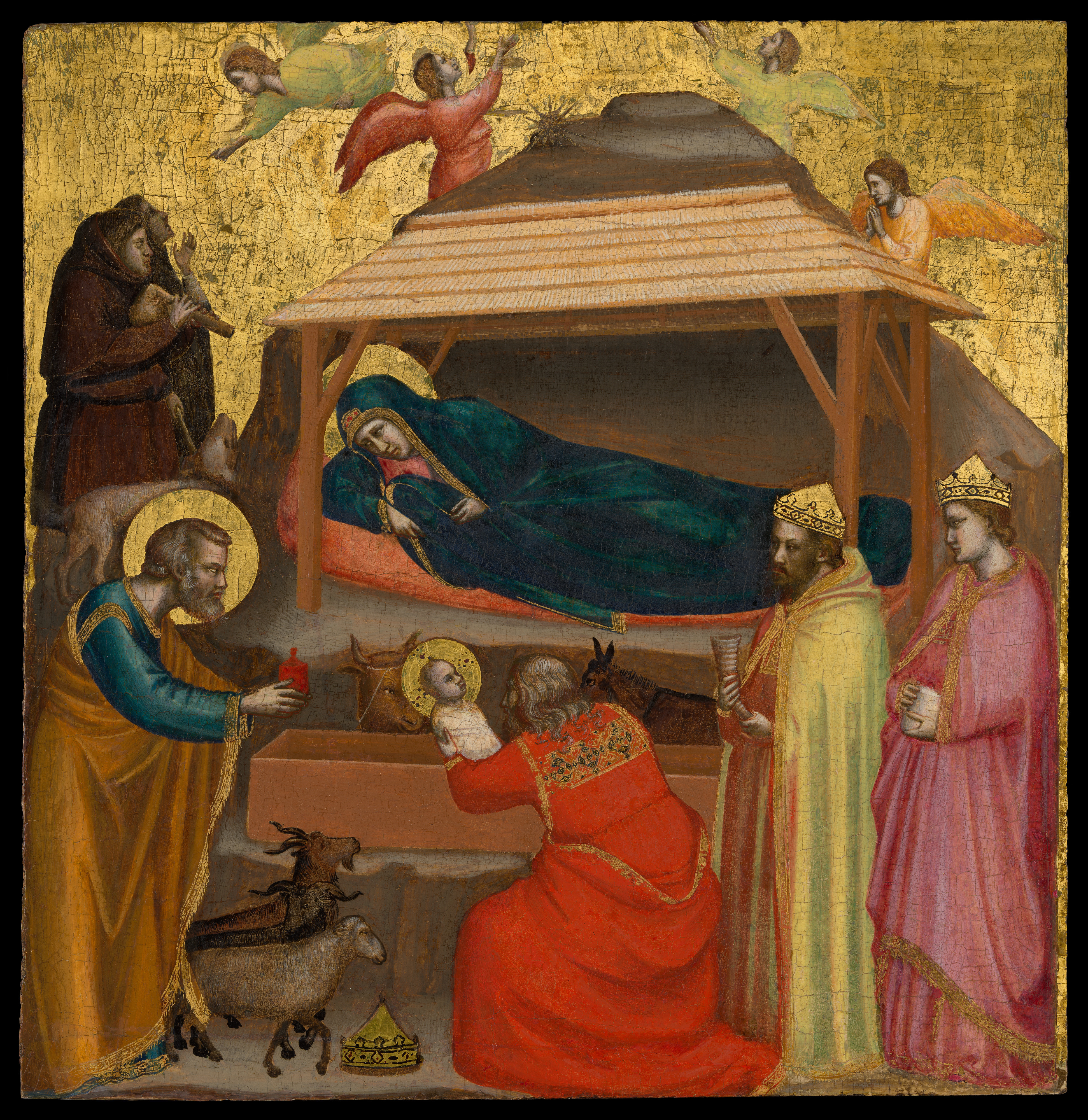 1315Giotto di Bondone
 1324Jean Pucelle
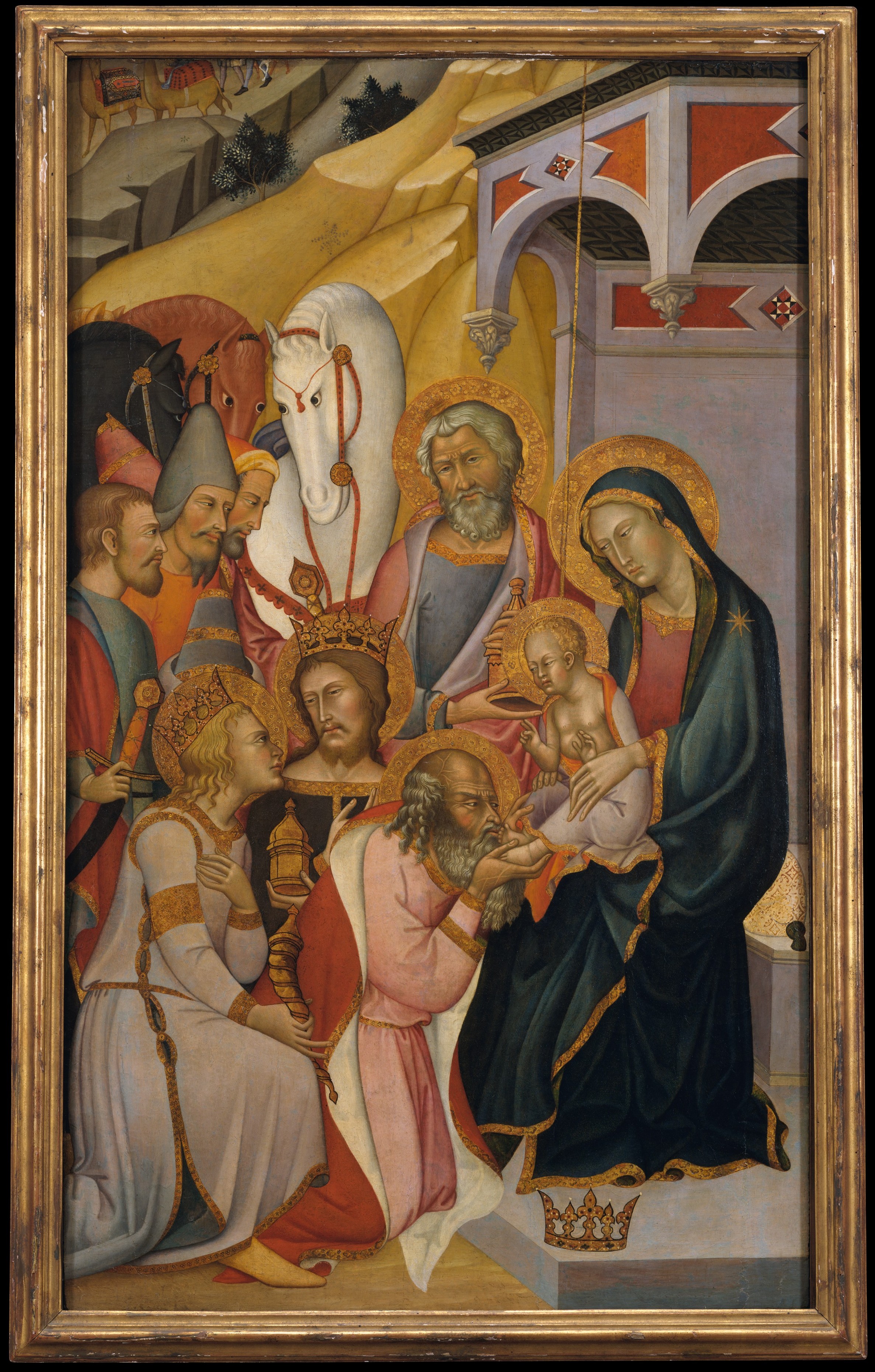 1387Bartolo di Fredi
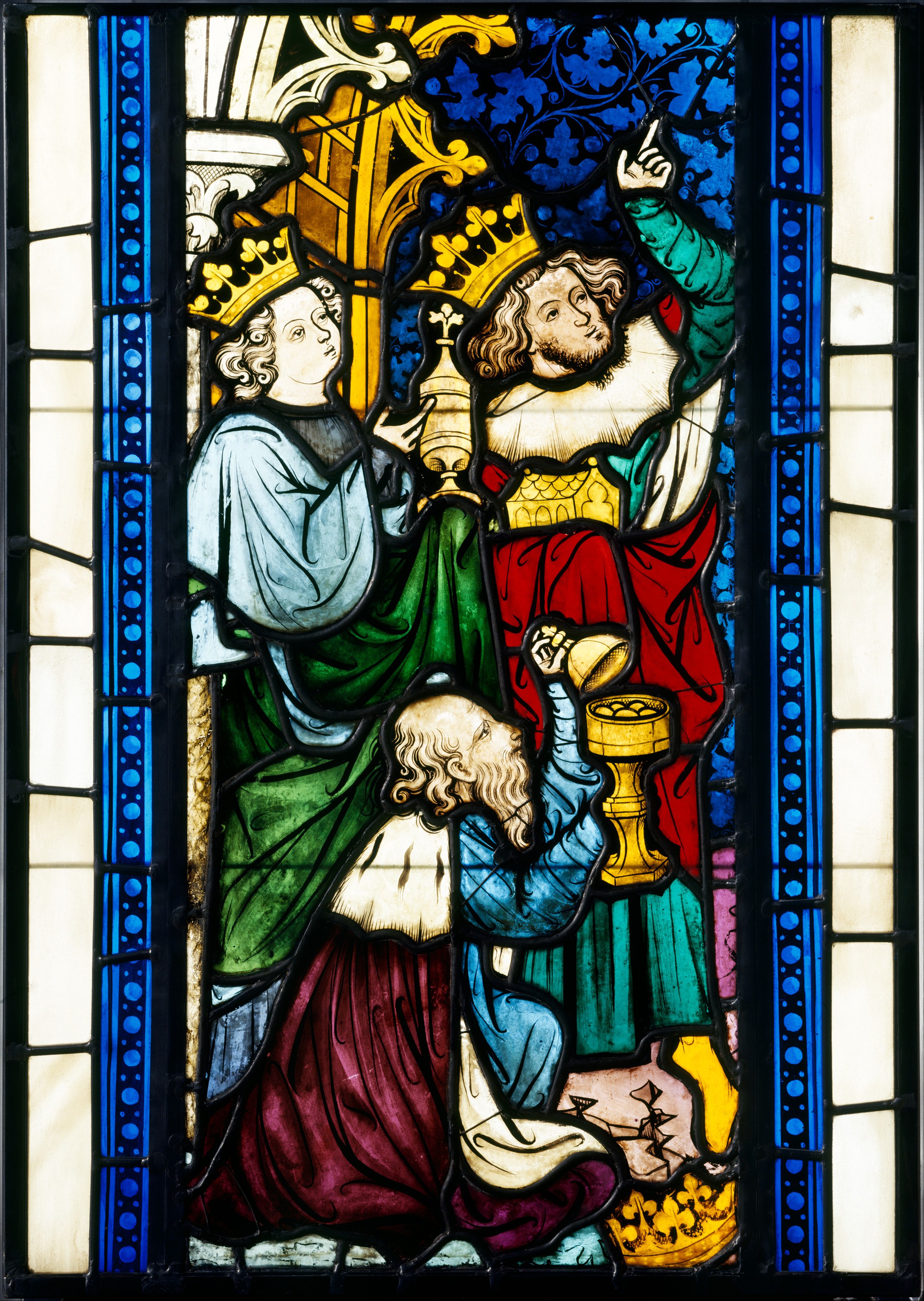 1390Unknown
 1400Unknown
 1472Joos van Wassenhove
7 hands, 1300 to 1472
The hands
7Unknownca. 1300Shrine of the VirginGift of J. Pierpont Morgan, 1917. CC0-1.0The same shrine, whose interior also carries the Adoration of the Magi. Giotto di Bondonepossibly ca. 1320The Adoration of the MagiJohn Stewart Kennedy Fund, 1911. CC0-1.0 Jean Pucelleca. 1324–28The Hours of Jeanne d'Evreux, Queen of FranceThe Cloisters Collection, 1954. CC0-1.0The same book of hours. Its cycle includes the Adoration of the Magi, on the Met's own heading. Bartolo di Fredica. 1390The Adoration of the MagiRobert Lehman Collection, 1975. CC0-1.0 Unknownca. 1390Adoration of the Magi from Seven Scenes from the Life of ChristThe Cloisters Collection, 1986. CC0-1.0 Unknown15th centuryCrib of the Infant JesusGift of Ruth Blumka, in memory of Leopold Blumka, 1974. CC0-1.0A crib made to hold a Christ-child figure, with the Magi among its painted and embroidered scenes. A devotional object, and the record says so. Joos van Wassenhove1472–74The Adoration of the MagiBequest of George Blumenthal, 1941. CC0-1.0Joos van Wassenhove's Adoration of the Magi, the three kings presenting the gifts. Iconclass 73B57 names the presenting specifically.
The passage
12 verses1When Jesus therefore was born in Bethlehem of Juda, in the days of king Herod, behold, there came wise men from the east to Jerusalem.
2Saying, Where is he that is born king of the Jews? For we have seen his star in the east, and are come to adore him.
3And king Herod hearing this, was troubled, and all Jerusalem with him.
4And assembling together all the chief priests and the scribes of the people, he inquired of them where Christ should be born.
5But they said to him: In Bethlehem of Juda. For so it is written by the prophet:
6And thou Bethlehem the land of Juda art not the least among the princes of Juda: for out of thee shall come forth the captain that shall rule my people Israel.
7Then Herod, privately calling the wise men, learned diligently of them the time of the star which appeared to them;
8And sending them into Bethlehem, said: Go and diligently inquire after the child, and when you have found him, bring me word again, that I also may come to adore him.
9Who having heard the king, went their way; and behold the star which they had seen in the east, went before them, until it came and stood over where the child was.
10And seeing the star they rejoiced with exceeding great joy.
11And entering into the house, they found the child with Mary his mother, and falling down they adored him; and opening their treasures, they offered him gifts; gold, frankincense, and myrrh.
12And having received an answer in sleep that they should not return to Herod, they went back another way into their country.
In the stacks
Not yet checked6Suggested by an AI model from books the library holds but has not yet set as editions. A passage here is a place to read, not a citation.
The Myth of the Birth of the Hero
And they came with haste, and found Mary and Joseph, and the babe lying in a manger. And when they had seen it they made known abroad the saying which was told them concerning this child. And all they that heard wondered at those things which were told them by the shepherds. But Mary kept all these things and pondered them in her heart. And the shepherds returned glorifying and praising God for all the things which they had heard and seen, as it was told unto them.” We now
0.84Religious art in France, 13 century
or in what place it is not known, but if it were by ad- 227 RELIGIOUS ART IN FRANCE through windows at Lyons1 and Le Mans,2 to a tympanum in the north porch of the cathedral at Chartres (Fig. in) and to the beautiful fragment of the old jube, now in the crypt (Fig. 112). Why again is Jesus re- presented as fastened to the Cross by four nails until the end of the twelfth century, and from the thirteenth by three only ? Books give no answer, and all
0.77The Myth of the Birth of the Hero
Then Herod, when he saw that he was mocked of the wise men, was exceeding wroth, and sent forth, and _slew all the children that were in Bethlehem, and in all the coasts thereof, from two years old and under_, according to the time which he had diligently enquired of the wise men. But when Herod was dead, behold, an angel of the Lord appeared in a dream to Joseph in Egypt, saying arise and take the young child and his mother, and go into the land of Israel: _for
0.77Religious art in France, 13 century
2 of the Magi, is first alluded to by Tertullian who teaches that the kings of Arabia and Sheba spoken of in the Psalms are a figure of the Magi (Adversus Marcionem, III., xiii., Adversus Judeeos, ix., and De idolatria, ix.). But it was not until the fifth century in a treatise of Maximus of Turin and in the sixth in Caesarius of Aries that they really became kings. And it was not until the tenth century that artists began to represent the Magi as crowned kings, the earliest example
0.77Religious art in France, 13 century
near Venice. 5 Cap. XVI. A/ See,T^e^Sj 'Irait* d" suPfrstiti™s> antl B. de « Leg. aurea. De Innocent., X., and De Epiphania Montault Bullet, monum., 1884, p. 722. Domini, xiv. [Golden Legend. The Holy Innocents, Ludolph, Vita Chnsti, cap. XI. ;;. I;6, and The Epiphany, i. 41.] 212 OF THE THIRTEENTH CENTURY It is there related that the Magi were three in number, that their names were Jaspar,1 Balthasar and Melchior, and that they were not only magi but kings. In their different countries they were in the habit of
0.75The Golden Bough
In this he may have been mistaken. If Adonis was indeed, as I have argued, the spirit of the corn, a more suitable name for his dwelling-place could hardly be found than Bethlehem, "the House of Bread," and he may well have been worshipped there at his House of Bread long ages before the birth of Him who said, "I am the bread of life." Even on the hypothesis that Adonis followed rather than preceded Christ at Bethlehem, the choice of his sad figure to divert the allegiance of Christians
0.74
How this subject was made
The subject was opened by an Iconclass notation. The library's map reads 73B5, whose own gloss is the story of the three Wise Men (kings or Magi) (Matthew 2:1-12)
, as Matthew 2:1-12; a picture reaches this page when the notation a cataloguer put on it resolves here, whether the cataloguer wrote the notation down or wrote a subject heading that carries one. The authority is iconclass.org/73B5.
3 pictures Confirmed: the object's own title names the scene and the matched notation or heading is specific to it.
Connections
Painted
- Shrine of the Virgin1300The same shrine, whose interior also carries the Adoration of the Magi.
- The Adoration of the Magi1315Confirmed: the object's own title names the scene and the matched notation or heading is specific to it.
- The Hours of Jeanne d'Evreux, Queen of France1324The same book of hours. Its cycle includes the Adoration of the Magi, on the Met's own heading.
- The Adoration of the Magi1387Confirmed: the object's own title names the scene and the matched notation or heading is specific to it.
- Adoration of the Magi from Seven Scenes from the Life of Christ1390Confirmed: the object's own title names the scene and the matched notation or heading is specific to it.
- Crib of the Infant Jesus1400A crib made to hold a Christ-child figure, with the Magi among its painted and embroidered scenes. A devotional object, and the record says so.
- The Adoration of the Magi1472Joos van Wassenhove's Adoration of the Magi, the three kings presenting the gifts. Iconclass 73B57 names the presenting specifically.