The Blindness of Tobit: The Large Plate, Rembrandt van Rijn (Dutch, 1606–1669)

Seen

Not described yet.


Of

No subject recorded yet.


Means

No reading yet.


Rights

Credit
Severance and Greta Millikin Purchase Fund
Licence
CC0-1.0
Evidence
openaccess-api.clevelandart.org: share_license_status=CC0 on artwork 162193 (read 2026-08-27)
Record
https://clevelandart.org/art/2002.10
The Blindness of Tobit: The Large Plate, Rembrandt van Rijn (Dutch, 1606–1669)
The Blindness of Tobit: The Large Plate — Rembrandt van Rijn (Dutch, 1606–1669)1651

Also by Rembrandt van Rijn (Dutch, 1606–1669)

8
The Strolling Musicians, Rembrandt van Rijn (Dutch, 1606–1669)
The Strolling MusiciansRembrandt van Rijn (Dutch, 1606–1669)c. 1635Cleveland Museum of Art
Rembrandt and His Wife Saskia, Rembrandt van Rijn (Dutch, 1606–1669)
Rembrandt and His Wife SaskiaRembrandt van Rijn (Dutch, 1606–1669)1636Cleveland Museum of Art
Christ Preaching ('La Petite Tombe'), Rembrandt van Rijn (Dutch, 1606–1669)
Christ Preaching ('La Petite Tombe')Rembrandt van Rijn (Dutch, 1606–1669)c. 1652Cleveland Museum of Art
Self-Portrait Drawing at a Window, Rembrandt van Rijn (Dutch, 1606–1669)
Self-Portrait Drawing at a WindowRembrandt van Rijn (Dutch, 1606–1669)1648Cleveland Museum of Art
The Presentation in the Temple, Rembrandt van Rijn (Dutch, 1606–1669)
The Presentation in the TempleRembrandt van Rijn (Dutch, 1606–1669)c. 1654Cleveland Museum of Art
Shah Jahan, Rembrandt van Rijn (Dutch, 1606–1669)
Shah JahanRembrandt van Rijn (Dutch, 1606–1669)c. 1656–61Cleveland Museum of Art
St. Francis Beneath a Tree Praying, Rembrandt van Rijn (Dutch, 1606–1669)
St. Francis Beneath a Tree PrayingRembrandt van Rijn (Dutch, 1606–1669)1657Cleveland Museum of Art
Woman Bathing Her Feet in a Brook, Rembrandt van Rijn (Dutch, 1606–1669)
Woman Bathing Her Feet in a BrookRembrandt van Rijn (Dutch, 1606–1669)1658Cleveland Museum of Art

Within fifty years of 1651

1148
Tapper (Iroke Ifa), Yoruba
Tapper (Iroke Ifa)Yoruba17th or 18th centuryThe Art Institute of Chicago
Fragment, Italy
FragmentItaly17th centuryThe Art Institute of Chicago
Oribe-Type Ewer, Japan
Oribe-Type EwerJapanearly 17th centuryThe Art Institute of Chicago
Dagger (Katar) and Sheath, Unknown
Dagger (Katar) and SheathUnknown17th centuryMetropolitan Museum of Art, New York, NY
Portrait of a Beauty, Mughal
Portrait of a BeautyMughal17th centuryThe Art Institute of Chicago
Portrait of a Princess, Mughal
Portrait of a PrincessMughal17th/18th centuryThe Art Institute of Chicago
A Hunt in the Mountains of Heaven, Artist unknown [spurious signature of Zhao Mengfu (1254-1322), dated 1301]
Chinese
A Hunt in the Mountains of HeavenArtist unknown [spurious signature of Zhao Mengfu (1254-1322), dated 1301] ChineseLate Ming /early Qing dynasty, 17th centuryThe Art Institute of Chicago
Birth of Alexander, Nicolas Poussin
Birth of AlexanderNicolas Poussin1640sThe Art Institute of Chicago

Also at Cleveland Museum of Art

596
Relief of Nyankhnesut Seated, Unknown
Relief of Nyankhnesut SeatedUnknownc. 2311–2281 BCECleveland Museum of Art
Stele of Shemai, Unknown
Stele of ShemaiUnknownc. 1960–1916 BCECleveland Museum of Art
Relief of Hatshepsut or Tuthmosis III, Unknown
Relief of Hatshepsut or Tuthmosis IIIUnknown1479–1425 BCECleveland Museum of Art
Talatat: Portrait of Nefertiti, Unknown
Talatat: Portrait of NefertitiUnknownc. 1353–1347 BCECleveland Museum of Art
Talatat: Portrait of Nefertiti, Unknown
Talatat: Portrait of NefertitiUnknownc. 1353–1347 BCECleveland Museum of Art
Talatat: Nefertiti Offers to the Aten, Unknown
Talatat: Nefertiti Offers to the AtenUnknown1353–1347 BCECleveland Museum of Art
Tomb Relief of the Chief Physician Amenhotep and Family, Unknown
Tomb Relief of the Chief Physician Amenhotep and FamilyUnknownc. 1279–1257 BCECleveland Museum of Art
Stele of the High Priest of Ptah, Shedsunefertem, Unknown
Stele of the High Priest of Ptah, ShedsunefertemUnknown945–924 BCECleveland Museum of Art

Similar picturesFound by visual likeness

8 pictures

Visual resemblances suggested by the model. A match does not establish a shared subject or historical connection.

The Prophet Amos, Baccio Baldini
The Prophet AmosBaccio Baldinic. 1470The Art Institute of Chicago
0.88
St. Jerome Seated near a Pollard Willow, Albrecht Dürer (German, 1471–1528)
St. Jerome Seated near a Pollard WillowAlbrecht Dürer (German, 1471–1528)1512Cleveland Museum of Art
0.86
A Praying Monk, Unknown
A Praying MonkUnknown1800–1830Cooper Hewitt, Smithsonian Design Museum
0.86
The Presentation in the Temple, Rembrandt van Rijn (Dutch, 1606–1669)
The Presentation in the TempleRembrandt van Rijn (Dutch, 1606–1669)c. 1654Cleveland Museum of Art
0.86
The Strolling Musicians, Rembrandt van Rijn (Dutch, 1606–1669)
The Strolling MusiciansRembrandt van Rijn (Dutch, 1606–1669)c. 1635Cleveland Museum of Art
0.86
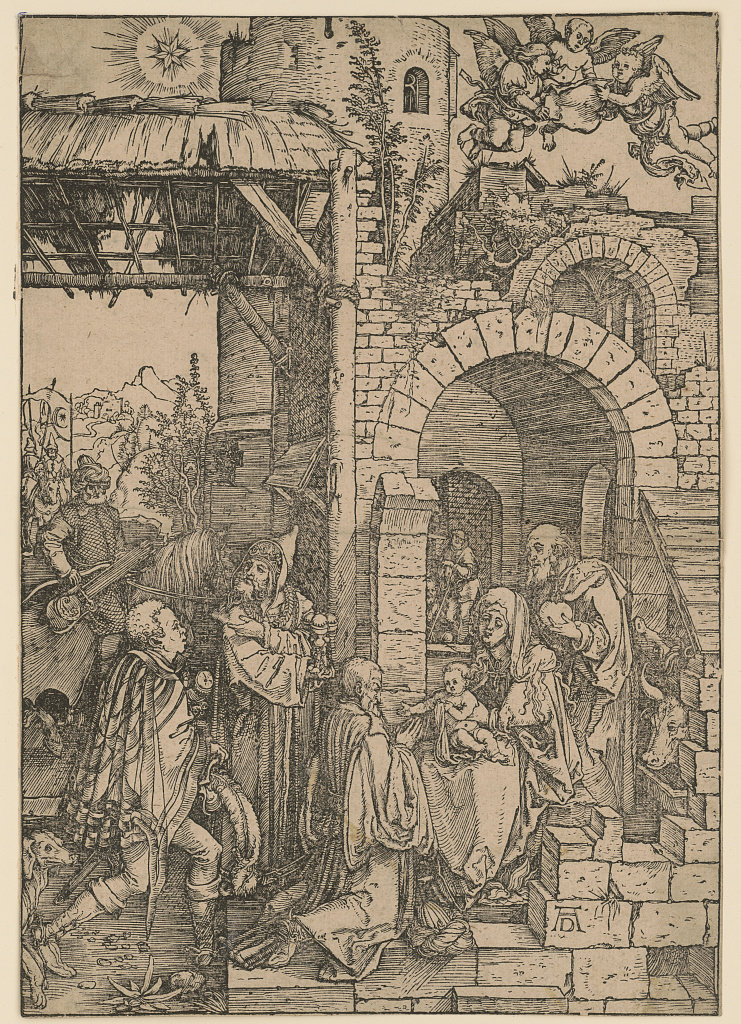
[Adoration of the Magi] / AD [monogram]., Dürer, Albrecht, 1471-1528, artist
[Adoration of the Magi] / AD [monogram].Dürer, Albrecht, 1471-1528, artist[Nuremberg], [1503]Library of Congress
0.86
St. Francis Beneath a Tree Praying, Rembrandt van Rijn (Dutch, 1606–1669)
St. Francis Beneath a Tree PrayingRembrandt van Rijn (Dutch, 1606–1669)1657Cleveland Museum of Art
0.85
Three Oriental Figures (Jacob and Laban?), Rembrandt van Rijn
Three Oriental Figures (Jacob and Laban?)Rembrandt van Rijn1641The Art Institute of Chicago
0.85

In the stacks

Not yet checked
2

Passages in the library’s own holdings that name this maker. The model ranked them; nobody has checked that the name means this person.

  1. Seven Discourses on Art · Joshua, Sir Reynolds

    By this mode of reasoning Rembrandt has a higher place than Raffaelle. But a very little reflection will serve to show us that these particularities cannot be nature: for how can that be the nature of man, in which no two individuals are the same? It plainly appears that as a work is conducted under the influence of general ideas or partial it is principally to be considered as the effect of a good or a bad taste. As beauty therefore does not consist in taking what lies immediately before
    0.69
  2. principles of art history · heinrich wolfflin

    PAINTING 95 Rembrandt The great Ecce Homo (etching of 1650) is an analogous case. As is known, the schema of the composition dates back to a Cinquecentist, Lucas van Leyden. A house wall and a terrace before it, seen frontally; people who have taken up their stand side by side in rows on and in front of the terrace—how are we to get a baroque picture out of all that? We learn with Rembrandt that it is not the subject but the treatment which matters. While Lucas van Leyden exhausts
    0.68

Next

Made in the seventeenth century, like The Blindness of Tobit: The Large Plate.

0:00–0:00