
The Binding of IsaacGenesis 22:1-19
32 hands · 1492–1754
And he put forth his hand and took the sword, to sacrifice his son.
Genesis 22:10
 1492Andrea Mantegna
 1511Raphael
 1511Mariotto Albertinelli
 1525Antonio di Donnino di Domenico del Mazziere
 1525Brunswick Monogrammist
 1527Andrea del Sarto
 1527Andrea del Sarto
 1528Andrea del Sarto
 1530Lucas Cranach the Elder
 1531Lucas Cranach the Elder
 1540Master of the Augsburg Ecce Homo
 1540Herri met de Bles
 1542Titian
 1549Unknown
 1585Paolo Veronese
 1588Paolo Veronese
 1590Caravaggio
 1599Annibale Carracci
 1599Jan Brueghel the Elder
 1603Caravaggio
 1607Cigoli
 1607Abraham Govaerts
 1612Pieter Lastman
 1612Peter Paul Rubens
 1616Pedro Orrente
 1616Pieter Lastman
- 1635RembrandtThis record
 1645Rembrandt van Rijn
 1685Giovanni Antonio Burrini
 1750Unknown
 1750Jean Jacques Spoede
 1754Francesco Guardi
What it depicts
Genesis 22:1-19The Akedah. Nineteen verses that painters have returned to for six hundred years, almost always at the same instant — the knife raised, the angel arriving — which is the tenth verse and not the first. Where the picture stops is itself an argument about the passage.
1After these things, God tempted Abraham, and said to him: Abraham, Abraham. And he answered: Here I am.
2He said to him: Take thy only begotten son Isaac, whom thou lovest, and go into the land of vision: and there thou shalt offer him for an holocaust upon one of the mountains which I will show thee.
3So Abraham rising up in the night, saddled his ass: and took with him two young men, and Isaac his son: and when he had cut wood for the holocaust he went his way to the place which God had commanded him.
4And on the third day, lifting up his eyes, he saw the place afar off.
5And he said to his young men: Stay you here with the ass: I and the boy will go with speed as far as yonder, and after we have worshipped, will return to you.
6And he took the wood for the holocaust, and laid it upon Isaac his son: and he himself carried in his hands fire and a sword. And as they two went on together,
7Isaac said to his father: My father. And he answered: What wilt thou, son? Behold, saith he, fire and wood: where is the victim for the holocaust?
8And Abraham said: God will provide himself a victim for an holocaust, my son. So they went on together.
9And they came to the place which God had shown him, where he built an altar, and laid the wood in order upon it: and when he had bound Isaac his son, he laid him on the altar upon the pile of wood.
10And he put forth his hand and took the sword, to sacrifice his son.
11And behold an angel of the Lord from heaven called to him, saying: Abraham, Abraham. And he answered: Here I am.
12And he said to him: Lay not thy hand upon the boy, neither do thou any thing to him: now I know that thou fearest God, and hast not spared thy only begotten son for my sake.
13Abraham lifted up his eyes, and saw behind his back a ram amongst the briers sticking fast by the horns, which he took and offered for a holocaust instead of his son.
14And he called the name of that place, The Lord seeth. Whereupon even to this day it is said: In the mountain the Lord will see.
15And the angel of the Lord called to Abraham a second time from heaven, saying:
16By my own self have I sworn, saith the Lord: because thou hast done this thing, and hast not spared thy only begotten son for my sake:
17I will bless thee, and I will multiply thy seed as the stars of heaven, and as the sand that is by the sea shore: thy seed shall possess the gates of their enemies.
18And in thy seed shall all the nations of the earth be blessed, because thou hast obeyed my voice.
19Abraham returned to his young men, and they went to Bersabee together, and he dwelt there.
Seen
Not yet checkedSuggested by an AI model, 2026-09-08 (hf.co/mradermacher/iconclass-vlm-GGUF:Q4_K_M), asked “Generate Iconclass labels for this image”. No one has checked these against the picture yet.
Of
The subjects are the library’s own joins, each marked with who made it. The other rows are claims by the holder and by Wikidata, read 2026-09-04, and join nothing until an editor confirms them.
Means
No reading yet.
Rights
- Credit
- Hermitage Museum, ГЭ-727, via Wikimedia Commons, Public domain
- Licence
- PDM-1.0
- Evidence
- wikidata:P6216=public domain on Q10749451; commons:License=pd (Public domain) on File:Rembrandt Harmensz. van Rijn 035.jpg (read 2026-08-13)
- Record
- https://www.wikidata.org/wiki/Q10749451
How this join was made
Hermitage Museum gives this object the Iconclass notation71C1313 71C131311 71 31D12 47D8(KNIFE) 11G 31D16 71C131 31A(+73), and the library's map reads that notation as Genesis 22:1-19. An editor has checked the picture against the passage and confirmed it.
The Hermitage canvas. Abraham does not lower the knife — the angel seizes his arm and the blade is caught in mid-fall, while his other hand covers the whole of his son’s face. Verse 11 arriving a half-second after verse 10.
Within fifty years of 1635
1066


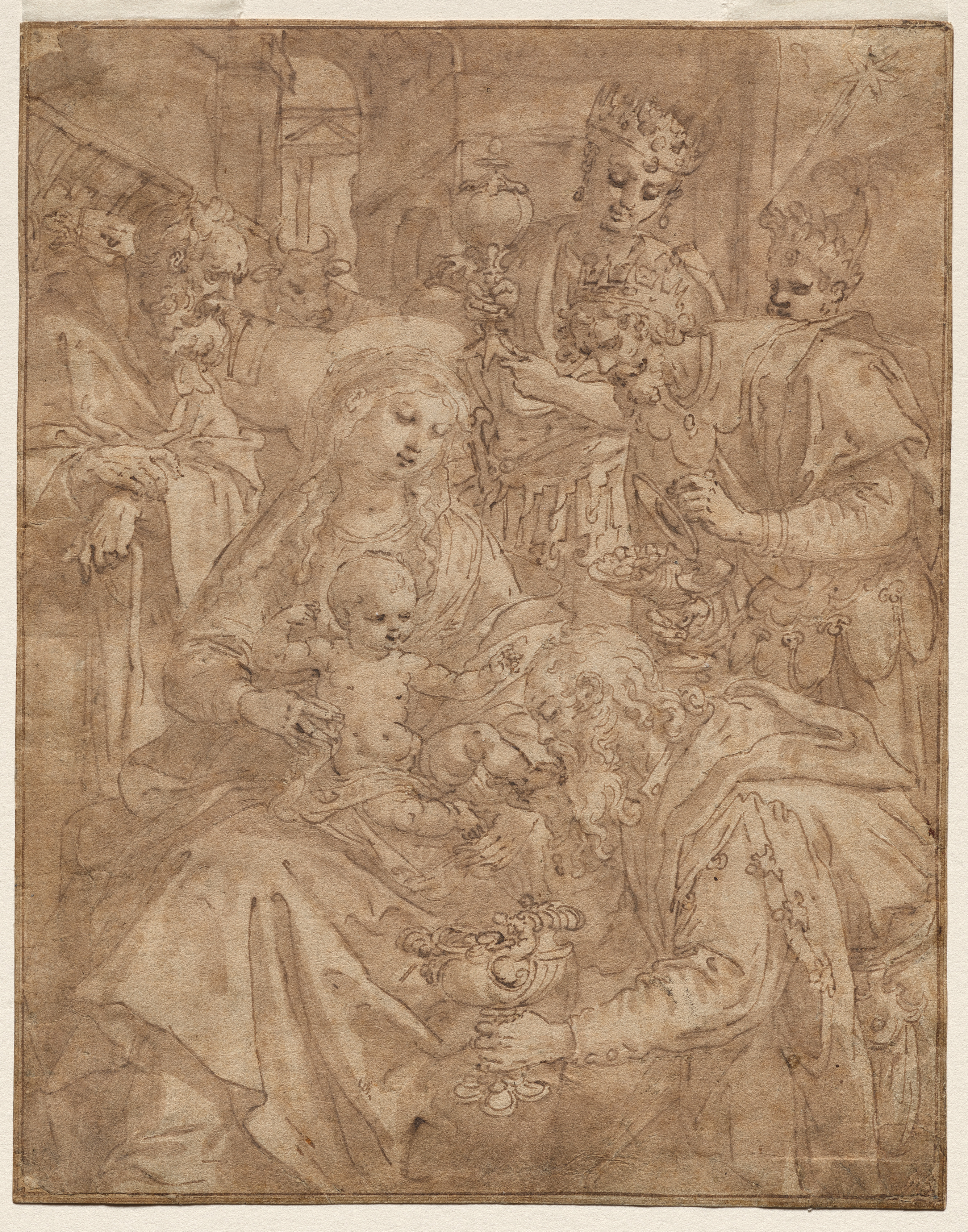

Similar picturesFound by visual likeness
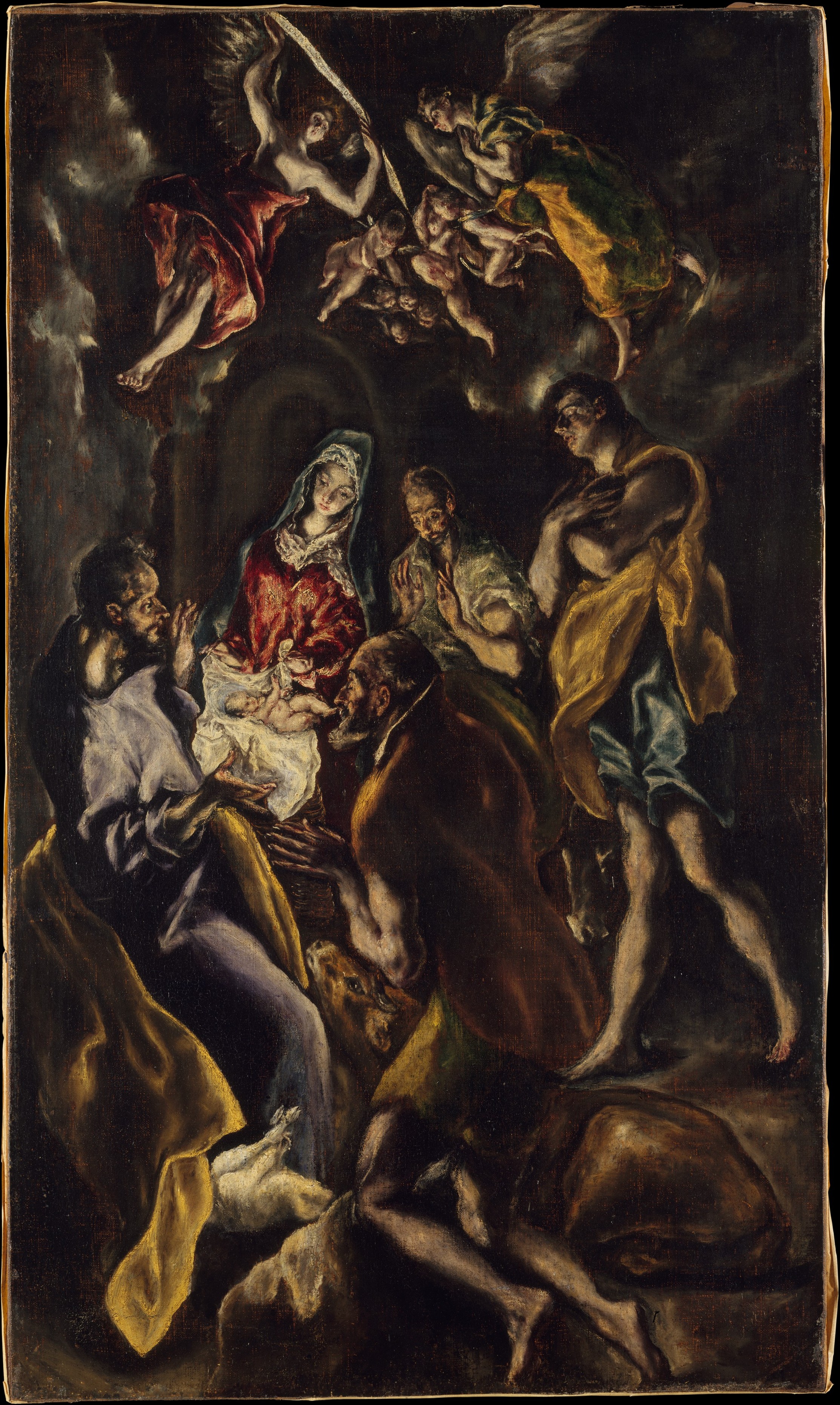
6 picturesVisual resemblances suggested by the model. A match does not establish a shared subject or historical connection.
In the stacks
Not yet checked2Passages in the library’s own holdings that name this maker. The model ranked them; nobody has checked that the name means this person.
By this mode of reasoning Rembrandt has a higher place than Raffaelle. But a very little reflection will serve to show us that these particularities cannot be nature: for how can that be the nature of man, in which no two individuals are the same? It plainly appears that as a work is conducted under the influence of general ideas or partial it is principally to be considered as the effect of a good or a bad taste. As beauty therefore does not consist in taking what lies immediately before
0.69PAINTING 95 Rembrandt The great Ecce Homo (etching of 1650) is an analogous case. As is known, the schema of the composition dates back to a Cinquecentist, Lucas van Leyden. A house wall and a terrace before it, seen frontally; people who have taken up their stand side by side in rows on and in front of the terrace—how are we to get a baroque picture out of all that? We learn with Rembrandt that it is not the subject but the treatment which matters. While Lucas van Leyden exhausts
0.68
Connections
Depicts
- The Binding of IsaacThe Hermitage canvas. Abraham does not lower the knife — the angel seizes his arm and the blade is caught in mid-fall, while his other hand covers the whole of his son’s face. Verse 11 arriving a half-second after verse 10.