Three Oriental Figures (Jacob and Laban?), Rembrandt van Rijn

Seen

Not described yet.


Of

No subject recorded yet.


Means

No reading yet.


Rights

Credit
Elizabeth Hammond Stickney Collection. CC0.
Licence
CC0-1.0
Evidence
api.artic.edu artworks api: is_public_domain=true on artwork 74 (read 2026-08-27)
Record
https://www.artic.edu/artworks/74
IIIF
manifest
Three Oriental Figures (Jacob and Laban?), Rembrandt van Rijn
Three Oriental Figures (Jacob and Laban?) — Rembrandt van Rijn1641

Also by Rembrandt van Rijn

16
Old Man with a Gold Chain, Rembrandt van Rijn
Old Man with a Gold ChainRembrandt van Rijn1631The Art Institute of Chicago
Bust of a Man in Oriental Dress, Rembrandt van Rijn
Bust of a Man in Oriental DressRembrandt van Rijn1635Rijksmuseum
Adam and Eve, Rembrandt van Rijn
Adam and EveRembrandt van Rijn1638The Art Institute of Chicago
Landscape with Stone Bridge, Rembrandt van Rijn
Landscape with Stone BridgeRembrandt van Rijnc. 1638Rijksmuseum
Still Life with Dead Peacocks, Rembrandt van Rijn
Still Life with Dead PeacocksRembrandt van Rijnc. 1639Rijksmuseum
Officers and other civic guardsmen of District II in Amsterdam, under the command of Captain Frans Banninck Cocq and Lieutenant Willem van Ruytenburch, known as ‘The Night Watch’, Rembrandt van Rijn
Officers and other civic guardsmen of District II in Amsterdam, under the command of Captain Frans Banninck Cocq and Lieutenant Willem van Ruytenburch, known as ‘The Night Watch’Rembrandt van Rijn1642Rijksmuseum
Abraham and Isaac, Rembrandt van Rijn
Abraham and IsaacRembrandt van Rijn1645The Art Institute of Chicago
Kostverloren Castle in Decay, Rembrandt van Rijn
Kostverloren Castle in DecayRembrandt van Rijnc. 1652The Art Institute of Chicago

Within fifty years of 1641

1048
The Visitation, Leonardo Parasole
The VisitationLeonardo Parasole1591Cooper Hewitt, Smithsonian Design Museum
Saturn, Hendrik Goltzius after Polidoro da Caravaggio
SaturnHendrik Goltzius after Polidoro da Caravaggio1592National Gallery of Art
Neptune, Hendrik Goltzius after Polidoro da Caravaggio
NeptuneHendrik Goltzius after Polidoro da Caravaggioprobably 1592National Gallery of Art
Pluto, Hendrik Goltzius after Polidoro da Caravaggio
PlutoHendrik Goltzius after Polidoro da Caravaggioprobably 1592National Gallery of Art
Vulcan, Hendrik Goltzius after Polidoro da Caravaggio
VulcanHendrik Goltzius after Polidoro da Caravaggioprobably 1592National Gallery of Art
Sol or Apollo, Hendrik Goltzius after Polidoro da Caravaggio
Sol or ApolloHendrik Goltzius after Polidoro da Caravaggioprobably 1592National Gallery of Art
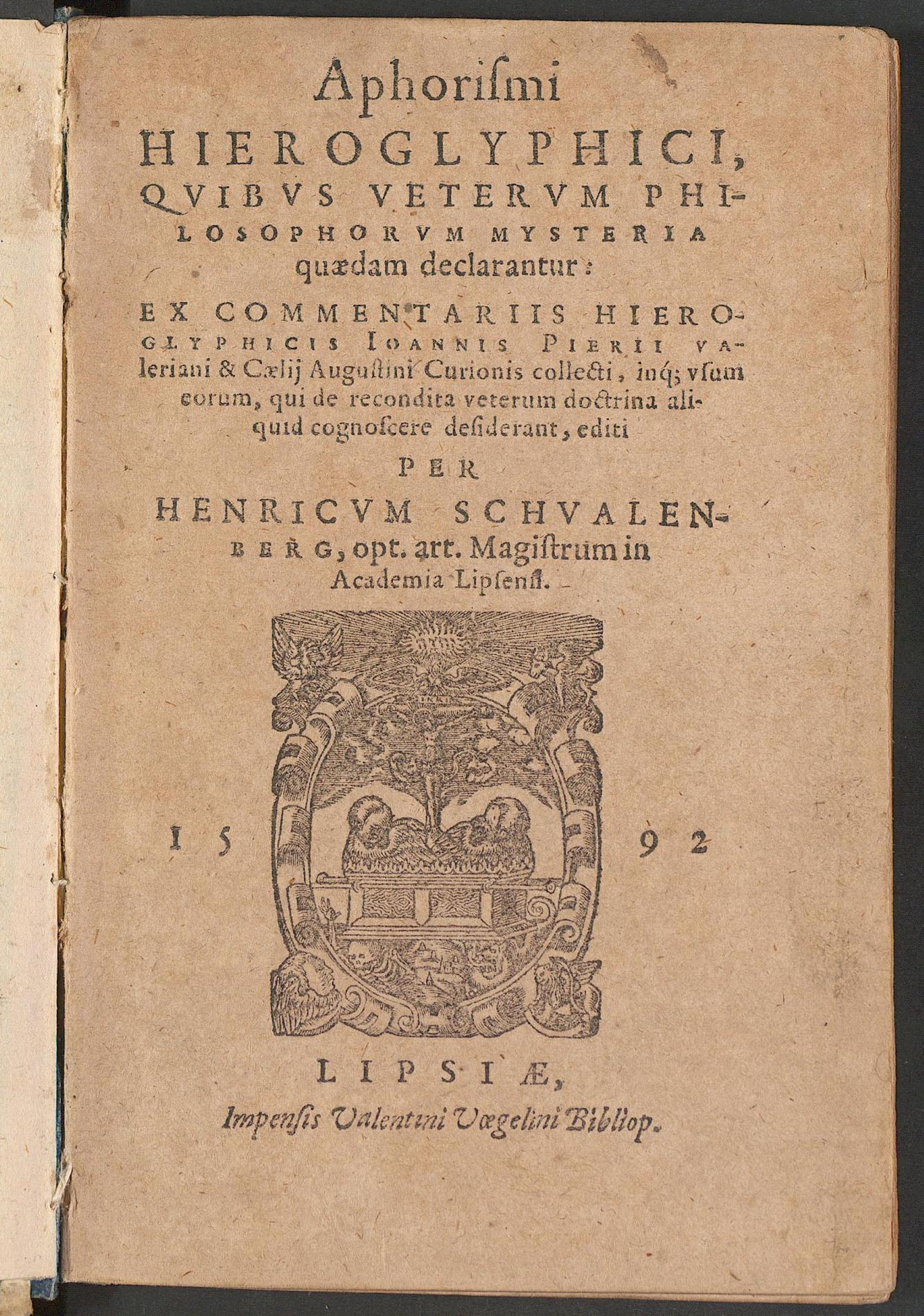
Aphorismi hieroglyphici : quibus veterum philosophorum mysteria quaedam declarantur: ex commentariis hieroglyphicis Ioannis Pierii Valeriani & Caelii Augustini Curionis collecti, inq. usum eorum, qui de recondita veterum doctrina aliquid cognoscere desiderant, Valeriano, Pierio
Aphorismi hieroglyphici : quibus veterum philosophorum mysteria quaedam declarantur: ex commentariis hieroglyphicis Ioannis Pierii Valeriani & Caelii Augustini Curionis collecti, inq. usum eorum, qui de recondita veterum doctrina aliquid cognoscere desiderantValeriano, Pierio1592Stiftung der Werke von C.G.Jung, Zürich
Page from Emblemata nobilitate et vulgo scitu digna (Noble Ornament), Johann Theodor de Bry, German, 1561 - 1623
Page from Emblemata nobilitate et vulgo scitu digna (Noble Ornament)Johann Theodor de Bry, German, 1561 - 16231593Cooper Hewitt, Smithsonian Design Museum

Also at The Art Institute of Chicago

770
Statuette of a Female Figure, Ancient Greek
Statuette of a Female FigureAncient GreekEarly Bronze Age, 2600–2400 BCEThe Art Institute of Chicago
Ring with a Scarab Bezel, Ancient Egyptian
Ring with a Scarab BezelAncient EgyptianSecond Intermediate Period, Dynasty 15 (about 1650–1550 BCE)The Art Institute of Chicago
Fragment of a Stela of Neferhotep, Ancient Egyptian
Fragment of a Stela of NeferhotepAncient EgyptianNew Kingdom, mid-Dynasty 19, about 1240-1195 BCEThe Art Institute of Chicago
Funerary Papyrus of Tayuhenutmut, Ancient Egyptian
Funerary Papyrus of TayuhenutmutAncient EgyptianThird Intermediate Period, probably Dynasty 21 (about 1069-945 BCE)The Art Institute of Chicago
Cauldron, China
CauldronChinaWestern Zhou dynasty (1046–771 BC ), early 9th century BCThe Art Institute of Chicago
Coffin and Mummy of Paankhaenamun, Ancient Egyptian
Coffin and Mummy of PaankhaenamunAncient EgyptianThird Intermediate Period, Dynasty 22, reign of Osorkon I (about 924–889 BCE)The Art Institute of Chicago
Relief Showing the Head of a Winged Genius, Neo-Assyrian
Relief Showing the Head of a Winged GeniusNeo-AssyrianNeo–Assyrian Period, reign of King Ashurnasirpal II (883–859 BCE)The Art Institute of Chicago
Altar, Ancient Greek
AltarAncient GreekGeometric Period (800–600 BCE)The Art Institute of Chicago

Similar picturesFound by visual likeness

8 pictures

Visual resemblances suggested by the model. A match does not establish a shared subject or historical connection.

The Last Supper, Francesco Saverio Mergolo, Italian, 1746–1786
The Last SupperFrancesco Saverio Mergolo, Italian, 1746–17861746–86Cooper Hewitt, Smithsonian Design Museum
0.88
Print, Jean-Baptiste Pillement, French, 1728–1808
PrintJean-Baptiste Pillement, French, 1728–1808Cooper Hewitt, Smithsonian Design Museum
0.86
Drawing, Felice Giani, Italian, 1758–1823
DrawingFelice Giani, Italian, 1758–18231780-1790Cooper Hewitt, Smithsonian Design Museum
0.86
Design for the Letter T of a Pictoral Alphabet: Turk, Victor Vincent Adam, French, 1801 – 1866
Design for the Letter T of a Pictoral Alphabet: TurkVictor Vincent Adam, French, 1801 – 1866ca. 1830Cooper Hewitt, Smithsonian Design Museum
0.86
Design for the Letter P of a Pictoral Alphabet: Pope, Victor Vincent Adam, French, 1801 – 1866
Design for the Letter P of a Pictoral Alphabet: PopeVictor Vincent Adam, French, 1801 – 1866ca. 1830Cooper Hewitt, Smithsonian Design Museum
0.86
Death Giving Audience, from Capricci, Giovanni Battista Tiepolo
Death Giving Audience, from CapricciGiovanni Battista Tiepolo1740/50, published 1785The Art Institute of Chicago
0.86
Title Page, François de Cuvilliés the younger, German, 1731 - 1777
Title PageFrançois de Cuvilliés the younger, German, 1731 - 17771770Cooper Hewitt, Smithsonian Design Museum
0.85
Print, Unknown
PrintUnknownCooper Hewitt, Smithsonian Design Museum
0.85

In the stacks

Not yet checked
2

Passages in the library’s own holdings that name this maker. The model ranked them; nobody has checked that the name means this person.

  1. Seven Discourses on Art · Joshua, Sir Reynolds

    By this mode of reasoning Rembrandt has a higher place than Raffaelle. But a very little reflection will serve to show us that these particularities cannot be nature: for how can that be the nature of man, in which no two individuals are the same? It plainly appears that as a work is conducted under the influence of general ideas or partial it is principally to be considered as the effect of a good or a bad taste. As beauty therefore does not consist in taking what lies immediately before
    0.69
  2. principles of art history · heinrich wolfflin

    PAINTING 95 Rembrandt The great Ecce Homo (etching of 1650) is an analogous case. As is known, the schema of the composition dates back to a Cinquecentist, Lucas van Leyden. A house wall and a terrace before it, seen frontally; people who have taken up their stand side by side in rows on and in front of the terrace—how are we to get a baroque picture out of all that? We learn with Rembrandt that it is not the subject but the treatment which matters. While Lucas van Leyden exhausts
    0.68

Next

Rembrandt van Rijn made Three Oriental Figures (Jacob and Laban?), and made these too.

Made in the seventeenth century, like Three Oriental Figures (Jacob and Laban?).

0:00–0:00