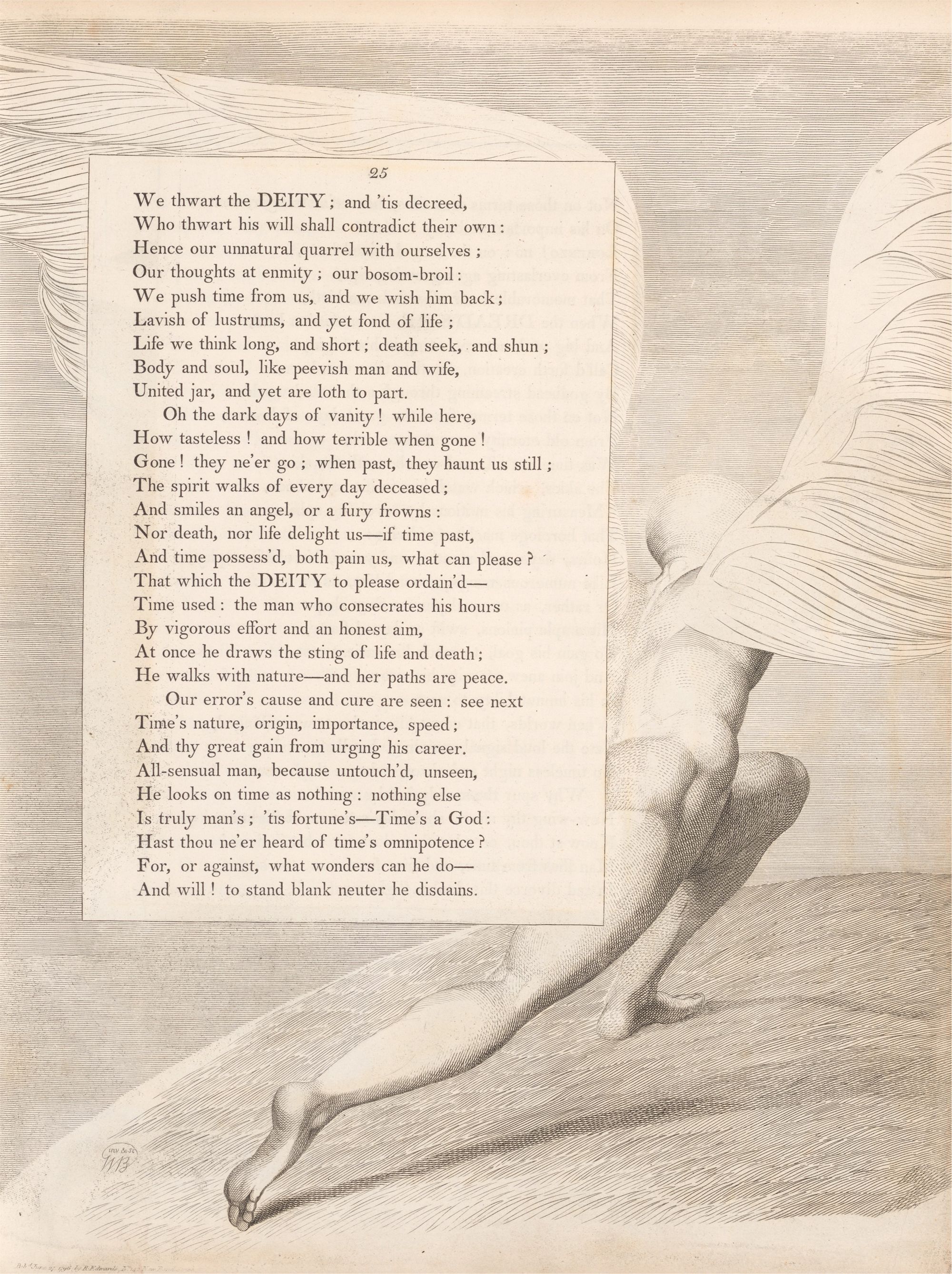
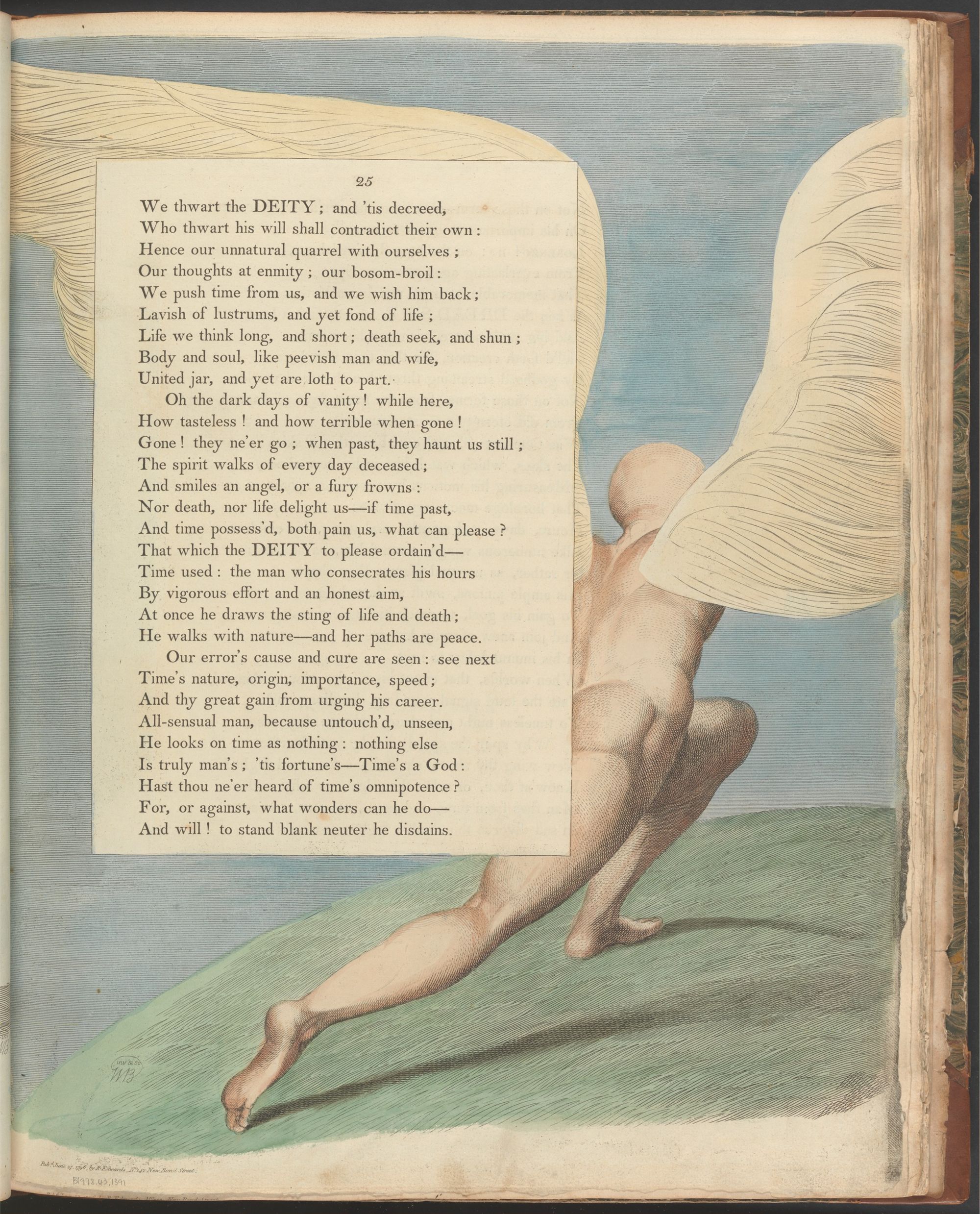
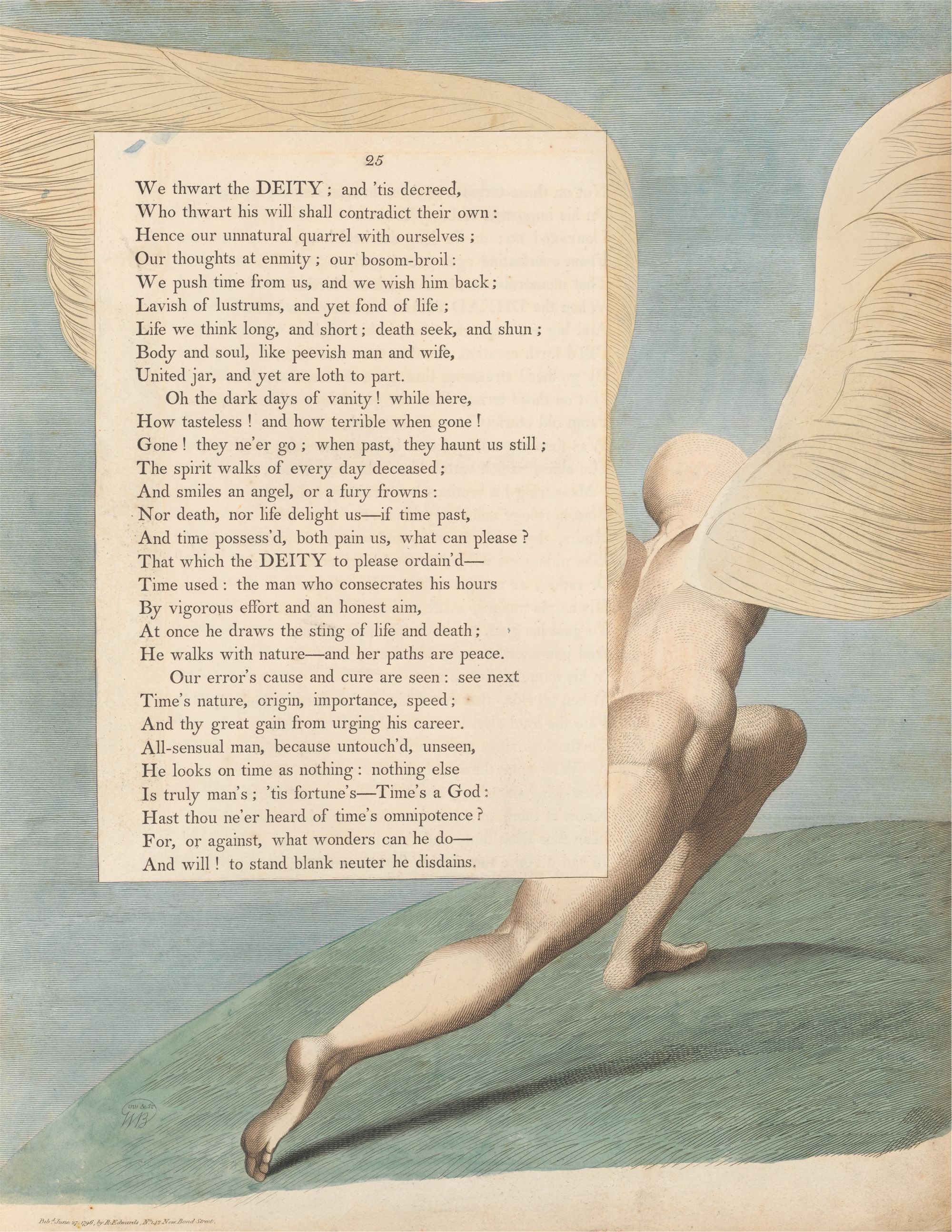
'Behold him, when past by; what then is seen' (Page 25), William Blake

Seen

Not described yet.


Of

No subject recorded yet.


Means

No reading yet.


Rights

Credit
Yale Center for British Art, Paul Mellon Collection
Licence
PDM-1.0
Evidence
manifests.collections.yale.edu: Copyright Statement=Public Domain on ycba object 94ff71bb-375d-4d48-8b6e-b046d9faa961 (https://manifests.collections.yale.edu/v2/ycba/obj/2275); Image Use Rights=No Copyright: You can copy, modify, distribute and perform the work, even for commercial purposes, all without asking permission. (CC0 1.0) (read 2026-09-16)
Record
https://collections.britishart.yale.edu/catalog/tms:2275
IIIF
manifest
'Behold him, when past by; what then is seen' (Page 25), William Blake
'Behold him, when past by; what then is seen' (Page 25) — William Blake1797

Also by William Blake

17
Songs of Experience: The School Boy, William Blake
Songs of Experience: The School BoyWilliam Blake[1789] printed ca. 1825Metropolitan Museum of Art, New York, NY
Songs of Experience: The Little Girl Found (second plate), William Blake
Songs of Experience: The Little Girl Found (second plate)William Blake[1789] printed ca. 1825Metropolitan Museum of Art, New York, NY
Songs of Experience: The Little Girl Lost, William Blake
Songs of Experience: The Little Girl LostWilliam Blake[1789] printed ca. 1825Metropolitan Museum of Art, New York, NY
Songs of Experience: The Little Girl Lost (second plate); The Little Girl Found, William Blake
Songs of Experience: The Little Girl Lost (second plate); The Little Girl FoundWilliam Blake[1789] printed ca. 1825Metropolitan Museum of Art, New York, NY
God Judging Adam, William Blake
God Judging AdamWilliam Blakeca. 1795Metropolitan Museum of Art, New York, NY
'Behold him, when past by; what then is seen' (Page 25), William Blake
'Behold him, when past by; what then is seen' (Page 25)William Blakeca. 1797Yale Center for British Art
Songs of Experience: A Little Girl Lost, William Blake
Songs of Experience: A Little Girl LostWilliam Blake[1794] printed ca. 1825Metropolitan Museum of Art, New York, NY
Songs of Experience: To Tirzah, William Blake
Songs of Experience: To TirzahWilliam Blake[1794] printed ca. 1825Metropolitan Museum of Art, New York, NY

Within fifty years of 1797

3191
Snuffbox with Vegetal Pattern, Unknown
Snuffbox with Vegetal PatternUnknownca. 1750Metropolitan Museum of Art, New York, NY
The Head of a Young Man Looking Upwards to the Right, Giovanni Battista Tiepolo (Italian, 1696–1770)
The Head of a Young Man Looking Upwards to the RightGiovanni Battista Tiepolo (Italian, 1696–1770)before 1752Cleveland Museum of Art
The Washerwoman, Capodimonte Porcelain Manufactory
The WasherwomanCapodimonte Porcelain Manufactoryca. 1752–58Metropolitan Museum of Art, New York, NY
The Tomb of Nero, Giovanni Battista Piranesi (Italian, 1720–1778); Giovanni Bouchard (Italian, 1700-1850)
The Tomb of NeroGiovanni Battista Piranesi (Italian, 1720–1778); Giovanni Bouchard (Italian, 1700-1850)1747–48Cleveland Museum of Art
Embroidered picture, Unknown
Embroidered pictureUnknown1748Cooper Hewitt, Smithsonian Design Museum
Title Page, Alexis Peyrotte, French, 1699–1769
Title PageAlexis Peyrotte, French, 1699–17691748Cooper Hewitt, Smithsonian Design Museum
Ornament Design with Vegetables over Shell from Livre des Legumes [Series of Vegetable Ornament], pl. 15 in Oeuvre de Juste-Aurèle Meissonnier, Juste-Aurèle Meissonnier, French, b. Italy, 1695–1750
Ornament Design with Vegetables over Shell from Livre des Legumes [Series of Vegetable Ornament], pl. 15 in Oeuvre de Juste-Aurèle MeissonnierJuste-Aurèle Meissonnier, French, b. Italy, 1695–17501748Cooper Hewitt, Smithsonian Design Museum
Ornament Design with Wheat and Acanthus Leaves over Shell, from Livre des Legumes [Series of Vegetable Ornament], pl. 17 in Oeuvre de Juste-Aurèle Meissonnier, Juste-Aurèle Meissonnier, French, b. Italy, 1695–1750
Ornament Design with Wheat and Acanthus Leaves over Shell, from Livre des Legumes [Series of Vegetable Ornament], pl. 17 in Oeuvre de Juste-Aurèle MeissonnierJuste-Aurèle Meissonnier, French, b. Italy, 1695–17501748Cooper Hewitt, Smithsonian Design Museum

Also at Yale Center for British Art

13
The Angel appearing to the shepherds, the visitation, and the annunciation: a sheet of notes for a proposed decorative scheme with 3 sketches of paintings for overdoors, Sir James Thornhill
The Angel appearing to the shepherds, the visitation, and the annunciation: a sheet of notes for a proposed decorative scheme with 3 sketches of paintings for overdoorsSir James ThornhillundatedYale Center for British Art
Sketch for 'The Last Supper,' St. Mary's, Weymouth, Sir James Thornhill
Sketch for 'The Last Supper,' St. Mary's, WeymouthSir James Thornhillbetween 1719 and 1720Yale Center for British Art
The Beggar's Opera, William Hogarth
The Beggar's OperaWilliam Hogarth1729Yale Center for British Art
Self-Portrait, William Hogarth
Self-PortraitWilliam Hogarthca. 1735Yale Center for British Art
Mary Hogarth, William Hogarth
Mary HogarthWilliam Hogarthca. 1740Yale Center for British Art
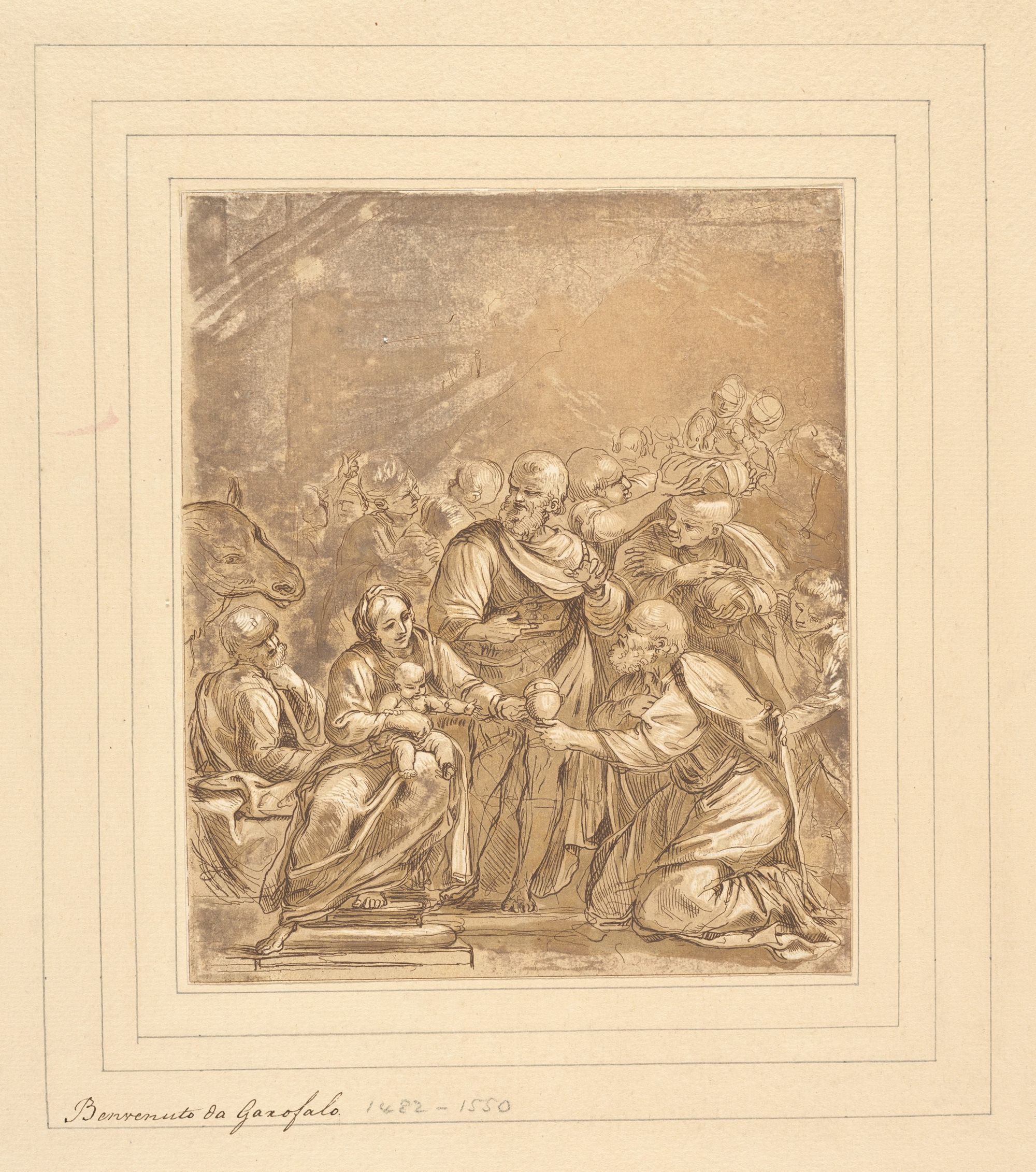
The Adoration of the Magi, Arthur Pond
The Adoration of the MagiArthur Pond1735Yale Center for British Art
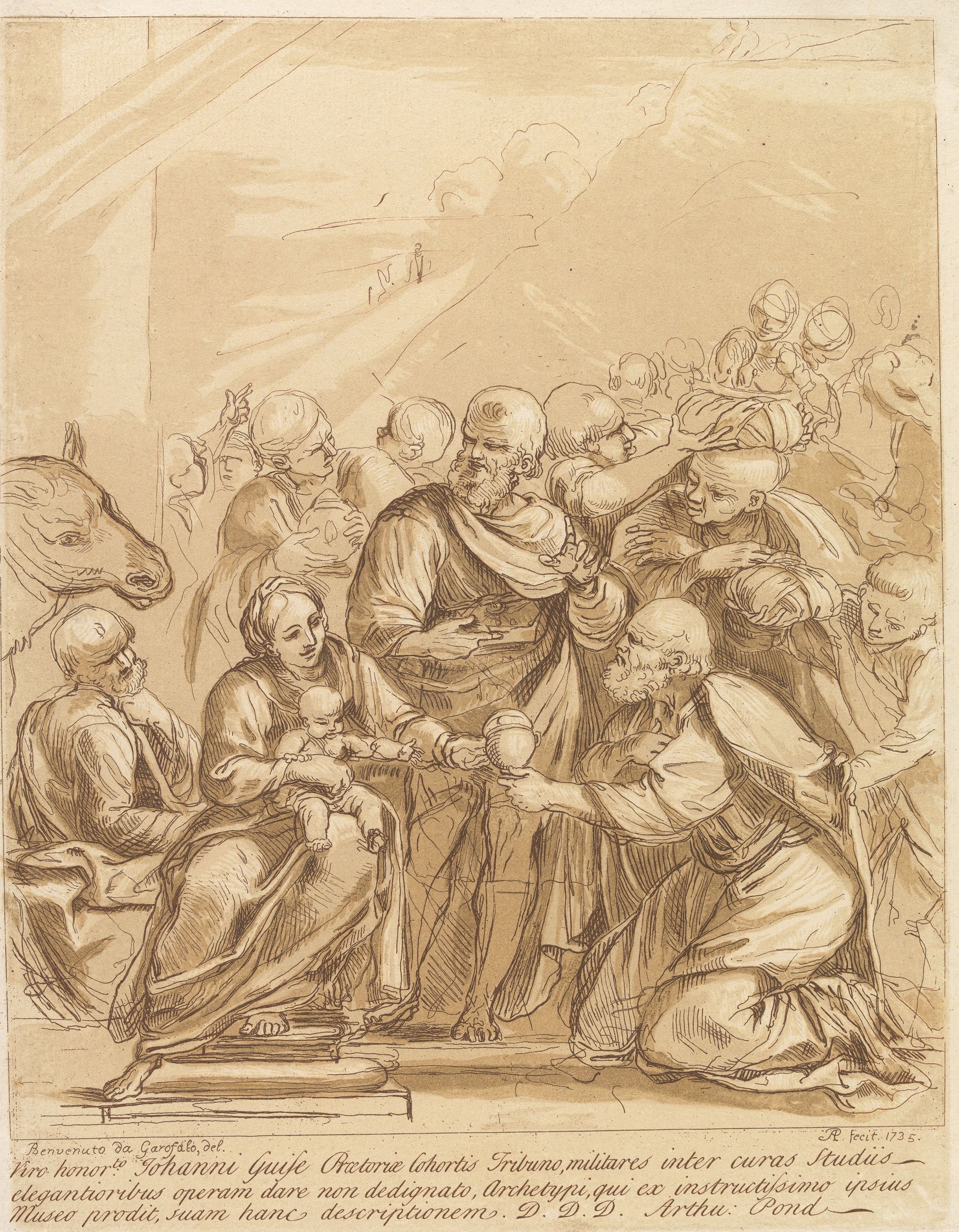
The Adoration of the Magi, Arthur Pond
The Adoration of the MagiArthur Pond1735Yale Center for British Art
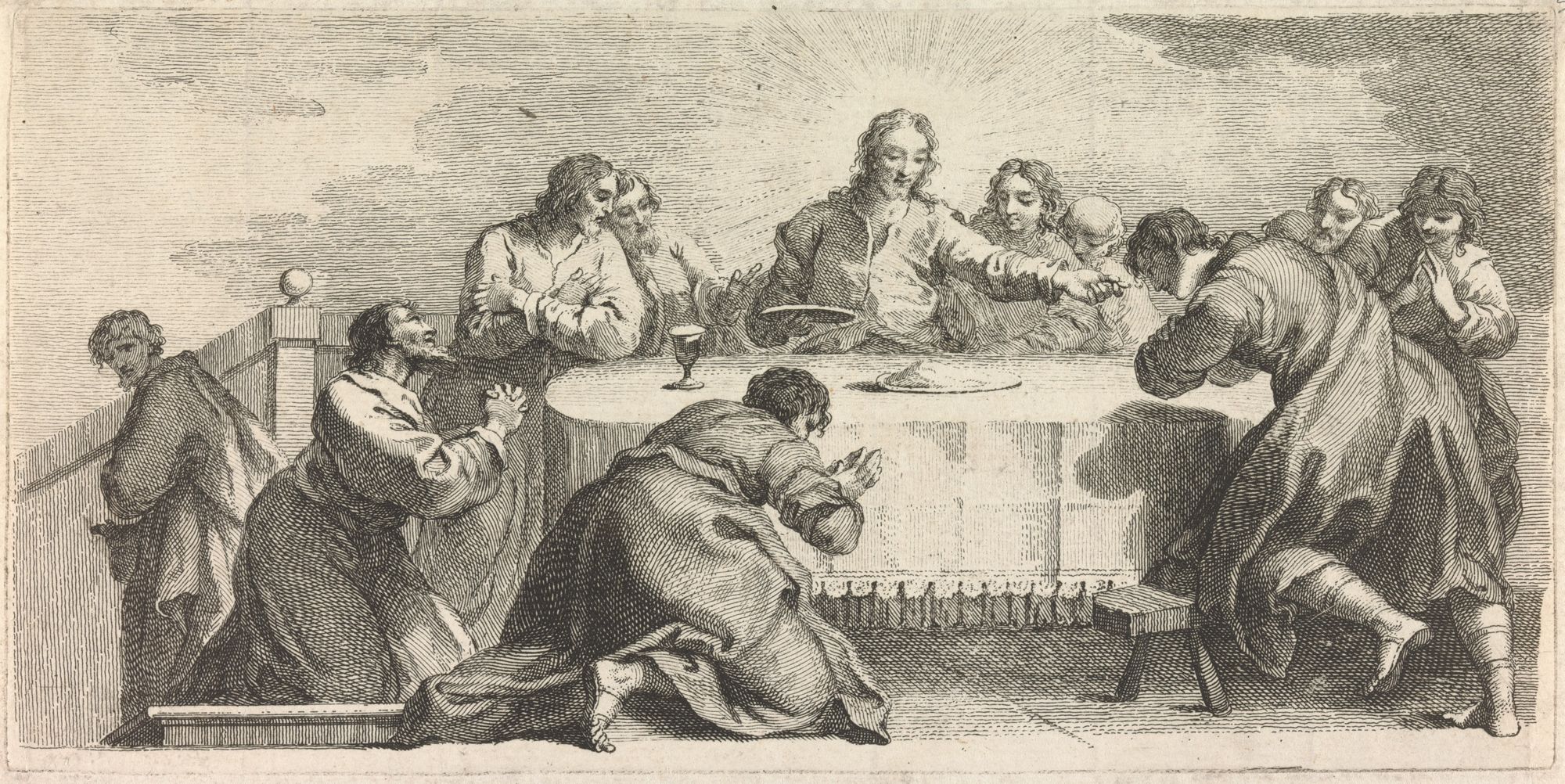
The Last Supper, Francesco Bartolozzi
The Last SupperFrancesco BartolozziundatedYale Center for British Art

Similar picturesFound by visual likeness

2 pictures

Visual resemblances suggested by the model. A match does not establish a shared subject or historical connection.

'Behold him, when past by; what then is seen' (Page 25), William Blake
'Behold him, when past by; what then is seen' (Page 25)William Blake1797Yale Center for British Art
0.95
'Behold him, when past by; what then is seen' (Page 25), William Blake
'Behold him, when past by; what then is seen' (Page 25)William Blakeca. 1797Yale Center for British Art
0.90

In the stacks

Not yet checked
2

Passages in the library’s own holdings that name this maker. The model ranked them; nobody has checked that the name means this person.

  1. The Bases of Design · Walter Crane

    At the end of last century a sort of revival took place under Thomas Bewick and his school, which led, not to a revival of the firm and open linear drawing of the designers of the early printers, but rather to a search after extra fineness and qualities of tone and colour, hitherto associated with steel or copper-plate. This tendency or aim of the engravers, however, only served to put the woodcut out of relation with the type, and the type itself grew uglier, and was hardly considered as part
    0.70
  2. Of the Decorative Illustration of Books Old and New · Walter Crane

    When he came to embody his own thoughts and dreams, he recurred quite spontaneously to the methods of the maker of the MS. books. He became his own calligrapher, illuminator and miniaturist, while availing himself of the copper-plate (which he turned into a surface printing block) and the printing press for the reproduction of his designs, and in some cases for producing them in tints. His hand-coloured drawings, the borderings and devices to his own poems, will always be things by themselves. His treatment of the resources of black and
    0.68

Next

Made in the eighteenth century, like 'Behold him, when past by; what then is seen' (Page 25).

0:00–0:00