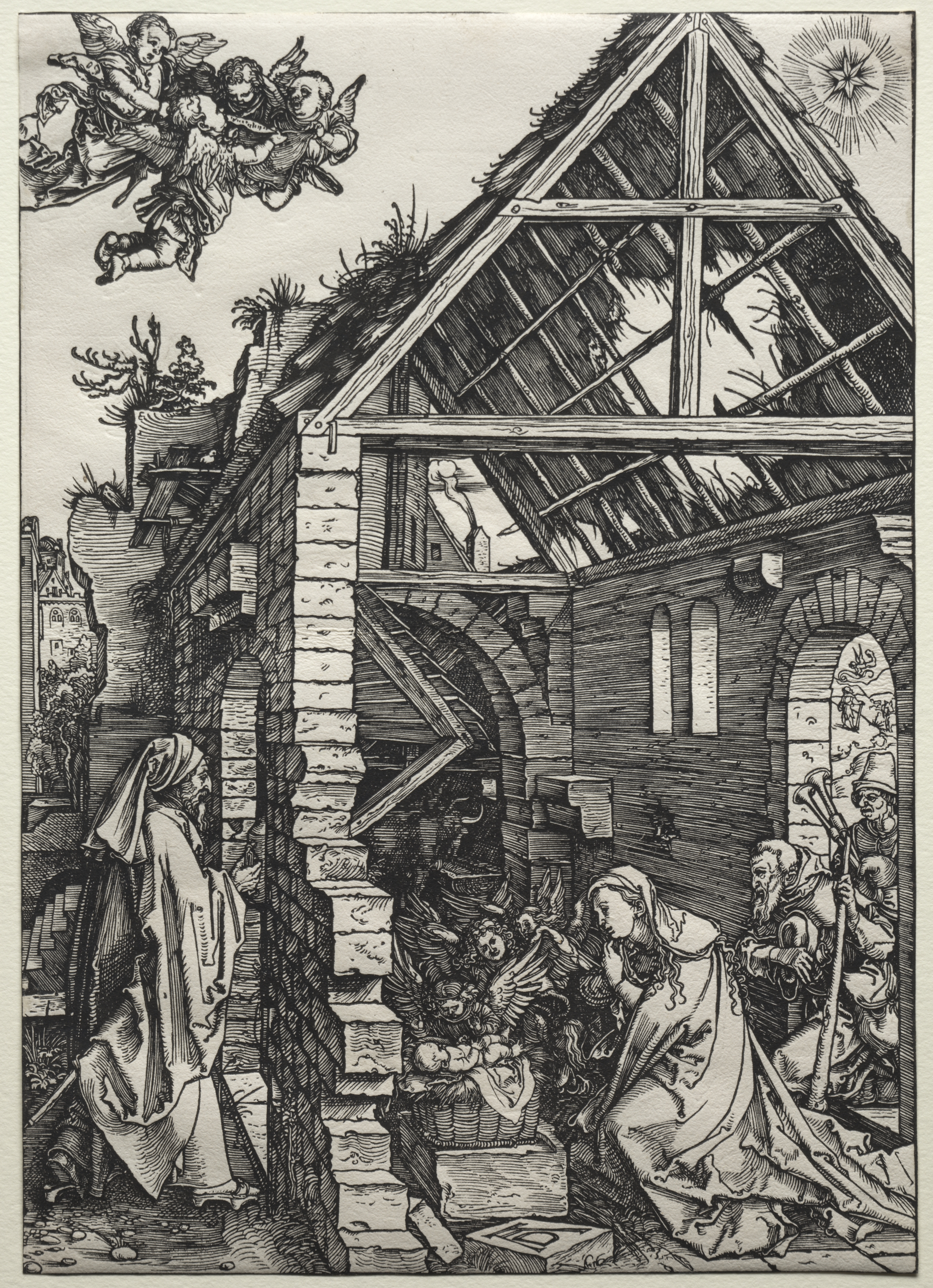
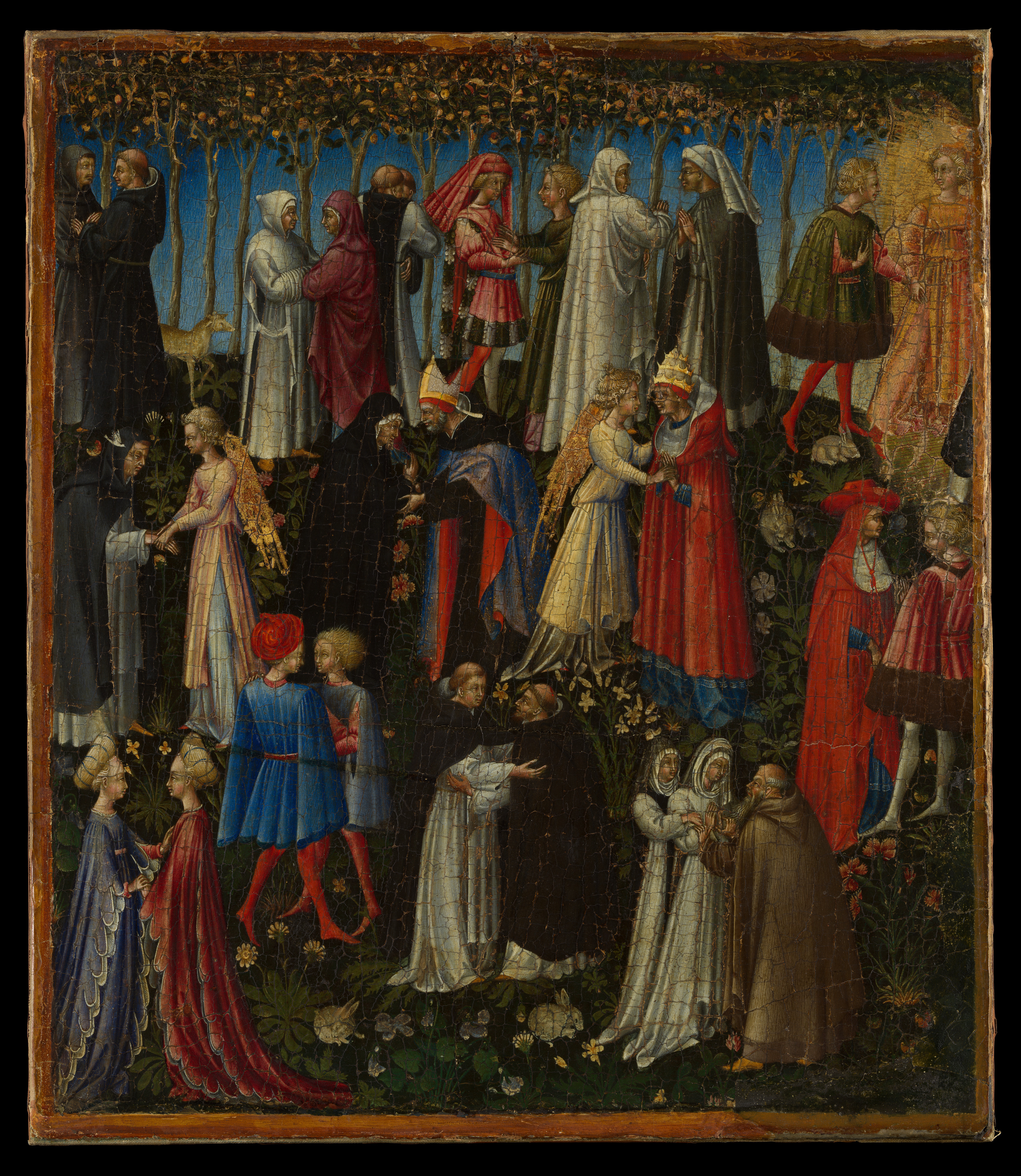
Hercules at the Crossroad, Albrecht Dürer (German, 1471–1528)

Seen

Not described yet.


Of

These are claims by the holder and by Wikidata, read 2026-09-04, and join nothing until an editor confirms them.

Wikidata depicts
Hercules at the crossroads

Means

No reading yet.


Rights

Credit
Purchase from the J. H. Wade Fund
Licence
CC0-1.0
Evidence
openaccess-api.clevelandart.org: share_license_status=CC0 on artwork 136609 (read 2026-08-27)
Record
https://clevelandart.org/art/1961.170
Hercules at the Crossroad, Albrecht Dürer (German, 1471–1528)
Hercules at the Crossroad — Albrecht Dürer (German, 1471–1528)c. 1498

Also by Albrecht Dürer (German, 1471–1528)

15
The Promenade, Albrecht Dürer (German, 1471–1528)
The PromenadeAlbrecht Dürer (German, 1471–1528)c. 1497Cleveland Museum of Art
The Large Passion:  The Crucifixion, Albrecht Dürer (German, 1471–1528)
The Large Passion: The CrucifixionAlbrecht Dürer (German, 1471–1528)c. 1497–1500Cleveland Museum of Art
The Virgin and Child with a Monkey, Albrecht Dürer (German, 1471–1528)
The Virgin and Child with a MonkeyAlbrecht Dürer (German, 1471–1528)c. 1498Cleveland Museum of Art
The Four Horsemen, from The Apocalypse, Albrecht Dürer (German, 1471–1528)
The Four Horsemen, from The ApocalypseAlbrecht Dürer (German, 1471–1528)c. 1498Cleveland Museum of Art
Saint Eustace, Albrecht Dürer (German, 1471–1528)
Saint EustaceAlbrecht Dürer (German, 1471–1528)c. 1501Cleveland Museum of Art
The Nativity, Albrecht Dürer (German, 1471–1528)
The NativityAlbrecht Dürer (German, 1471–1528)c. 1502–3Cleveland Museum of Art
The Flight into Egypt, Albrecht Dürer (German, 1471–1528)
The Flight into EgyptAlbrecht Dürer (German, 1471–1528)c. 1503–5Cleveland Museum of Art
Adam and Eve, Albrecht Dürer (German, 1471–1528)
Adam and EveAlbrecht Dürer (German, 1471–1528)1504Cleveland Museum of Art

Within fifty years of c. 1498

299
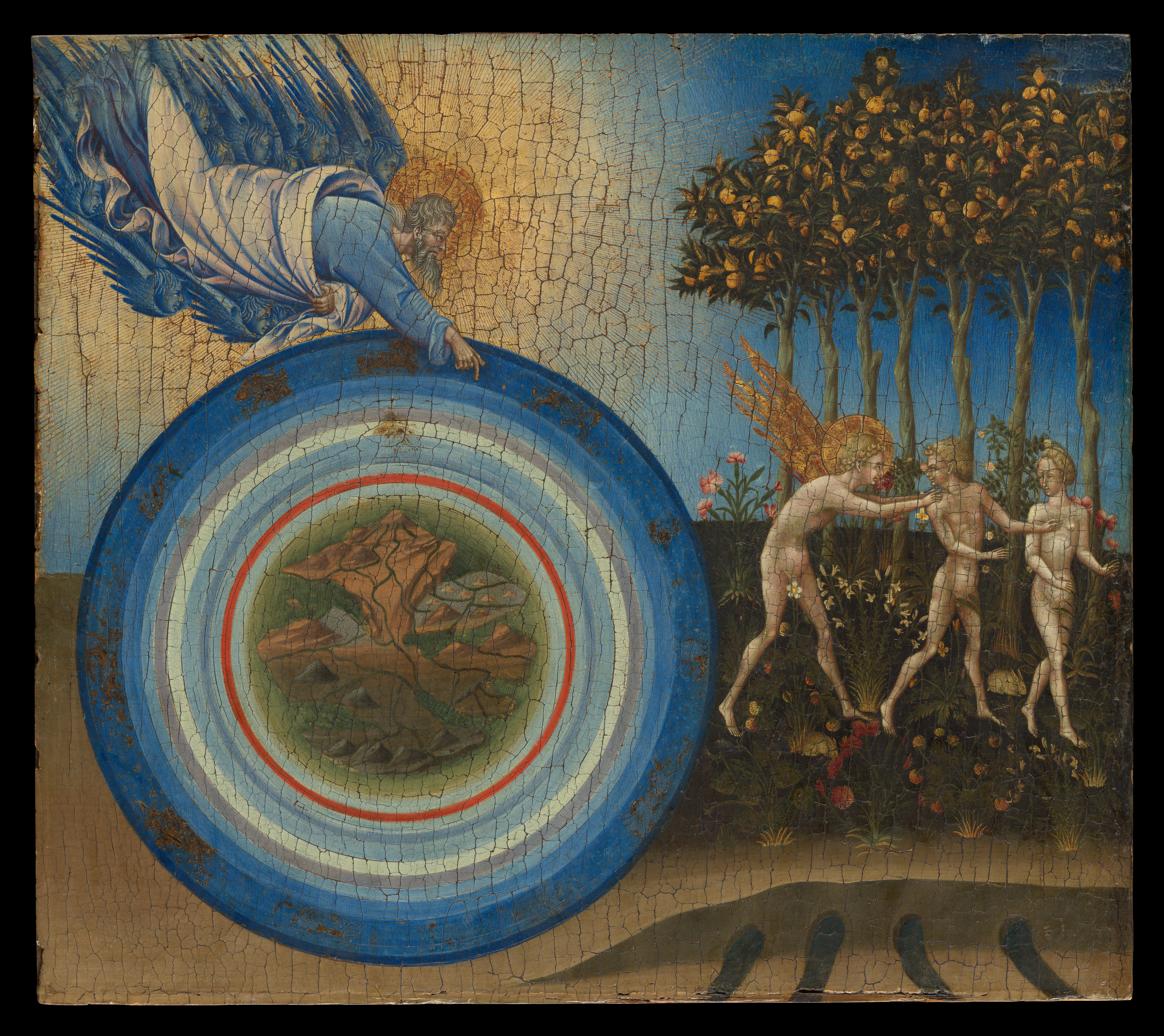
The Triumph of Fame; (reverse) Impresa of the Medici Family and Arms of the Medici and Tornabuoni Families, Giovanni di ser Giovanni Guidi (called Scheggia)
The Triumph of Fame; (reverse) Impresa of the Medici Family and Arms of the Medici and Tornabuoni FamiliesGiovanni di ser Giovanni Guidi (called Scheggia)ca. 1449Metropolitan Museum of Art, New York, NY
The Creation of the World and the Expulsion from Paradise, Giovanni di Paolo (Giovanni di Paolo di Grazia)
The Creation of the World and the Expulsion from ParadiseGiovanni di Paolo (Giovanni di Paolo di Grazia)1445Metropolitan Museum of Art, New York, NY
Paradise, Giovanni di Paolo (Giovanni di Paolo di Grazia)
ParadiseGiovanni di Paolo (Giovanni di Paolo di Grazia)1445Metropolitan Museum of Art, New York, NY
The Right Hand of God Protecting the Faithful against the Demons, Jean Fouquet
The Right Hand of God Protecting the Faithful against the DemonsJean Fouquetca. 1452–60Metropolitan Museum of Art, New York, NY
Madonna and Child with Angels, Antonio Rossellino
Madonna and Child with AngelsAntonio Rossellinoca. 1455–60Metropolitan Museum of Art, New York, NY
Minature Handled Bowl with Textile-like Design, Inca
Minature Handled Bowl with Textile-like DesignInca1450–1532The Art Institute of Chicago
Ritual Impersonator of the Deity Xipe Totec, Mexica (Aztec)
Ritual Impersonator of the Deity Xipe TotecMexica (Aztec)1450–1500The Art Institute of Chicago
Manuscript Leaf with the Trinity in an Initial G, from an Antiphonary, Master of the Riccardiana Lactantius
Manuscript Leaf with the Trinity in an Initial G, from an AntiphonaryMaster of the Riccardiana Lactantiussecond half 15th centuryMetropolitan Museum of Art, New York, NY

Also at Cleveland Museum of Art

553
Relief of Nyankhnesut Seated, Unknown
Relief of Nyankhnesut SeatedUnknownc. 2311–2281 BCECleveland Museum of Art
Stele of Shemai, Unknown
Stele of ShemaiUnknownc. 1960–1916 BCECleveland Museum of Art
Relief of Hatshepsut or Tuthmosis III, Unknown
Relief of Hatshepsut or Tuthmosis IIIUnknown1479–1425 BCECleveland Museum of Art
Talatat: Portrait of Nefertiti, Unknown
Talatat: Portrait of NefertitiUnknownc. 1353–1347 BCECleveland Museum of Art
Talatat: Portrait of Nefertiti, Unknown
Talatat: Portrait of NefertitiUnknownc. 1353–1347 BCECleveland Museum of Art
Talatat: Nefertiti Offers to the Aten, Unknown
Talatat: Nefertiti Offers to the AtenUnknown1353–1347 BCECleveland Museum of Art
Tomb Relief of the Chief Physician Amenhotep and Family, Unknown
Tomb Relief of the Chief Physician Amenhotep and FamilyUnknownc. 1279–1257 BCECleveland Museum of Art
Stele of the High Priest of Ptah, Shedsunefertem, Unknown
Stele of the High Priest of Ptah, ShedsunefertemUnknown945–924 BCECleveland Museum of Art

Similar picturesFound by visual likeness

8 pictures

Visual resemblances suggested by the model. A match does not establish a shared subject or historical connection.

Adam and Eve, Albrecht Dürer (German, 1471–1528)
Adam and EveAlbrecht Dürer (German, 1471–1528)1504Cleveland Museum of Art
0.92
Allegory of Carnal Love, Cristofano Robetta (Italian, 1462–1534)
Allegory of Carnal LoveCristofano Robetta (Italian, 1462–1534)c. 1530Cleveland Museum of Art
0.91
Adam and Eve, Albrecht Dürer
Adam and EveAlbrecht Dürer1504The Art Institute of Chicago
0.91
Adam and Eve, Albrecht Dürer
Adam and EveAlbrecht Dürer1504Metropolitan Museum of Art, New York, NY
0.91
Design for Illuminated Initial "F", Gilles-Marie Oppenord, French, 1672–1742
Design for Illuminated Initial "F"Gilles-Marie Oppenord, French, 1672–1742ca. 1695Cooper Hewitt, Smithsonian Design Museum
0.91
The Lamentation, from The Large Passion, Albrecht Dürer
The Lamentation, from The Large PassionAlbrecht Dürerc. 1498–99The Art Institute of Chicago
0.91
Adam and Eve, Albrecht Dürer
Adam and EveAlbrecht Dürer1504Metropolitan Museum of Art, New York, NY
0.91
Adam and Eve, Rembrandt van Rijn
Adam and EveRembrandt van Rijn1638The Art Institute of Chicago
0.90

In the stacks

Not yet checked
4

Passages in the library’s own holdings that name this maker. The model ranked them; nobody has checked that the name means this person.

  1. Vision and Design · Roger Fry

    Drawing still retained something of the blunt, almost brutal frankness of statement, together with the sense of the characteristic which marked its earlier period. And it is perhaps this inheritance of Gothic directness of statement, this Gothic realism, that accounts for what is ultimately of most value in Dürer’s work. There exists in the Kunsthistorisches Akademie at Vienna a painting of a man, dated 1394, which shows how much of Dürer’s portraiture was already implicit in the Nuremberg school. In this remarkable work, executed, if we may trust the date,
    0.73
  2. Vision and Design · Roger Fry

    What, then, lies at the root of Dürer’s art is this Gothic sense of the characteristic, already menaced by the professional bravura of the late Gothic craftsman. The superstructure is what Dürer’s industry and intellectual acquisitiveness, acting in the peculiar conditions of his day, brought forth. It is in short what distinguishes him as the pioneer of the Renaissance in Germany. This new endeavour was in two directions, one due mainly to the trend of native ideas, the other to Italian influence. The former was concerned mainly with a new
    0.72
  3. The Bases of Design · Walter Crane

    Up to the end of the fifteenth century the Gothic and ornamental feeling is still dominant in the treatment of the design of woodcuts in books, and most instructive and suggestive they are in simplicity of method and line, and directness of expression. Characteristic German work of Gothic feeling and considerable graphic force is seen in the woodcuts of the Nuremberg Chronicle (1493) designed by Michael Wolgemuth, the master of Albert Dürer. In these vigorous cuts we may plainly see the tradition of that Gothic feeling and style of graphic
    0.72
  4. principles of art history · heinrich wolfflin

    Dürer patterns do not coincide with objective facts, but for all that, they are lines, clear, ornamental patterns which are intended to be seen for themselves, which do not merely assert themselves in the impression of the whole but can hold their own even at the closest range. Therein lies the difference from the painterly foliage painting of the seventeenth century. If we wish to speak of premonitions of the painterly style, we shall find them rather in the fifteenth century than in the sixteenth. We find there, indeed, in
    0.71

Next

Albrecht Dürer (German, 1471–1528) made Hercules at the Crossroad, and made these too.

Made in the fifteenth century, like Hercules at the Crossroad.

0:00–0:00