Of
No subject recorded yet.
 The Parrot Addresses Khujasta at the Beginning of the Seventh Night, from a Tuti-nama (Tales of a Parrot) — Unknownc. 1560
Also by Unknown
5442 Relief Fragment with a Ship Under SailUnknownca. 2465–2458 BCEMetropolitan Museum of Art, New York, NY
 Tomb Chapel of Raemkai: South WallUnknownca. 2446–2389 BCEMetropolitan Museum of Art, New York, NY
 West wall of the chapel of the mastaba Kaemsenu with niches for Iretnub, Kaemsenu and WerdjedptahUnknownca. 2420–2250 BCEMetropolitan Museum of Art, New York, NY
 Relief of Nyankhnesut SeatedUnknownc. 2311–2281 BCECleveland Museum of Art
 Design amulet, Cow and Calf on the Back, Device showing Antithetical Falcons Flanking an Ankh Sign over a Crouching LionUnknownca. 2150–2100 B.C.Metropolitan Museum of Art, New York, NY
 Design Amulet, Pyramidal Back with Horizontal Piercing, Device showing Two Falcons Flanking what is meant to be an Ankh SignUnknownca. 2150–2010 B.C.Metropolitan Museum of Art, New York, NY
 Design Amulet, Cow Nursing Calf and also a Kneeling Suckling Man Visible on Opposite Side on the Back, Device showing Antithetical Falcons with an Ankh Sign over a LionUnknownca. 2150–2100 B.C.Metropolitan Museum of Art, New York, NY
 Design Amulet, Back in the Form of a Woman Suckling a Child, Device showing Two Lizards Head-to-tailUnknownca. 2100–2080 B.C.Metropolitan Museum of Art, New York, NY
Within fifty years of c. 1560
359 Christ Carrying the CrossHans Malerc. 1510The Art Institute of Chicago
 "Isfandiyar's Third Course: He Slays a Dragon", Folio 434v from the Shahnama (Book of Kings) of Shah TahmaspAbu'l Qasim Firdausica. 1530Metropolitan Museum of Art, New York, NY
 Return of the Prodigal SonLucas van Leyden (Netherlandish, 1494–about 1533)c. 1510Cleveland Museum of Art
 "Akbar With Lion and Calf", Folio from the Shah Jahan AlbumGovardhanverso: ca. 1630; recto: ca. 1530–50Metropolitan Museum of Art, New York, NY
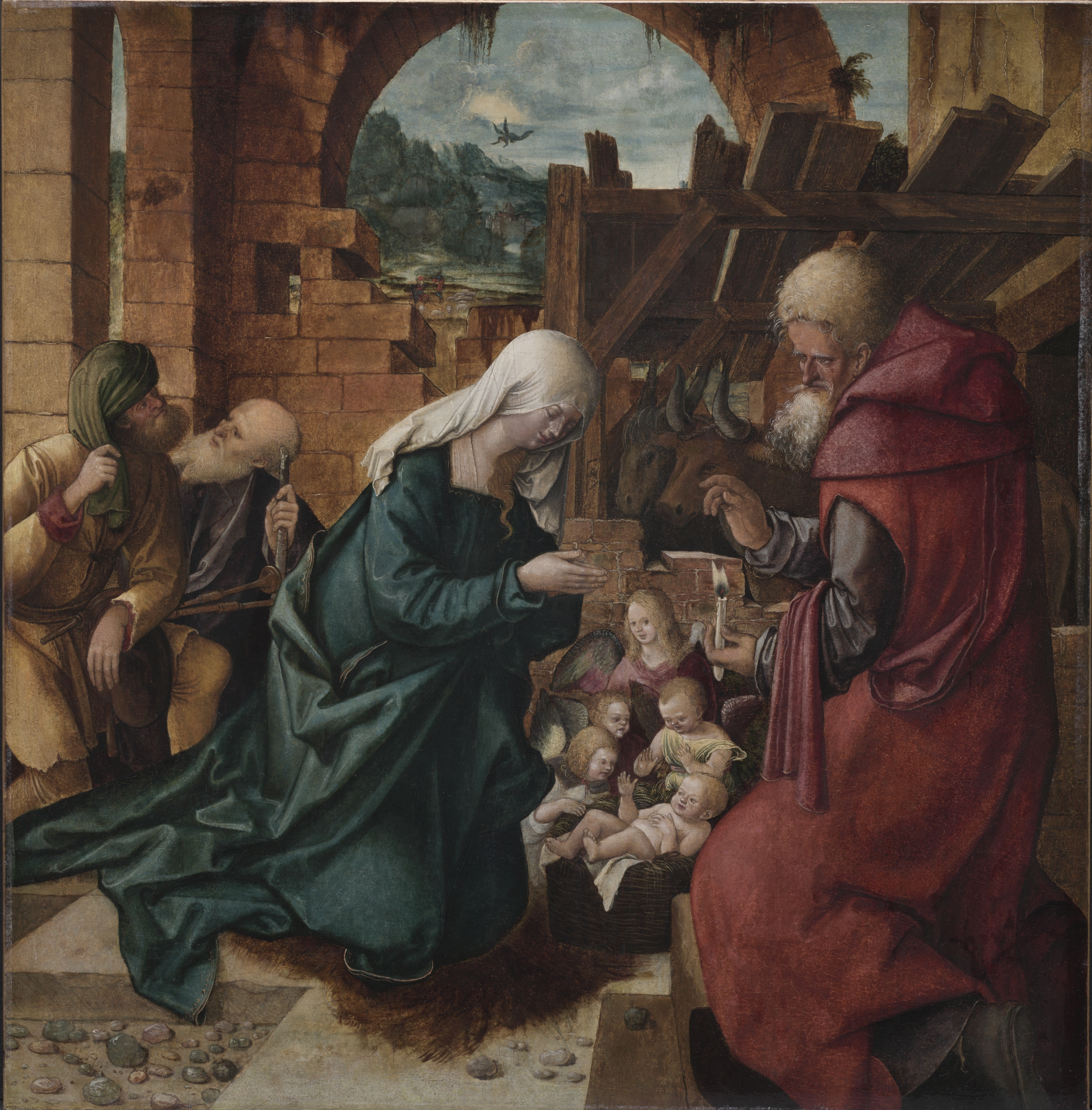 Adoration of the ShepherdsHans Leonhard Schäufelein (German)c. 1510Cleveland Museum of Art
 Saint ChristopherLucas Cranach the Elder1506, published 1509The Art Institute of Chicago
 The Massacre of the Innocents (Without the Fir Tree)Marcantonio Raimondi (Italian, 1470/82–1527/34); Raphael (Italian, 1483–1520)about 1511–12Cleveland Museum of Art
 The Fifth KnotAlbrecht Dürerc. 1507The Art Institute of Chicago
Also at Cleveland Museum of Art
465 Black-Figure Nikosthenic Amphora (Storage Vessel): Dancing Youths; Sphinxes and Lions; Satyrs and MaenadsNikosthenes (Greek, Attic, active c. 545–510 BCE); Painter N, Thiasos Group (Greek, c. 530–510 BC)c. 530–510 BCECleveland Museum of Art
 Black-Figure Dinos (Mixing Vessel): Warships (Int.); Heroic Scenes (Top)Antimenes Painter (Greek, Attic, active c. 530–510 BCE)c. 520–515 BCECleveland Museum of Art
 White-Ground Lekythos (Oil Vessel): Atalanta and ErotesDouris (Greek, Attic, active c. 500–470 BCE)c. 500–490 BCECleveland Museum of Art
 Black-Figure White-Ground Lekythos (Oil Vessel): Athena between Cocks and Hieropoioi (Officials)Athena Painter (Greek, c. 500–475 BCE)500–485 BCECleveland Museum of Art
 Red-Figure Lekythos (Oil Vessel): Athena Slaying Giant (body); Satyr between Maenads (shoulder)Berlin Painter (Greek, Attic, active c. 505–460 BC); Painter of Goluchow 37 (Greek, Attic, active c. 490–460 BC)c. 490 BCECleveland Museum of Art
 Red-Figure Lekythos (Oil Vessel): Warrior Cutting HairOionokles Painter (Greek, Attic, active c. 480–460 BCE)c. 480–470 BCECleveland Museum of Art
 Red-Figure Column Krater (Mixing Vessel): Apollo and Goddesses with Chariot (A); Komos (Revel) (B)Cleveland Painter (name vase; Greek, Attic, active c. 470–460 BCE)c. 470–460 BCECleveland Museum of Art
 Fragment from Red-Figure Oinochoe (Wine Jug) or Hydria (Water Jar): Woman Holding BoxShuvalov Painter (Greek, Attic, active c. 440–410 BCE)c. 425–420 BCECleveland Museum of Art
Similar picturesFound by visual likeness
8 picturesVisual resemblances suggested by the model. A match does not establish a shared subject or historical connection.
 Zulaykha in her palace and as an old woman with Joseph, from a Panj Ganj (Five Treasures) of Abd al-Rahman Jami (Persian, 1414–1492); verso from a Panj Ganj of Abd al-Rahman Jami (Persian, 1414–1492), with two masnavis: Yusuf va Zulaykha (Joseph and Zulaykha) and Khirad-nama-i Iskandari (Alexander’s Book of Wisdom)Mushfiq (Indian, active early 1600s); Sultan 'Ali al-Mashadi (Iranian, 1430–1520)Text copied by Sultan-Ali Mashhadi (Persian, 1453–1520) for Badi al-Zaman Mirza of Herat
Painting, borders, and illumination by Mushfiq (Indian, active 1580s–early 1600s); Text copied in Herat; Painting, borders, and illuminations made in the Deccan for Mughal minister Abd al-Rahim the Khan KhananCleveland Museum of Art0.90
 Khusrau and ShirinHatifidated 904 AH/1498–99 CEMetropolitan Museum of Art, New York, NY0.89
Next
Made in the sixteenth century, like The Parrot Addresses Khujasta at the Beginning of the Seventh Night, from a Tuti-nama (Tales of a Parrot).


