Wolf and Fox Hunt, Peter Paul Rubens

Seen

Not described yet.


Of

These are claims by the holder and by Wikidata, read 2026-09-04, and join nothing until an editor confirms them.

Iconclass
46C13143C1147
Holder's headings
Men, Women, Hunting, Foxes, Horses, Wolves
Wikidata depicts
woman, fox, man, grey wolf, hunting, equestrianism

Means

No reading yet.


Rights

Credit
John Stewart Kennedy Fund, 1910
Licence
CC0-1.0
Evidence
metmuseum.org collection api v1: isPublicDomain=true on object 437536 (read 2026-09-01)
Record
https://www.metmuseum.org/art/collection/search/437536
Wolf and Fox Hunt, Peter Paul Rubens
Wolf and Fox Hunt — Peter Paul Rubensca. 1616

Also by Peter Paul Rubens

14
Portrait of a Man, Possibly an Architect or Geographer, Peter Paul Rubens
Portrait of a Man, Possibly an Architect or GeographerPeter Paul Rubens1597Metropolitan Museum of Art, New York, NY
The Capture of Samson, Peter Paul Rubens
The Capture of SamsonPeter Paul Rubens1609–10The Art Institute of Chicago
The Feast of Acheloüs, Peter Paul Rubens
The Feast of AcheloüsPeter Paul Rubensca. 1615Metropolitan Museum of Art, New York, NY
The Holy Family with Saints Elizabeth and John the Baptist, Peter Paul Rubens
The Holy Family with Saints Elizabeth and John the BaptistPeter Paul Rubensc. 1615The Art Institute of Chicago
Saint Francis, Peter Paul Rubens
Saint FrancisPeter Paul Rubensc. 1615The Art Institute of Chicago
The Sacrifice of Isaac, Peter Paul Rubens
The Sacrifice of IsaacPeter Paul Rubens1612The Nelson-Atkins Museum of Art
Portrait of Nicolas Trigault in Chinese Costume, Peter Paul Rubens
Portrait of Nicolas Trigault in Chinese CostumePeter Paul Rubens1617Metropolitan Museum of Art, New York, NY
St. Albert of Louvain, Peter Paul Rubens
St. Albert of LouvainPeter Paul Rubens1620The Art Institute of Chicago

Within fifty years of ca. 1616

857
Allegory of Life, Giorgio Ghisi (Italian, 1520–1582)
Allegory of LifeGiorgio Ghisi (Italian, 1520–1582)1561Cleveland Museum of Art
Philip Melanchthon, Lucas Cranach, II
Philip MelanchthonLucas Cranach, II1562The Art Institute of Chicago
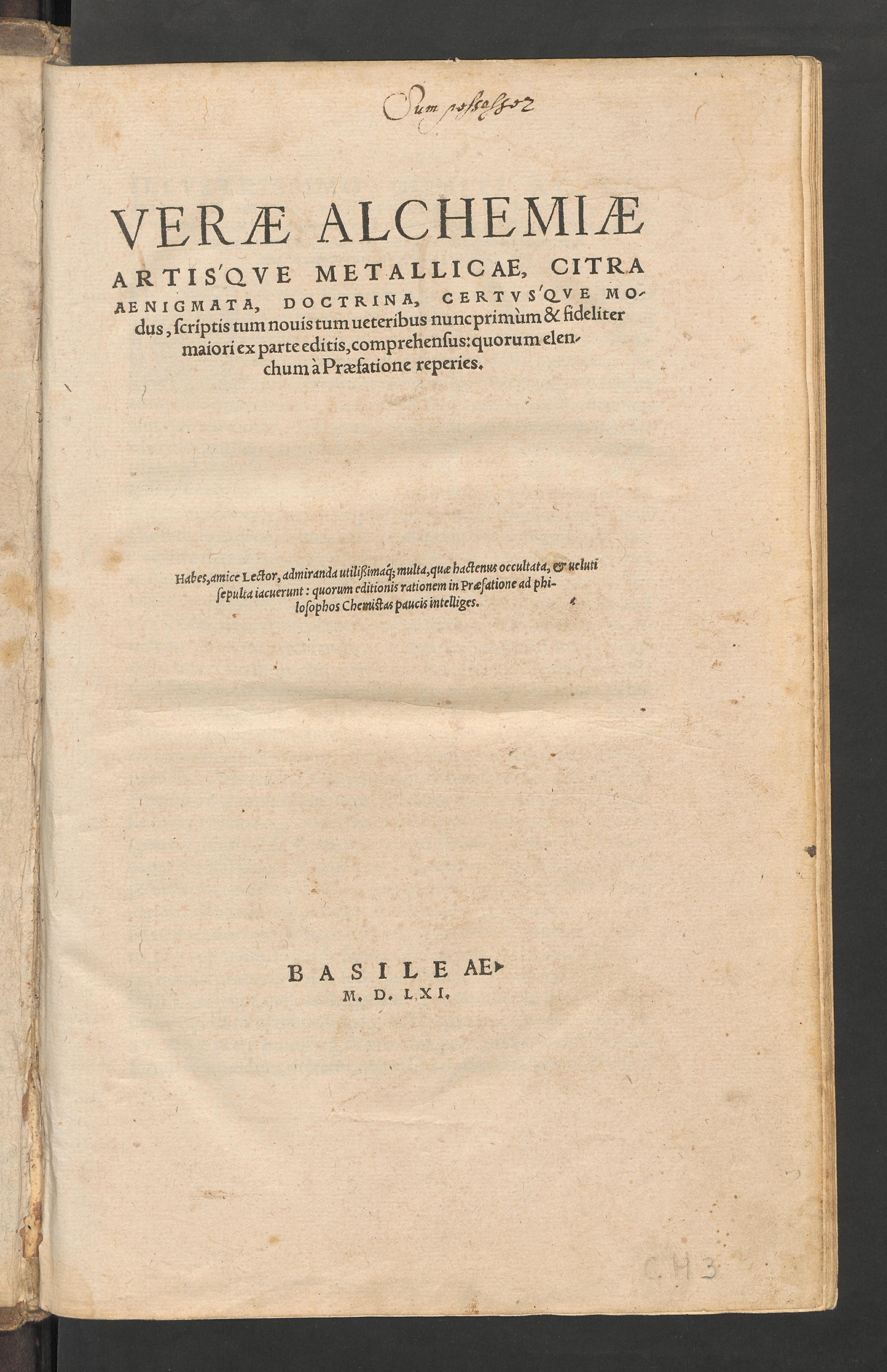
Verae alchemiae artisque metallicae, citra aenigmata, doctrina certusque modus, scriptis tum novis tum veteribus nunc primum & fideliter maiori ex parte editis, comprehensus quorum elenchum a praefatione reperies, Grataroli, Guglielmo
Verae alchemiae artisque metallicae, citra aenigmata, doctrina certusque modus, scriptis tum novis tum veteribus nunc primum & fideliter maiori ex parte editis, comprehensus quorum elenchum a praefatione reperiesGrataroli, Guglielmo1561Stiftung der Werke von C.G.Jung, Zürich, online
Philonis Judaei ... operum, quotquot ad hunc diem haberi potuerunt, tomus prior[-alter] / Tomus prior., Unknown
Philonis Judaei ... operum, quotquot ad hunc diem haberi potuerunt, tomus prior[-alter] / Tomus prior.Unknown1561Stiftung der Werke von C.G.Jung, Zürich
Philonis Judaei ... operum, quotquot ad hunc diem haberi potuerunt, tomus prior[-alter] / Tomus alter., Unknown
Philonis Judaei ... operum, quotquot ad hunc diem haberi potuerunt, tomus prior[-alter] / Tomus alter.Unknown1561Stiftung der Werke von C.G.Jung, Zürich
Portrait of a Lady of the Wentworth Family (Probably Jane Cheyne), Hans Eworth
Portrait of a Lady of the Wentworth Family (Probably Jane Cheyne)Hans Eworth1563The Art Institute of Chicago
Frieze, Combat of Animals, preparatory drawing for fresco at the Palazzo Borri, Parma, Jacopo Zanguidi, called Bertoia, Italian, 1544 – 1573
Frieze, Combat of Animals, preparatory drawing for fresco at the Palazzo Borri, ParmaJacopo Zanguidi, called Bertoia, Italian, 1544 – 15731563–68Cooper Hewitt, Smithsonian Design Museum
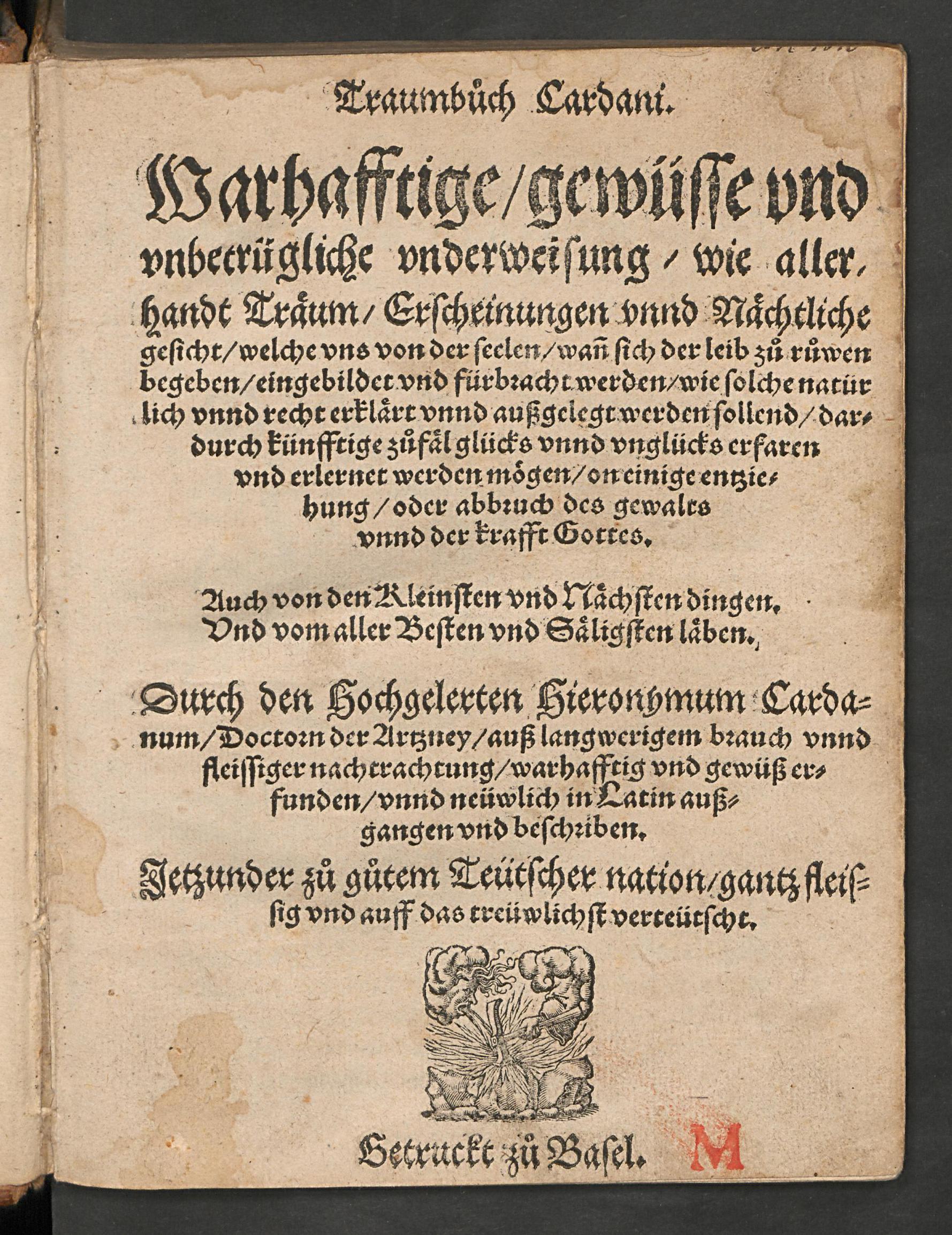
Traumbuch Cardani : warhafftige, gewüsse und unbetrügliche Underweisung, wie allerhandt Träum, Erscheinungen unnd nächtliche Gesicht, welche uns von der Seelen wann sich der Leib zu ruwen begeben eingebildet und fürbracht werden, wie solche natürlich unnd recht erklärt unnd aussgelegt werden sollend ... ; auch von den kleinsten und nächsten Dingen und vom aller besten und säligsten Läben ..., Cardano, Girolamo
Traumbuch Cardani : warhafftige, gewüsse und unbetrügliche Underweisung, wie allerhandt Träum, Erscheinungen unnd nächtliche Gesicht, welche uns von der Seelen wann sich der Leib zu ruwen begeben eingebildet und fürbracht werden, wie solche natürlich unnd recht erklärt unnd aussgelegt werden sollend ... ; auch von den kleinsten und nächsten Dingen und vom aller besten und säligsten Läben ...Cardano, Girolamo1563Stiftung der Werke von C.G.Jung, Zürich, online

Also at Metropolitan Museum of Art, New York, NY

676
Marble female figure, Bastis Master
Marble female figureBastis Master2600–2400 BCEMetropolitan Museum of Art, New York, NY
Relief Fragment with a Ship Under Sail, Unknown
Relief Fragment with a Ship Under SailUnknownca. 2465–2458 BCEMetropolitan Museum of Art, New York, NY
Tomb Chapel of Raemkai: South Wall, Unknown
Tomb Chapel of Raemkai: South WallUnknownca. 2446–2389 BCEMetropolitan Museum of Art, New York, NY
West wall of the chapel of the mastaba Kaemsenu with niches for Iretnub, Kaemsenu and Werdjedptah, Unknown
West wall of the chapel of the mastaba Kaemsenu with niches for Iretnub, Kaemsenu and WerdjedptahUnknownca. 2420–2250 BCEMetropolitan Museum of Art, New York, NY
Design amulet, Cow and Calf on the Back, Device showing Antithetical Falcons Flanking an Ankh Sign over a Crouching Lion, Unknown
Design amulet, Cow and Calf on the Back, Device showing Antithetical Falcons Flanking an Ankh Sign over a Crouching LionUnknownca. 2150–2100 B.C.Metropolitan Museum of Art, New York, NY
Design Amulet, Pyramidal Back with Horizontal Piercing, Device showing Two Falcons Flanking what is meant to be an Ankh Sign, Unknown
Design Amulet, Pyramidal Back with Horizontal Piercing, Device showing Two Falcons Flanking what is meant to be an Ankh SignUnknownca. 2150–2010 B.C.Metropolitan Museum of Art, New York, NY
Design Amulet, Cow Nursing Calf and also a Kneeling Suckling Man Visible on Opposite Side on the Back, Device showing Antithetical Falcons with an Ankh Sign over a Lion, Unknown
Design Amulet, Cow Nursing Calf and also a Kneeling Suckling Man Visible on Opposite Side on the Back, Device showing Antithetical Falcons with an Ankh Sign over a LionUnknownca. 2150–2100 B.C.Metropolitan Museum of Art, New York, NY
Design Amulet, Back in the Form of a Woman Suckling a Child, Device showing Two Lizards Head-to-tail, Unknown
Design Amulet, Back in the Form of a Woman Suckling a Child, Device showing Two Lizards Head-to-tailUnknownca. 2100–2080 B.C.Metropolitan Museum of Art, New York, NY

Similar picturesFound by visual likeness

5 pictures

Visual resemblances suggested by the model. A match does not establish a shared subject or historical connection.

Lion Hunt, Eugène Delacroix
Lion HuntEugène Delacroix1860–61The Art Institute of Chicago
0.87
The Abduction of Rebecca, Eugène Delacroix
The Abduction of RebeccaEugène Delacroix1846Metropolitan Museum of Art, New York, NY
0.84
Study for "The Bear Hunt" (for the Alcázar, Madrid), Peter Paul Rubens (Flemish, 1577–1640)
Study for "The Bear Hunt" (for the Alcázar, Madrid)Peter Paul Rubens (Flemish, 1577–1640)c. 1639Cleveland Museum of Art
0.84
The sacrifice of Abraham, Master of the Augsburg Ecce Homo
The sacrifice of AbrahamMaster of the Augsburg Ecce Homo1540Germanisches Nationalmuseum
0.83
The Triumph of Henry IV, Peter Paul Rubens
The Triumph of Henry IVPeter Paul Rubensca. 1630Metropolitan Museum of Art, New York, NY
0.83

In the stacks

Not yet checked
3

Passages in the library’s own holdings that name this maker. The model ranked them; nobody has checked that the name means this person.

  1. principles of art history · heinrich wolfflin

    The baroque antithesis to Raphael and Diirer is here represented by Rubens’ Christ Bearing the Cross* (engraving by Pontius with a variant anterior to the picture in Brussels). The recessional movement most brilliantly developed, and made still more interesting by an upward movement. The stylistically new factor we are looking for certainly does not lie in the merely material motive of the direction of movement, but, as it is a question of a principle of present- ment, in the way in which the theme is handled, how every recessional element
    0.71
  2. principles of art history · heinrich wolfflin

    PAINTING 75 tion. It is not a question of the degree of recession in the space represented, but in what way recession is made effective. Even where the seventeenth century apparently indulges in pure compositions in breadth, a closer com- parison must prove the fundamentally different point of departure. The spiral into-the-picture movement which Rubens loves will certainly be sought for in vain in Dutch pictures, yet this system of Rubens’ is only one type of re- cessional composition. There need even be no plastic oppositions of foreground and background:
    0.70
  3. principles of art history · heinrich wolfflin

    The course of the development of art, however, cannot simply be reduced to a series of separate points. Individuals fall into larger groups. Botticelli and Lorenzo di Credi, for all their differences, have still, as Florentines, a certain resemblance when compared with any Venetian, and Hobbema and Ruysdael, however divergent they may be, are immediately homogeneous as soon as to them, as Dutchmen, a Fleming like Rubens is opposed. That is to say: to the personal style must be added the style of the school, the country, the race. Let
    0.69

Next

Peter Paul Rubens made Wolf and Fox Hunt, and made these too.

Made in the seventeenth century, like Wolf and Fox Hunt.

0:00–0:00