Saint Catherine of Alexandria, Peter Paul Rubens

Seen

Not described yet.


Of

No subject recorded yet.


Means

No reading yet.


Rights

Credit
Prints and Drawings Purchase Fund. CC0.
Licence
CC0-1.0
Evidence
api.artic.edu artworks api: is_public_domain=true on artwork 31599 (read 2026-09-01)
Record
https://www.artic.edu/artworks/31599
IIIF
manifest
Saint Catherine of Alexandria, Peter Paul Rubens
Saint Catherine of Alexandria — Peter Paul Rubens1620/21

Also by Peter Paul Rubens

14
Portrait of a Man, Possibly an Architect or Geographer, Peter Paul Rubens
Portrait of a Man, Possibly an Architect or GeographerPeter Paul Rubens1597Metropolitan Museum of Art, New York, NY
The Capture of Samson, Peter Paul Rubens
The Capture of SamsonPeter Paul Rubens1609–10The Art Institute of Chicago
The Feast of Acheloüs, Peter Paul Rubens
The Feast of AcheloüsPeter Paul Rubensca. 1615Metropolitan Museum of Art, New York, NY
The Holy Family with Saints Elizabeth and John the Baptist, Peter Paul Rubens
The Holy Family with Saints Elizabeth and John the BaptistPeter Paul Rubensc. 1615The Art Institute of Chicago
Saint Francis, Peter Paul Rubens
Saint FrancisPeter Paul Rubensc. 1615The Art Institute of Chicago
Wolf and Fox Hunt, Peter Paul Rubens
Wolf and Fox HuntPeter Paul Rubensca. 1616Metropolitan Museum of Art, New York, NY
The Sacrifice of Isaac, Peter Paul Rubens
The Sacrifice of IsaacPeter Paul Rubens1612The Nelson-Atkins Museum of Art
Portrait of Nicolas Trigault in Chinese Costume, Peter Paul Rubens
Portrait of Nicolas Trigault in Chinese CostumePeter Paul Rubens1617Metropolitan Museum of Art, New York, NY

Within fifty years of 1620/21

905
The Prophet Joel, Giorgio Ghisi (Italian, 1520–1582); Michelangelo Buonarroti (Italian, 1475–1564)
The Prophet JoelGiorgio Ghisi (Italian, 1520–1582); Michelangelo Buonarroti (Italian, 1475–1564)early 1570sCleveland Museum of Art
from a series of 12 "Ornaments for Goldsmiths" Grotesques, Philip Galle, Flemish, 1537 - 1612
from a series of 12 "Ornaments for Goldsmiths" GrotesquesPhilip Galle, Flemish, 1537 - 1612ca. 1570Cooper Hewitt, Smithsonian Design Museum
Wild Animal Hunt (frieze), Etienne Delaune, French, 1519 - 1583
Wild Animal Hunt (frieze)Etienne Delaune, French, 1519 - 1583ca. 1570Cooper Hewitt, Smithsonian Design Museum
Design for a Tabernacle, Unknown
Design for a TabernacleUnknownca. 1570Cooper Hewitt, Smithsonian Design Museum
"The Angel Gabriel meets 'Amr ibn Zaid (the Shepherd)", Folio from a Siyer-i Nebi (the Life of the Prophet), Mustafa ibn Vali
"The Angel Gabriel meets 'Amr ibn Zaid (the Shepherd)", Folio from a Siyer-i Nebi (the Life of the Prophet)Mustafa ibn Valica. 1595Metropolitan Museum of Art, New York, NY
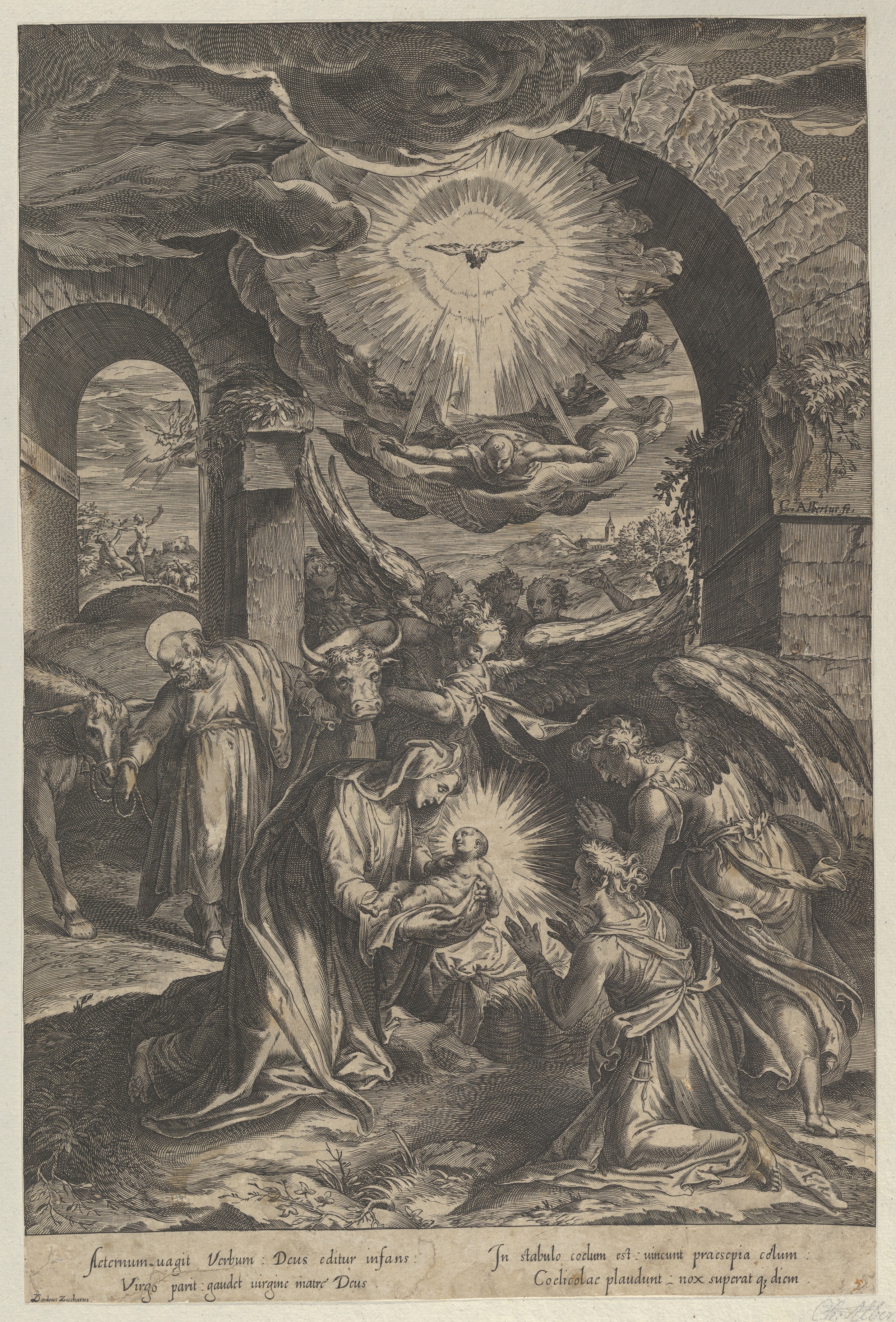
The Birth of Christ, Cherubino Alberti (Zaccaria Mattia)
The Birth of ChristCherubino Alberti (Zaccaria Mattia)1570–1615Metropolitan Museum of Art, New York, NY
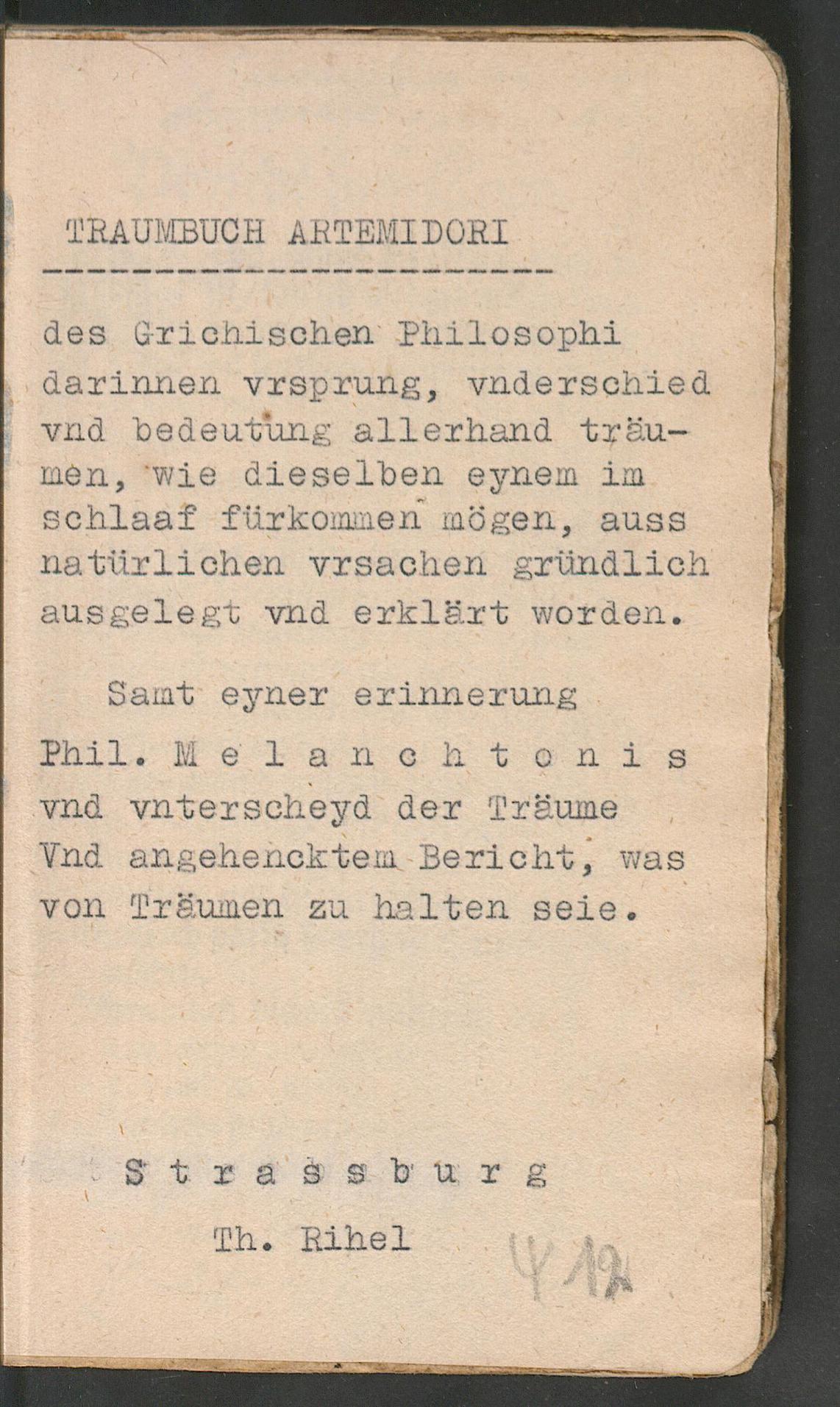
Traumbuch Artemidori ... darinnen Ursprung, Unterscheid und Bedeutung, allerhand Träumen ... : sambt eyner Erinnerung Philippi Melanchtonis von Unterscheid der Träume unnd angehencktem Bericht, was von Träumen zu halten seie, Artemidorus
Traumbuch Artemidori ... darinnen Ursprung, Unterscheid und Bedeutung, allerhand Träumen ... : sambt eyner Erinnerung Philippi Melanchtonis von Unterscheid der Träume unnd angehencktem Bericht, was von Träumen zu halten seieArtemidorus1570Stiftung der Werke von C.G.Jung, Zürich
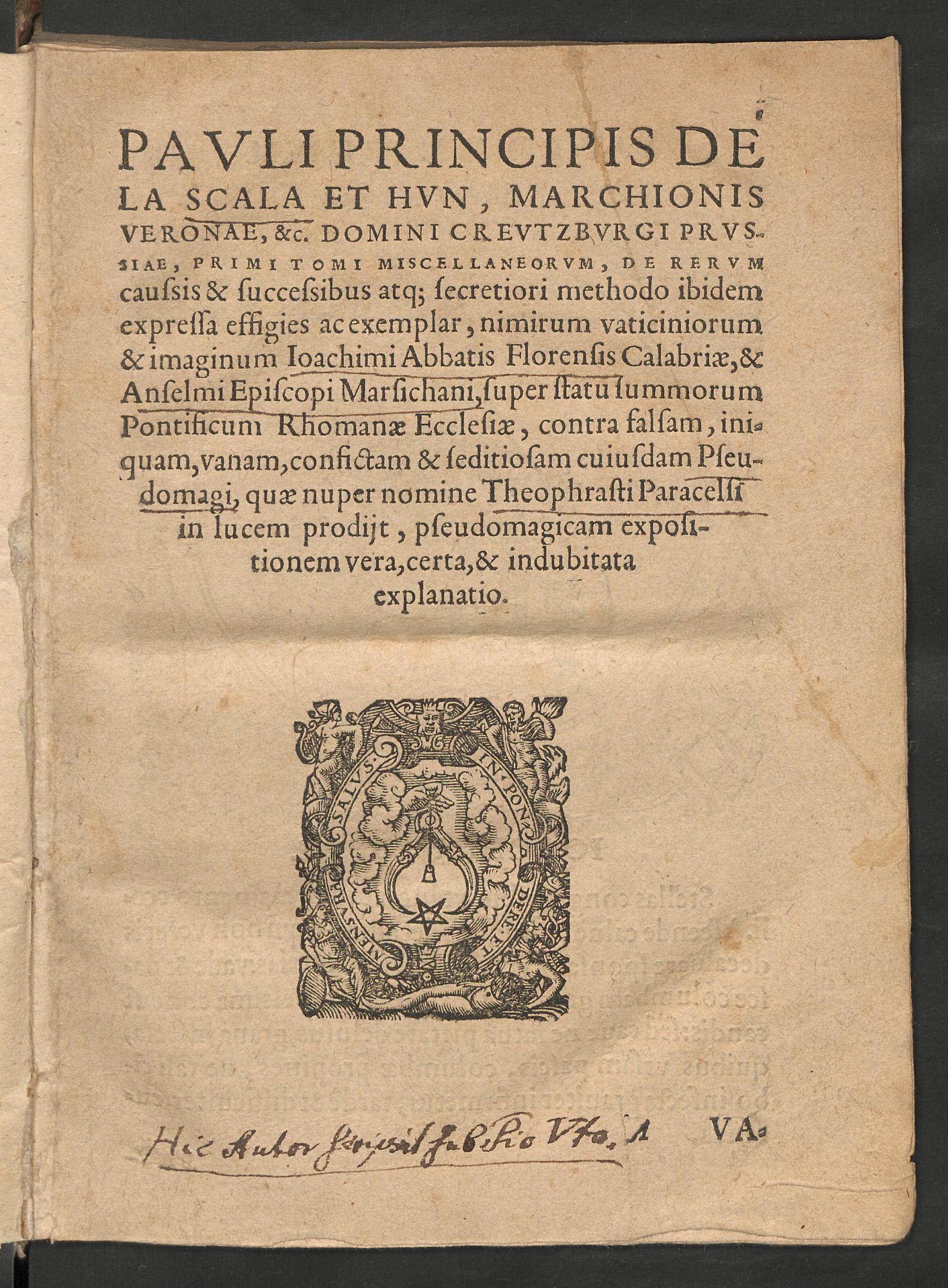
Pauli principis de la Scala et Hun ... primi tomi miscellaneorum, de rerum caussis & successibus atque secretiori methodo ibidem expressa effigies ac exemplar, nimirum vaticiniorum & imaginum Ioachimi abbatis Florensis Calabriae, & Anselmi episcopi Marsichani, super statu summorum pontificum Rhomanae ecclesiae, contra falsam, iniquam, vanam, confictam & seditiosam cuiusdam pseudomagi, quae nuper nomine Theophrasti Paracelsi in lucem prodiit, pseudomagicam expositionem vera, & certa, & indubitata| explanatio, Joachim
Pauli principis de la Scala et Hun ... primi tomi miscellaneorum, de rerum caussis & successibus atque secretiori methodo ibidem expressa effigies ac exemplar, nimirum vaticiniorum & imaginum Ioachimi abbatis Florensis Calabriae, & Anselmi episcopi Marsichani, super statu summorum pontificum Rhomanae ecclesiae, contra falsam, iniquam, vanam, confictam & seditiosam cuiusdam pseudomagi, quae nuper nomine Theophrasti Paracelsi in lucem prodiit, pseudomagicam expositionem vera, & certa, & indubitata| explanatioJoachim1570Stiftung der Werke von C.G.Jung, Zürich

Also at The Art Institute of Chicago

761
Statuette of a Female Figure, Ancient Greek
Statuette of a Female FigureAncient GreekEarly Bronze Age, 2600–2400 BCEThe Art Institute of Chicago
Ring with a Scarab Bezel, Ancient Egyptian
Ring with a Scarab BezelAncient EgyptianSecond Intermediate Period, Dynasty 15 (about 1650–1550 BCE)The Art Institute of Chicago
Fragment of a Stela of Neferhotep, Ancient Egyptian
Fragment of a Stela of NeferhotepAncient EgyptianNew Kingdom, mid-Dynasty 19, about 1240-1195 BCEThe Art Institute of Chicago
Funerary Papyrus of Tayuhenutmut, Ancient Egyptian
Funerary Papyrus of TayuhenutmutAncient EgyptianThird Intermediate Period, probably Dynasty 21 (about 1069-945 BCE)The Art Institute of Chicago
Cauldron, China
CauldronChinaWestern Zhou dynasty (1046–771 BC ), early 9th century BCThe Art Institute of Chicago
Coffin and Mummy of Paankhaenamun, Ancient Egyptian
Coffin and Mummy of PaankhaenamunAncient EgyptianThird Intermediate Period, Dynasty 22, reign of Osorkon I (about 924–889 BCE)The Art Institute of Chicago
Relief Showing the Head of a Winged Genius, Neo-Assyrian
Relief Showing the Head of a Winged GeniusNeo-AssyrianNeo–Assyrian Period, reign of King Ashurnasirpal II (883–859 BCE)The Art Institute of Chicago
Altar, Ancient Greek
AltarAncient GreekGeometric Period (800–600 BCE)The Art Institute of Chicago

Similar picturesFound by visual likeness

8 pictures

Visual resemblances suggested by the model. A match does not establish a shared subject or historical connection.

St. John the Baptist, Francesco Saverio Mergolo, Italian, 1746–1786
St. John the BaptistFrancesco Saverio Mergolo, Italian, 1746–1786ca. 1775Cooper Hewitt, Smithsonian Design Museum
0.91
Saturn, Hendrik Goltzius after Polidoro da Caravaggio
SaturnHendrik Goltzius after Polidoro da Caravaggio1592National Gallery of Art
0.90
Sol or Apollo, Hendrik Goltzius after Polidoro da Caravaggio
Sol or ApolloHendrik Goltzius after Polidoro da Caravaggioprobably 1592National Gallery of Art
0.89
Pluto, Hendrik Goltzius after Polidoro da Caravaggio
PlutoHendrik Goltzius after Polidoro da Caravaggioprobably 1592National Gallery of Art
0.88
Adoration of the Shepherds, Cornelis Cort (Dutch, 1533–1578); Taddeo Zuccaro (Italian, 1529–1566)
Adoration of the ShepherdsCornelis Cort (Dutch, 1533–1578); Taddeo Zuccaro (Italian, 1529–1566)1567Cleveland Museum of Art
0.87
Church Triumphant over Falsehood, Paolo de Mattheis, Italian, 1662 - 1728
Church Triumphant over FalsehoodPaolo de Mattheis, Italian, 1662 - 1728ca. 1700Cooper Hewitt, Smithsonian Design Museum
0.87
The Lamentation, from The Large Passion, Albrecht Dürer
The Lamentation, from The Large PassionAlbrecht Dürerc. 1498–99The Art Institute of Chicago
0.87
Virgin and Child with an Apple, Martin Schongauer (German, c. 1450–1491)
Virgin and Child with an AppleMartin Schongauer (German, c. 1450–1491)c. 1475Cleveland Museum of Art
0.87

In the stacks

Not yet checked
3

Passages in the library’s own holdings that name this maker. The model ranked them; nobody has checked that the name means this person.

  1. principles of art history · heinrich wolfflin

    The baroque antithesis to Raphael and Diirer is here represented by Rubens’ Christ Bearing the Cross* (engraving by Pontius with a variant anterior to the picture in Brussels). The recessional movement most brilliantly developed, and made still more interesting by an upward movement. The stylistically new factor we are looking for certainly does not lie in the merely material motive of the direction of movement, but, as it is a question of a principle of present- ment, in the way in which the theme is handled, how every recessional element
    0.71
  2. principles of art history · heinrich wolfflin

    PAINTING 75 tion. It is not a question of the degree of recession in the space represented, but in what way recession is made effective. Even where the seventeenth century apparently indulges in pure compositions in breadth, a closer com- parison must prove the fundamentally different point of departure. The spiral into-the-picture movement which Rubens loves will certainly be sought for in vain in Dutch pictures, yet this system of Rubens’ is only one type of re- cessional composition. There need even be no plastic oppositions of foreground and background:
    0.70
  3. principles of art history · heinrich wolfflin

    The course of the development of art, however, cannot simply be reduced to a series of separate points. Individuals fall into larger groups. Botticelli and Lorenzo di Credi, for all their differences, have still, as Florentines, a certain resemblance when compared with any Venetian, and Hobbema and Ruysdael, however divergent they may be, are immediately homogeneous as soon as to them, as Dutchmen, a Fleming like Rubens is opposed. That is to say: to the personal style must be added the style of the school, the country, the race. Let
    0.69

Next

Peter Paul Rubens made Saint Catherine of Alexandria, and made these too.

0:00–0:00