A Faun Grasping a Bunch of Grapes, Peter Paul Rubens (Flemish, 1577–1640)

Seen

Not described yet.


Of

No subject recorded yet.


Means

No reading yet.


Rights

Credit
Purchase from the J. H. Wade Fund
Licence
CC0-1.0
Evidence
openaccess-api.clevelandart.org: share_license_status=CC0 on artwork 123095 (read 2026-09-01)
Record
https://clevelandart.org/art/1943.341
A Faun Grasping a Bunch of Grapes, Peter Paul Rubens (Flemish, 1577–1640)
A Faun Grasping a Bunch of Grapes — Peter Paul Rubens (Flemish, 1577–1640)after 1616–18

Also by Peter Paul Rubens (Flemish, 1577–1640)

5
Portrait of Isabella Brant, Peter Paul Rubens (Flemish, 1577–1640)
Portrait of Isabella BrantPeter Paul Rubens (Flemish, 1577–1640)c. 1620–25Cleveland Museum of Art
The Triumph of the Church, Peter Paul Rubens (Flemish, 1577–1640)
The Triumph of the ChurchPeter Paul Rubens (Flemish, 1577–1640)after 1628Cleveland Museum of Art
Study for "The Bear Hunt" (for the Alcázar, Madrid), Peter Paul Rubens (Flemish, 1577–1640)
Study for "The Bear Hunt" (for the Alcázar, Madrid)Peter Paul Rubens (Flemish, 1577–1640)c. 1639Cleveland Museum of Art
The Feast of Herod (recto); Tomyris with the Head of Cyrus (verso), Peter Paul Rubens (Flemish, 1577–1640)
The Feast of Herod (recto); Tomyris with the Head of Cyrus (verso)Peter Paul Rubens (Flemish, 1577–1640)c. 1637–38Cleveland Museum of Art
The Feast of Herod (recto), Peter Paul Rubens (Flemish, 1577–1640)
The Feast of Herod (recto)Peter Paul Rubens (Flemish, 1577–1640)c. 1637–38Cleveland Museum of Art

Within fifty years of after 1616–18

891
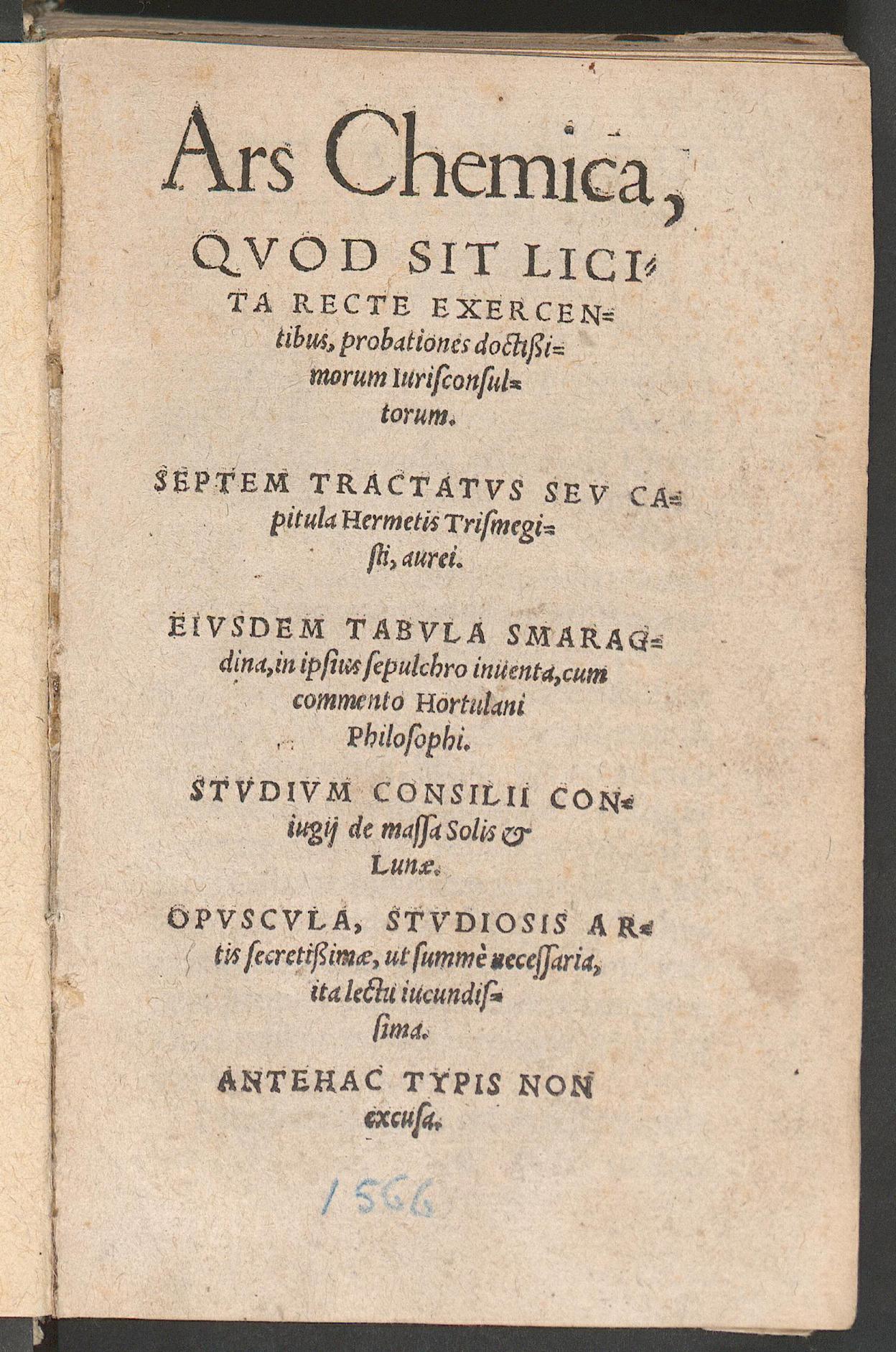
Ars chemica, quod sit licita recte exercentibus, probationes doctissimorum iurisconsultorum. Septem tractatus seu capitula Hermetis Trismegisti, aurei. Eiusdem Tabula Smaragdina, in ipsius sepulchro inventa, cum commento Hortulani Philosophi. Studium consilii coniugii de massa solis et lunae, Hermes
Ars chemica, quod sit licita recte exercentibus, probationes doctissimorum iurisconsultorum. Septem tractatus seu capitula Hermetis Trismegisti, aurei. Eiusdem Tabula Smaragdina, in ipsius sepulchro inventa, cum commento Hortulani Philosophi. Studium consilii coniugii de massa solis et lunaeHermes1566Stiftung der Werke von C.G.Jung, Zürich
Adoration of the Shepherds, Cornelis Cort (Dutch, 1533–1578); Taddeo Zuccaro (Italian, 1529–1566)
Adoration of the ShepherdsCornelis Cort (Dutch, 1533–1578); Taddeo Zuccaro (Italian, 1529–1566)1567Cleveland Museum of Art
Perseus with the Head of Medusa, Turning Phineus and his Followers to Stone, Polidoro da Caravaggio
Perseus with the Head of Medusa, Turning Phineus and his Followers to StonePolidoro da Caravaggio1567The Art Institute of Chicago
Fish Market, Joachim Beuckelaer
Fish MarketJoachim Beuckelaer1568Metropolitan Museum of Art, New York, NY
Astronomical table clock, Jeremias Metzger
Astronomical table clockJeremias Metzger1568Metropolitan Museum of Art, New York, NY
Plate XIV, from the "Exercitatio Alphabetica", Clément Perret, 1569/71–?
Plate XIV, from the "Exercitatio Alphabetica"Clément Perret, 1569/71–?1568–69Cooper Hewitt, Smithsonian Design Museum
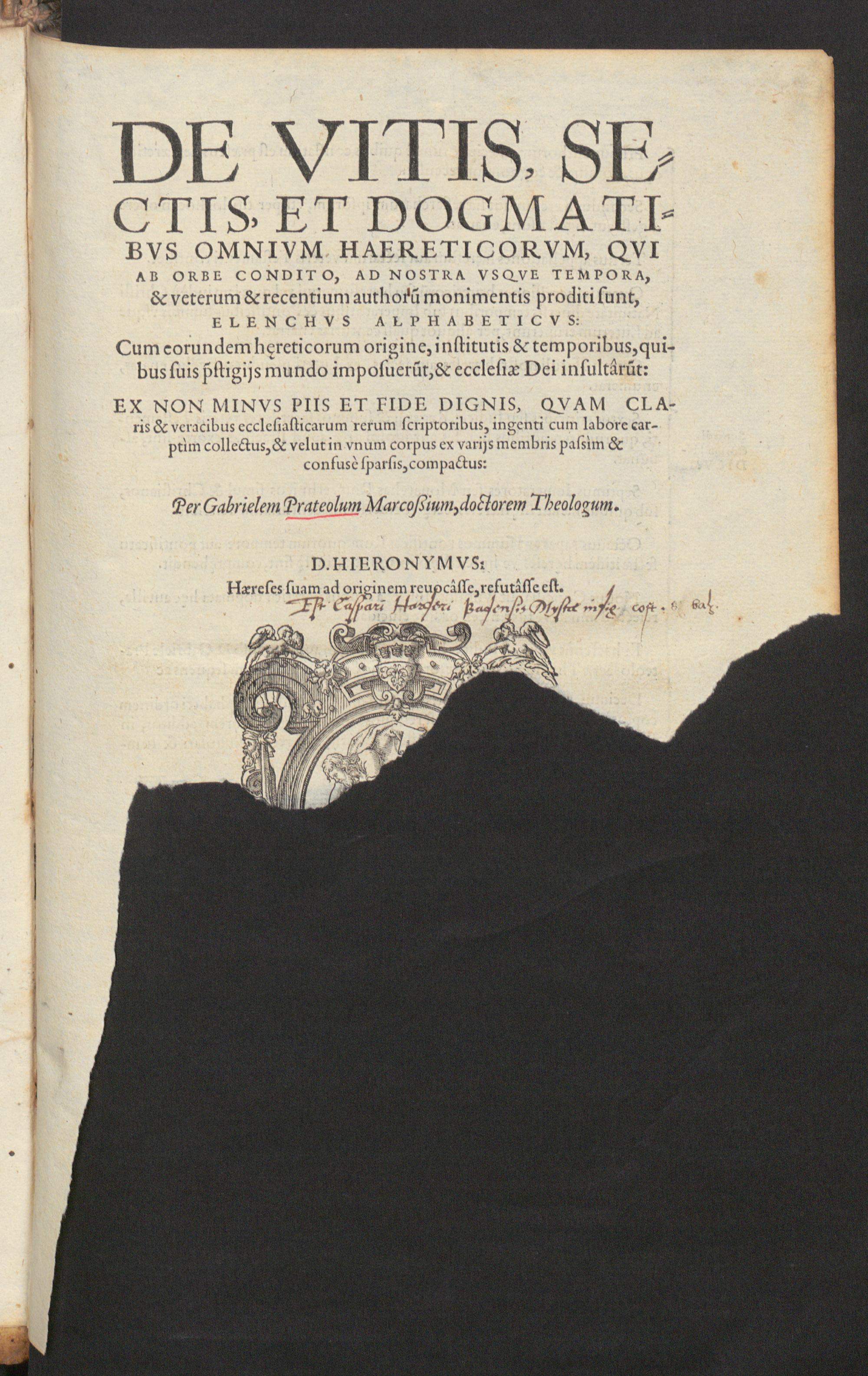
De vitis, sectis, et dogmatibus omnium haereticorum, qui ab orbe condito, ad nostra usque tempora, & veterum & recentium authorum monimentis proditi sunt, elenchus alphabeticus ..., Du Préau, Gabriel
De vitis, sectis, et dogmatibus omnium haereticorum, qui ab orbe condito, ad nostra usque tempora, & veterum & recentium authorum monimentis proditi sunt, elenchus alphabeticus ...Du Préau, Gabriel1569Stiftung der Werke von C.G.Jung, Zürich
The Prophet Joel, Giorgio Ghisi (Italian, 1520–1582); Michelangelo Buonarroti (Italian, 1475–1564)
The Prophet JoelGiorgio Ghisi (Italian, 1520–1582); Michelangelo Buonarroti (Italian, 1475–1564)early 1570sCleveland Museum of Art

Also at Cleveland Museum of Art

576
Relief of Nyankhnesut Seated, Unknown
Relief of Nyankhnesut SeatedUnknownc. 2311–2281 BCECleveland Museum of Art
Stele of Shemai, Unknown
Stele of ShemaiUnknownc. 1960–1916 BCECleveland Museum of Art
Relief of Hatshepsut or Tuthmosis III, Unknown
Relief of Hatshepsut or Tuthmosis IIIUnknown1479–1425 BCECleveland Museum of Art
Talatat: Portrait of Nefertiti, Unknown
Talatat: Portrait of NefertitiUnknownc. 1353–1347 BCECleveland Museum of Art
Talatat: Portrait of Nefertiti, Unknown
Talatat: Portrait of NefertitiUnknownc. 1353–1347 BCECleveland Museum of Art
Talatat: Nefertiti Offers to the Aten, Unknown
Talatat: Nefertiti Offers to the AtenUnknown1353–1347 BCECleveland Museum of Art
Tomb Relief of the Chief Physician Amenhotep and Family, Unknown
Tomb Relief of the Chief Physician Amenhotep and FamilyUnknownc. 1279–1257 BCECleveland Museum of Art
Stele of the High Priest of Ptah, Shedsunefertem, Unknown
Stele of the High Priest of Ptah, ShedsunefertemUnknown945–924 BCECleveland Museum of Art

Similar picturesFound by visual likeness

8 pictures

Visual resemblances suggested by the model. A match does not establish a shared subject or historical connection.

Male nude, Unknown
Male nudeUnknownlate 17th centuryCooper Hewitt, Smithsonian Design Museum
0.92
Seated Male Nude, Baccio Bandinelli (Italian, 1493–1560)
Seated Male NudeBaccio Bandinelli (Italian, 1493–1560)c. 1516–20Cleveland Museum of Art
0.91
Cupid, Unknown
CupidUnknown1770–1800Cooper Hewitt, Smithsonian Design Museum
0.91
Fortitude (?), Giovanni Battista Beinaschi
Fortitude (?)Giovanni Battista Beinaschica. 1640–88Cooper Hewitt, Smithsonian Design Museum
0.91
Guard Drawing His Sword, Raphael
Guard Drawing His SwordRaphaeln.d.The Art Institute of Chicago
0.90
Crucified Man, Melchior Lorck (Danish, 1526/27–after 1588); Michelangelo Buonarroti (Italian, 1475–1564)
Crucified ManMelchior Lorck (Danish, 1526/27–after 1588); Michelangelo Buonarroti (Italian, 1475–1564)1550Cleveland Museum of Art
0.90
Studies for the Libyan Sibyl (recto); Studies for the Libyan Sibyl and a small Sketch for a Seated Figure (verso), Michelangelo Buonarroti
Studies for the Libyan Sibyl (recto); Studies for the Libyan Sibyl and a small Sketch for a Seated Figure (verso)Michelangelo Buonarrotica. 1510–11Metropolitan Museum of Art, New York, NY
0.90
Legs and Feet of Male Nude, Michelangelo Buonarroti
Legs and Feet of Male NudeMichelangelo Buonarroti1812/50The Art Institute of Chicago
0.89

In the stacks

Not yet checked
3

Passages in the library’s own holdings that name this maker. The model ranked them; nobody has checked that the name means this person.

  1. principles of art history · heinrich wolfflin

    The baroque antithesis to Raphael and Diirer is here represented by Rubens’ Christ Bearing the Cross* (engraving by Pontius with a variant anterior to the picture in Brussels). The recessional movement most brilliantly developed, and made still more interesting by an upward movement. The stylistically new factor we are looking for certainly does not lie in the merely material motive of the direction of movement, but, as it is a question of a principle of present- ment, in the way in which the theme is handled, how every recessional element
    0.71
  2. principles of art history · heinrich wolfflin

    PAINTING 75 tion. It is not a question of the degree of recession in the space represented, but in what way recession is made effective. Even where the seventeenth century apparently indulges in pure compositions in breadth, a closer com- parison must prove the fundamentally different point of departure. The spiral into-the-picture movement which Rubens loves will certainly be sought for in vain in Dutch pictures, yet this system of Rubens’ is only one type of re- cessional composition. There need even be no plastic oppositions of foreground and background:
    0.70
  3. principles of art history · heinrich wolfflin

    The course of the development of art, however, cannot simply be reduced to a series of separate points. Individuals fall into larger groups. Botticelli and Lorenzo di Credi, for all their differences, have still, as Florentines, a certain resemblance when compared with any Venetian, and Hobbema and Ruysdael, however divergent they may be, are immediately homogeneous as soon as to them, as Dutchmen, a Fleming like Rubens is opposed. That is to say: to the personal style must be added the style of the school, the country, the race. Let
    0.69

Next

0:00–0:00