Poem on Imperial Gift of an Embroidered Silk: Calligraphy in Running-Standard Script (xingkaishu), Wen Zhengming (Chinese, 1470–1559)

Seen

Not described yet.


Of

No subject recorded yet.


Means

No reading yet.


Rights

Credit
John L. Severance Fund
Licence
CC0-1.0
Evidence
openaccess-api.clevelandart.org: share_license_status=CC0 on artwork 160290 (read 2026-09-01)
Record
https://clevelandart.org/art/1998.169
Poem on Imperial Gift of an Embroidered Silk: Calligraphy in Running-Standard Script (xingkaishu), Wen Zhengming (Chinese, 1470–1559)
Poem on Imperial Gift of an Embroidered Silk: Calligraphy in Running-Standard Script (xingkaishu) — Wen Zhengming (Chinese, 1470–1559)c. 1525

Within fifty years of c. 1525

404
Christ Carrying the Cross, Martin Schongauer (German, c. 1450–1491)
Christ Carrying the CrossMartin Schongauer (German, c. 1450–1491)1475–90Cleveland Museum of Art
Battle of the Nudes, Antonio del Pollaiuolo (Italian, 1431/32–1498)
Battle of the NudesAntonio del Pollaiuolo (Italian, 1431/32–1498)1470s–80sCleveland Museum of Art
Virgin and Child with an Apple, Martin Schongauer (German, c. 1450–1491)
Virgin and Child with an AppleMartin Schongauer (German, c. 1450–1491)c. 1475Cleveland Museum of Art
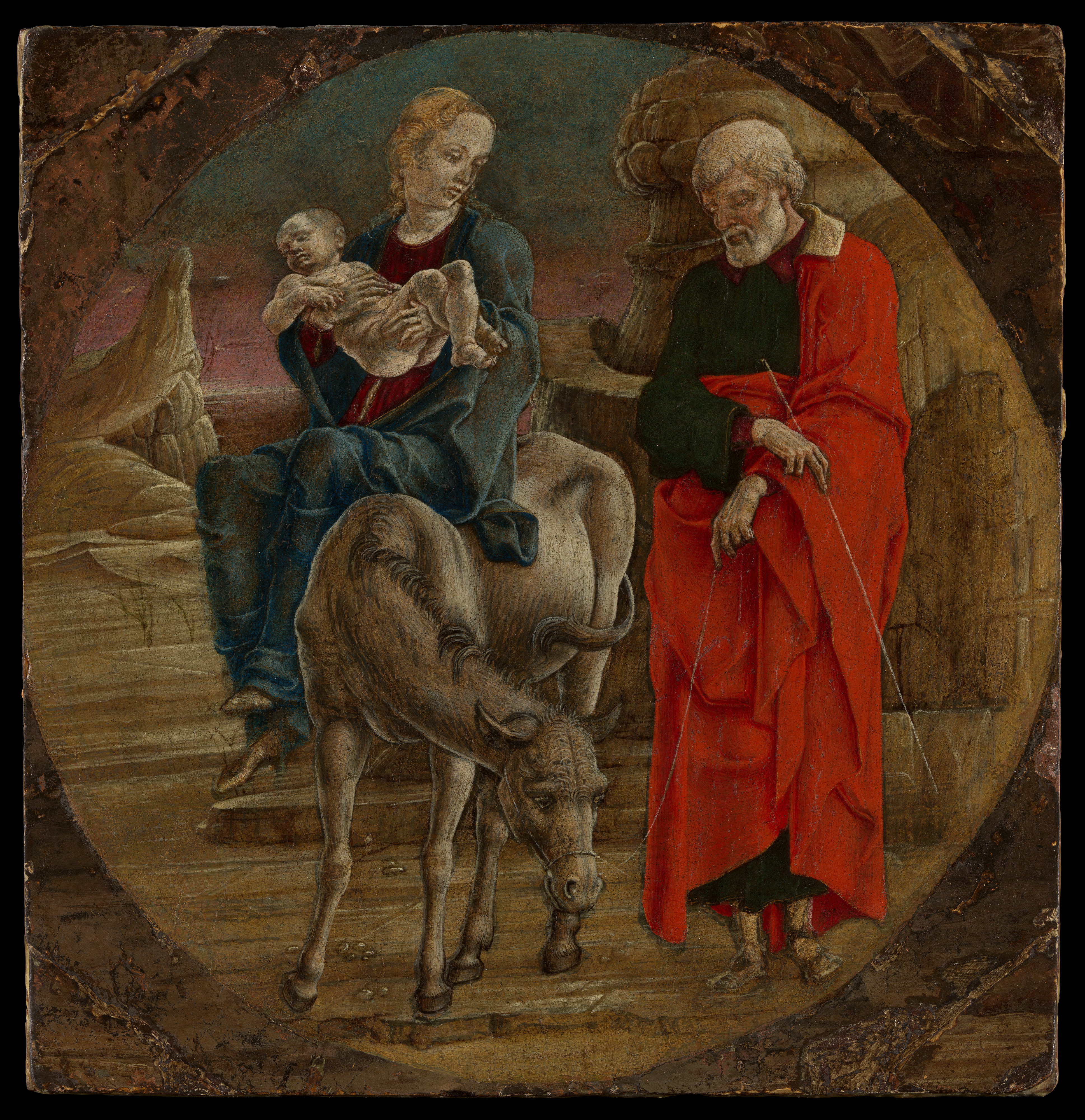
The Flight into Egypt, Cosmè Tura (Cosimo di Domenico di Bonaventura)
The Flight into EgyptCosmè Tura (Cosimo di Domenico di Bonaventura)1470sMetropolitan Museum of Art, New York, NY
Two Putti with Lamb, School of Leonardo da Vinci
Two Putti with LambSchool of Leonardo da Vincin.d.The Art Institute of Chicago
The Adoration of the Magi, Joos van Wassenhove
The Adoration of the MagiJoos van Wassenhove1472–74Metropolitan Museum of Art, New York, NY
De Re Militari (On the Military Arts), Roberto Valturio
De Re Militari (On the Military Arts)Roberto Valturio1472Metropolitan Museum of Art, New York, NY
Studiolo from the Ducal Palace in Gubbio, Francesco di Giorgio Martini
Studiolo from the Ducal Palace in GubbioFrancesco di Giorgio Martinica. 1478–82Metropolitan Museum of Art, New York, NY

Also at Cleveland Museum of Art

549
Relief of Nyankhnesut Seated, Unknown
Relief of Nyankhnesut SeatedUnknownc. 2311–2281 BCECleveland Museum of Art
Stele of Shemai, Unknown
Stele of ShemaiUnknownc. 1960–1916 BCECleveland Museum of Art
Relief of Hatshepsut or Tuthmosis III, Unknown
Relief of Hatshepsut or Tuthmosis IIIUnknown1479–1425 BCECleveland Museum of Art
Talatat: Portrait of Nefertiti, Unknown
Talatat: Portrait of NefertitiUnknownc. 1353–1347 BCECleveland Museum of Art
Talatat: Portrait of Nefertiti, Unknown
Talatat: Portrait of NefertitiUnknownc. 1353–1347 BCECleveland Museum of Art
Talatat: Nefertiti Offers to the Aten, Unknown
Talatat: Nefertiti Offers to the AtenUnknown1353–1347 BCECleveland Museum of Art
Tomb Relief of the Chief Physician Amenhotep and Family, Unknown
Tomb Relief of the Chief Physician Amenhotep and FamilyUnknownc. 1279–1257 BCECleveland Museum of Art
Stele of the High Priest of Ptah, Shedsunefertem, Unknown
Stele of the High Priest of Ptah, ShedsunefertemUnknown945–924 BCECleveland Museum of Art

Similar picturesFound by visual likeness

8 pictures

Visual resemblances suggested by the model. A match does not establish a shared subject or historical connection.

Famine Relief Herbal (1593): Preface, Unknown
Famine Relief Herbal (1593): PrefaceUnknownWellcome Collection
0.91
Three Poems from the Later Collection of Japanese Poems (Gosen wakashū), Monk Saigyō
Three Poems from the Later Collection of Japanese Poems (Gosen wakashū)Monk Saigyōlate 12th centuryMetropolitan Museum of Art, New York, NY
0.91
Letter, Song Jue
LetterSong Jueearly 17th centuryMetropolitan Museum of Art, New York, NY
0.91
Calligraphy in Semi-Cursive Style (xing-caoshu), Yueshan Daozong (Chinese, 1629–1709)
Calligraphy in Semi-Cursive Style (xing-caoshu)Yueshan Daozong (Chinese, 1629–1709)c. 1660–1709Cleveland Museum of Art
0.90
Biographies of Lian Po and Lin Xiangru, Huang Tingjian
Biographies of Lian Po and Lin XiangruHuang Tingjianca. 1095Metropolitan Museum of Art, New York, NY
0.90
”Abiding nowhere, the awakened mind arises”, Musō Soseki
”Abiding nowhere, the awakened mind arises”Musō Sosekiearly to mid-14th centuryMetropolitan Museum of Art, New York, NY
0.88
Poem by Wang Wei in the Cursive Script Style, Song Lizong (Chinese, 1205–1264)
Poem by Wang Wei in the Cursive Script StyleSong Lizong (Chinese, 1205–1264)1256Cleveland Museum of Art
0.88
Left Scroll from Calligraphy Couplet, Liang Qichao (Chinese, 1873–1929)
Left Scroll from Calligraphy CoupletLiang Qichao (Chinese, 1873–1929)after 1911Cleveland Museum of Art
0.87

Next

Made in the sixteenth century, like Poem on Imperial Gift of an Embroidered Silk: Calligraphy in Running-Standard Script (xingkaishu).

0:00–0:00