"Alberti Dvreri pictoris et architecti praestantissimi De vrbibvs...", Albrecht Dürer

Seen

Not described yet.


Of

No subject recorded yet.


Means

No reading yet.


Rights

Credit
Purchased with income from the Jacob S. Rogers Fund
Licence
CC0-1.0
Evidence
metmuseum.org collection api v1: isPublicDomain=true on object 591824 (read 2026-08-27)
Record
https://www.metmuseum.org/art/collection/search/591824
"Alberti Dvreri pictoris et architecti praestantissimi De vrbibvs...", Albrecht Dürer
"Alberti Dvreri pictoris et architecti praestantissimi De vrbibvs..." — Albrecht Dürer1535

Also by Albrecht Dürer

22
The Four Horsemen of the Apocalypse, from The Apocalypse, Albrecht Dürer
The Four Horsemen of the Apocalypse, from The ApocalypseAlbrecht Dürerc. 1496–98The Art Institute of Chicago
The Lamentation, from The Large Passion, Albrecht Dürer
The Lamentation, from The Large PassionAlbrecht Dürerc. 1498–99The Art Institute of Chicago
Salvator Mundi, Albrecht Dürer
Salvator MundiAlbrecht Dürerca. 1505Metropolitan Museum of Art, New York, NY
Man of Sorrows with Arms Outstretched, Albrecht Dürer
Man of Sorrows with Arms OutstretchedAlbrecht Dürerca. 1500Metropolitan Museum of Art, New York, NY
Calvary, Albrecht Dürer
CalvaryAlbrecht Dürerc. 1503–04The Art Institute of Chicago
Adam and Eve, Albrecht Dürer
Adam and EveAlbrecht Dürer1504Metropolitan Museum of Art, New York, NY
Adam and Eve, Albrecht Dürer
Adam and EveAlbrecht Dürer1504Metropolitan Museum of Art, New York, NY
Adam and Eve, Albrecht Dürer
Adam and EveAlbrecht Dürer1504The Art Institute of Chicago

Within fifty years of 1535

405
The Lion of Saint Mark, Martin Schongauer
The Lion of Saint MarkMartin Schongauerc. 1490The Art Institute of Chicago
Cuirass and Tassets (Torso and Hip Defense), Kolman Helmschmid
Cuirass and Tassets (Torso and Hip Defense)Kolman Helmschmidca. 1510–20Metropolitan Museum of Art, New York, NY
Portrait of a Youth as Saint Sebastian, Marco d'Oggiono (Italian, 1460-1524)
Portrait of a Youth as Saint SebastianMarco d'Oggiono (Italian, 1460-1524)late 1480sCleveland Museum of Art
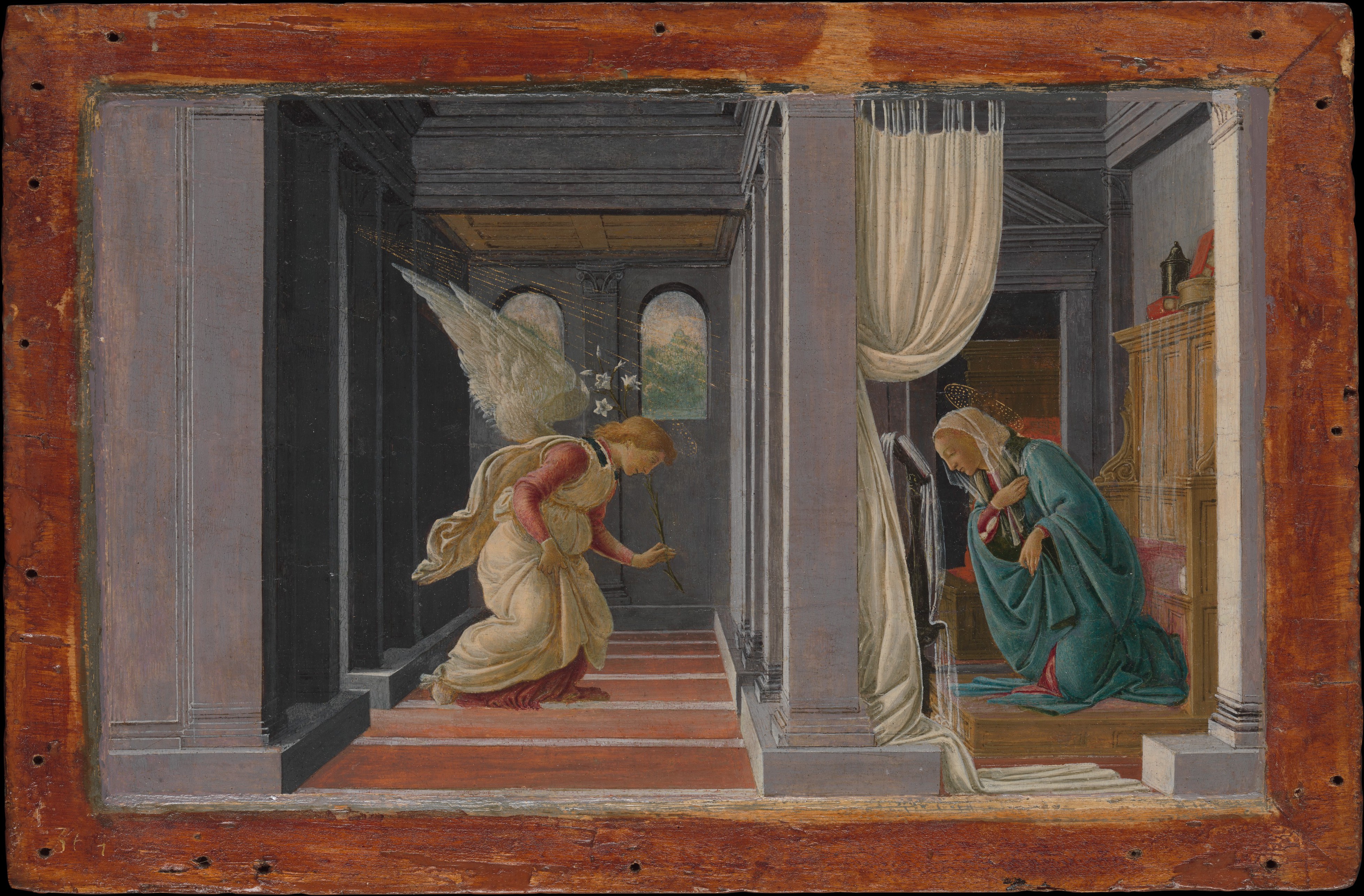
The Annunciation, Botticelli (Alessandro di Mariano Filipepi)
The AnnunciationBotticelli (Alessandro di Mariano Filipepi)ca. 1490Metropolitan Museum of Art, New York, NY
Madonna and Child, Giovanni Bellini
Madonna and ChildGiovanni Bellinilate 1480sMetropolitan Museum of Art, New York, NY
The Holy Family with Saint John the Baptist and Saint Margaret, Filippino Lippi (Italian, c. 1457–1504)
The Holy Family with Saint John the Baptist and Saint MargaretFilippino Lippi (Italian, c. 1457–1504)c. 1488–93Cleveland Museum of Art
Saint Sebastian, Perugino (Italian, c. 1450/55–1523)
Saint SebastianPerugino (Italian, c. 1450/55–1523)c. 1493Cleveland Museum of Art
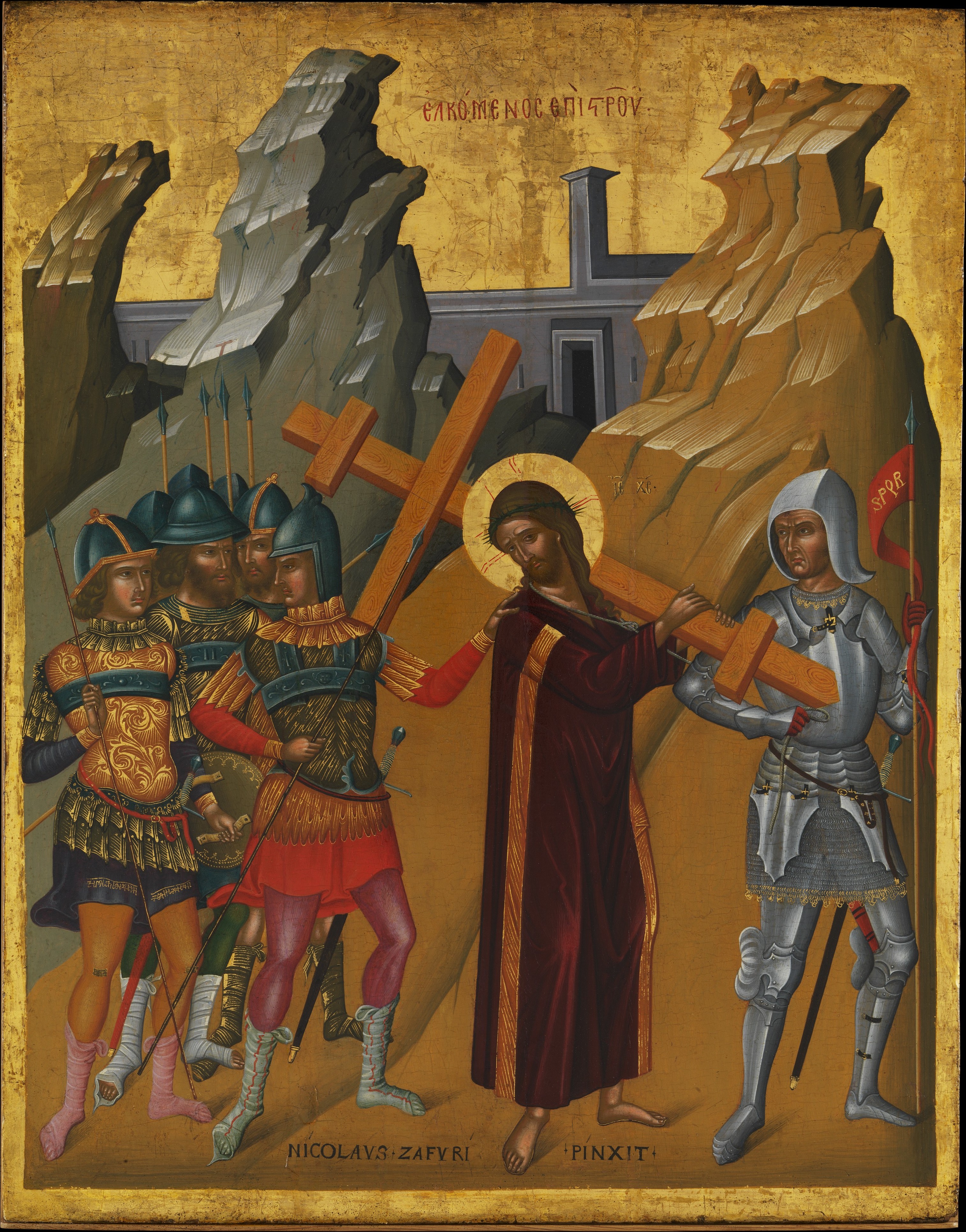
Christ Bearing the Cross, Nicolaos Tzafouris
Christ Bearing the CrossNicolaos TzafourisMetropolitan Museum of Art, New York, NY

Also at Metropolitan Museum of Art, New York, NY

688
Marble female figure, Bastis Master
Marble female figureBastis Master2600–2400 BCEMetropolitan Museum of Art, New York, NY
Relief Fragment with a Ship Under Sail, Unknown
Relief Fragment with a Ship Under SailUnknownca. 2465–2458 BCEMetropolitan Museum of Art, New York, NY
Tomb Chapel of Raemkai: South Wall, Unknown
Tomb Chapel of Raemkai: South WallUnknownca. 2446–2389 BCEMetropolitan Museum of Art, New York, NY
West wall of the chapel of the mastaba Kaemsenu with niches for Iretnub, Kaemsenu and Werdjedptah, Unknown
West wall of the chapel of the mastaba Kaemsenu with niches for Iretnub, Kaemsenu and WerdjedptahUnknownca. 2420–2250 BCEMetropolitan Museum of Art, New York, NY
Design amulet, Cow and Calf on the Back, Device showing Antithetical Falcons Flanking an Ankh Sign over a Crouching Lion, Unknown
Design amulet, Cow and Calf on the Back, Device showing Antithetical Falcons Flanking an Ankh Sign over a Crouching LionUnknownca. 2150–2100 B.C.Metropolitan Museum of Art, New York, NY
Design Amulet, Pyramidal Back with Horizontal Piercing, Device showing Two Falcons Flanking what is meant to be an Ankh Sign, Unknown
Design Amulet, Pyramidal Back with Horizontal Piercing, Device showing Two Falcons Flanking what is meant to be an Ankh SignUnknownca. 2150–2010 B.C.Metropolitan Museum of Art, New York, NY
Design Amulet, Cow Nursing Calf and also a Kneeling Suckling Man Visible on Opposite Side on the Back, Device showing Antithetical Falcons with an Ankh Sign over a Lion, Unknown
Design Amulet, Cow Nursing Calf and also a Kneeling Suckling Man Visible on Opposite Side on the Back, Device showing Antithetical Falcons with an Ankh Sign over a LionUnknownca. 2150–2100 B.C.Metropolitan Museum of Art, New York, NY
Design Amulet, Back in the Form of a Woman Suckling a Child, Device showing Two Lizards Head-to-tail, Unknown
Design Amulet, Back in the Form of a Woman Suckling a Child, Device showing Two Lizards Head-to-tailUnknownca. 2100–2080 B.C.Metropolitan Museum of Art, New York, NY

Similar picturesFound by visual likeness

3 pictures

Visual resemblances suggested by the model. A match does not establish a shared subject or historical connection.

Designs for Gun Parts and Ornament, Thobie Tourneur, Le Thuraine, French, active ca. 1630 – ca. 1690
Designs for Gun Parts and OrnamentThobie Tourneur, Le Thuraine, French, active ca. 1630 – ca. 16901660Cooper Hewitt, Smithsonian Design Museum
0.83
Jewelry Designs, Pierre Moreau, French, 1722 – 1798
Jewelry DesignsPierre Moreau, French, 1722 – 17981771Cooper Hewitt, Smithsonian Design Museum
0.83
Print, Unknown
PrintUnknownCooper Hewitt, Smithsonian Design Museum
0.83

In the stacks

Not yet checked
4

Passages in the library’s own holdings that name this maker. The model ranked them; nobody has checked that the name means this person.

  1. Vision and Design · Roger Fry

    Drawing still retained something of the blunt, almost brutal frankness of statement, together with the sense of the characteristic which marked its earlier period. And it is perhaps this inheritance of Gothic directness of statement, this Gothic realism, that accounts for what is ultimately of most value in Dürer’s work. There exists in the Kunsthistorisches Akademie at Vienna a painting of a man, dated 1394, which shows how much of Dürer’s portraiture was already implicit in the Nuremberg school. In this remarkable work, executed, if we may trust the date,
    0.73
  2. Vision and Design · Roger Fry

    What, then, lies at the root of Dürer’s art is this Gothic sense of the characteristic, already menaced by the professional bravura of the late Gothic craftsman. The superstructure is what Dürer’s industry and intellectual acquisitiveness, acting in the peculiar conditions of his day, brought forth. It is in short what distinguishes him as the pioneer of the Renaissance in Germany. This new endeavour was in two directions, one due mainly to the trend of native ideas, the other to Italian influence. The former was concerned mainly with a new
    0.72
  3. The Bases of Design · Walter Crane

    Up to the end of the fifteenth century the Gothic and ornamental feeling is still dominant in the treatment of the design of woodcuts in books, and most instructive and suggestive they are in simplicity of method and line, and directness of expression. Characteristic German work of Gothic feeling and considerable graphic force is seen in the woodcuts of the Nuremberg Chronicle (1493) designed by Michael Wolgemuth, the master of Albert Dürer. In these vigorous cuts we may plainly see the tradition of that Gothic feeling and style of graphic
    0.72
  4. principles of art history · heinrich wolfflin

    Dürer patterns do not coincide with objective facts, but for all that, they are lines, clear, ornamental patterns which are intended to be seen for themselves, which do not merely assert themselves in the impression of the whole but can hold their own even at the closest range. Therein lies the difference from the painterly foliage painting of the seventeenth century. If we wish to speak of premonitions of the painterly style, we shall find them rather in the fifteenth century than in the sixteenth. We find there, indeed, in
    0.71

Next

Albrecht Dürer made "Alberti Dvreri pictoris et architecti praestantissimi De vrbibvs...", and made these too.

0:00–0:00