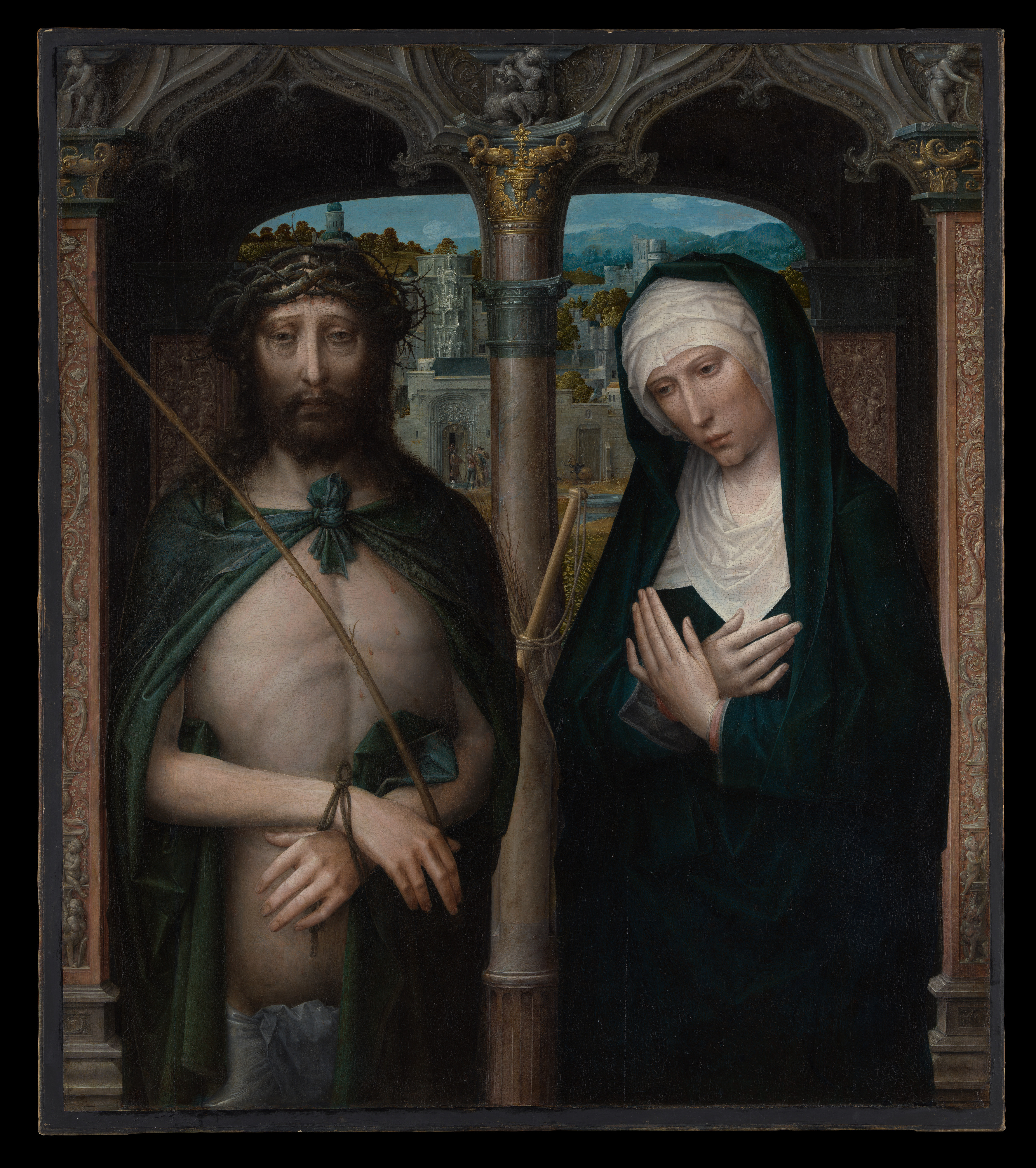
Pilate therefore went forth again, and saith to them: Behold, I bring him forth unto you,…
John 19:4
What it depicts
Matthew 27:58-66Opened by a notation lookup, not by an editor. Iconclass 73D7 glosses this subject as “from Christ's deposition to his entombment (Matthew 27:58-66; Mark 15:46-47; Luke 23:53-56; John 19:39-42)”, and this library reads the Douay-Rheims, where the passage stands at Matthew 27:58-66. Iconclass states 4 references for this subject; the first one this corpus holds is used.
58He went to Pilate, and asked the body of Jesus. Then Pilate commanded that the body should be delivered.
59And Joseph taking the body, wrapped it up in a clean linen cloth.
60And laid it in his own new monument, which he had hewed out in a rock. And he rolled a great stone to the door of the monument, and went his way.
61And there was there Mary Magdalen, and the other Mary sitting over against the sepulchre.
62And the next day, which followed the day of preparation, the chief priests and the Pharisees came together to Pilate,
63Saying: Sir, we have remembered, that that seducer said, while he was yet alive: After three days I will rise again.
64Command therefore the sepulchre to be guarded until the third day: lest perhaps his disciples come and steal him away, and say to the people: He is risen from the dead; and the last error shall be worse than the first.
65Pilate saith to them: You have a guard; go, guard it as you know.
66And they departing, made the sepulchre sure, sealing the stone, and setting guards.
Seen
Not described yet.
Of
The subjects are the library’s own joins, each marked with who made it. The other rows are claims by the holder and by Wikidata, read 2026-09-17, and join nothing until an editor confirms them.
- Subject
- Pilate showing Christ to the people, 'Ostentatio Christi', 'Ecce Homo'John 19:4-6joined by editor pass delegated by Abe Garcia, 2026-09-18From Christ's deposition to his entombmentMatthew 27:58-66Not yet checkedAn AI reviewer had doubts, 2026-10-09: Iconclass describes 73D73 as a devotional image of "the upright Christ showing his wounds, usually bearing the crown of thorns", not a narrative of the deposition or burial. The picture shows a standing, crowned Christ with bound hands and a reed beside the grieving Virgin, with no body being lowered, no tomb and no entombment, so the notation fits only loosely and the claimed subject is not borne out.
- Iconclass
- 11DChrist61B(+53)73D7373D361
- Holder's headings
- Cities, Christ, Virgin Mary, Jesus
- Wikidata depicts
- Jesus Christ, Mary, city, Ecce Homo, Christ, Our Lady of Sorrows
Means
No reading yet.
Rights
- Credit
- Rogers Fund, 1904
- Licence
- CC0-1.0
- Evidence
- metmuseum.org collection api v1: isPublicDomain=true on object 436721 (read 2026-09-16)
- Record
- https://www.metmuseum.org/art/collection/search/436721
How this join was made
Metropolitan Museum of Art, New York, NY gives this object the Iconclass notation11D 61B(+53) 73D73 73D361, and the library's map reads that notation as Matthew 27:58-66.
Held for Abe: 73D73 on a Crowned with Thorns / Mourning Virgin pairing does not clearly place it between deposition and entombment.
Matched from an Iconclass notation and not yet checked against the picture.
Within fifty years of ca. 1530–40
426


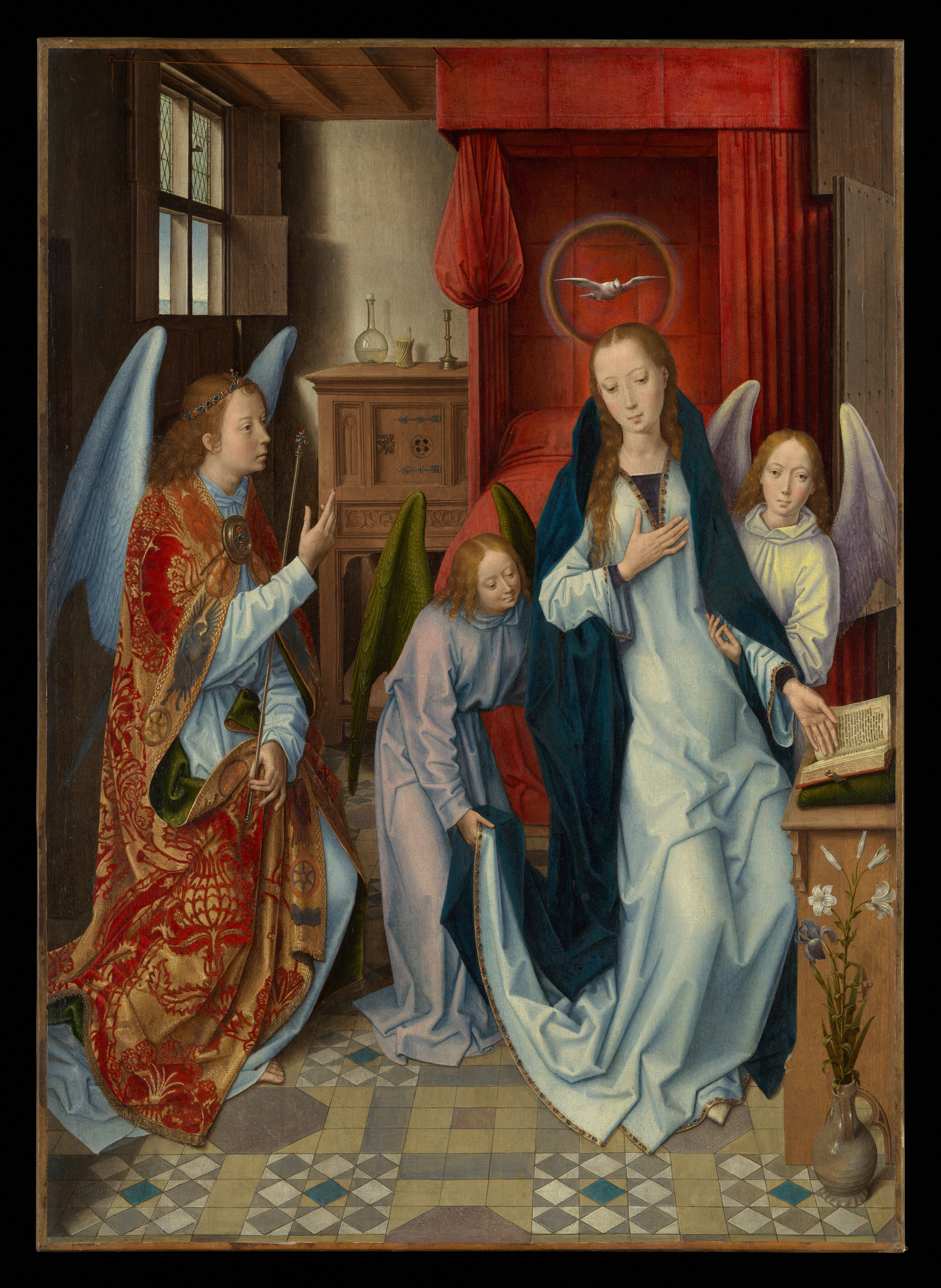
Also at Metropolitan Museum of Art, New York, NY
686


Connections
Depicts
- From Christ's deposition to his entombmentHeld for Abe: 73D73 on a Crowned with Thorns / Mourning Virgin pairing does not clearly place it between deposition and entombment.Not yet checked
- Pilate showing Christ to the people, 'Ostentatio Christi', 'Ecce Homo'Confirmed: the object's own title names the scene and the matched notation or heading is specific to it.