Diana and Her Nymphs Departing for the Hunt, Peter Paul Rubens (Flemish, 1577–1640); Workshop

Seen

Not described yet.


Of

These are claims by the holder and by Wikidata, read 2026-09-04, and join nothing until an editor confirms them.

Wikidata depicts
hound, Diana, satyr, nymph, Isabella Brant

Means

No reading yet.


Rights

Credit
Leonard C. Hanna Jr. Fund
Licence
CC0-1.0
Evidence
openaccess-api.clevelandart.org: share_license_status=CC0 on artwork 135661 (read 2026-09-01)
Record
https://clevelandart.org/art/1959.190
Diana and Her Nymphs Departing for the Hunt, Peter Paul Rubens (Flemish, 1577–1640); Workshop
Diana and Her Nymphs Departing for the Hunt — Peter Paul Rubens (Flemish, 1577–1640); Workshopc. 1615

Within fifty years of c. 1615

878
Pair of Gauntlets for a Child, Lucio Piccinino
Pair of Gauntlets for a ChildLucio Piccininoca. 1585Metropolitan Museum of Art, New York, NY
Pair of Gauntlets, Unknown
Pair of GauntletsUnknownca. 1585Metropolitan Museum of Art, New York, NY
Mirror clock, Master CR
Mirror clockMaster CRca. 1565–70Metropolitan Museum of Art, New York, NY
Garniture for Field and Foot Tourney at the Barriers, Northern Italian, Milan
Garniture for Field and Foot Tourney at the BarriersNorthern Italian, Milanc. 1575The Art Institute of Chicago
Design for a Sepulchral Monument for a Medici Cardinal, Francesco da Sangallo, Italian, 1494 - 1576
Design for a Sepulchral Monument for a Medici CardinalFrancesco da Sangallo, Italian, 1494 - 1576ca. 1560–70Cooper Hewitt, Smithsonian Design Museum
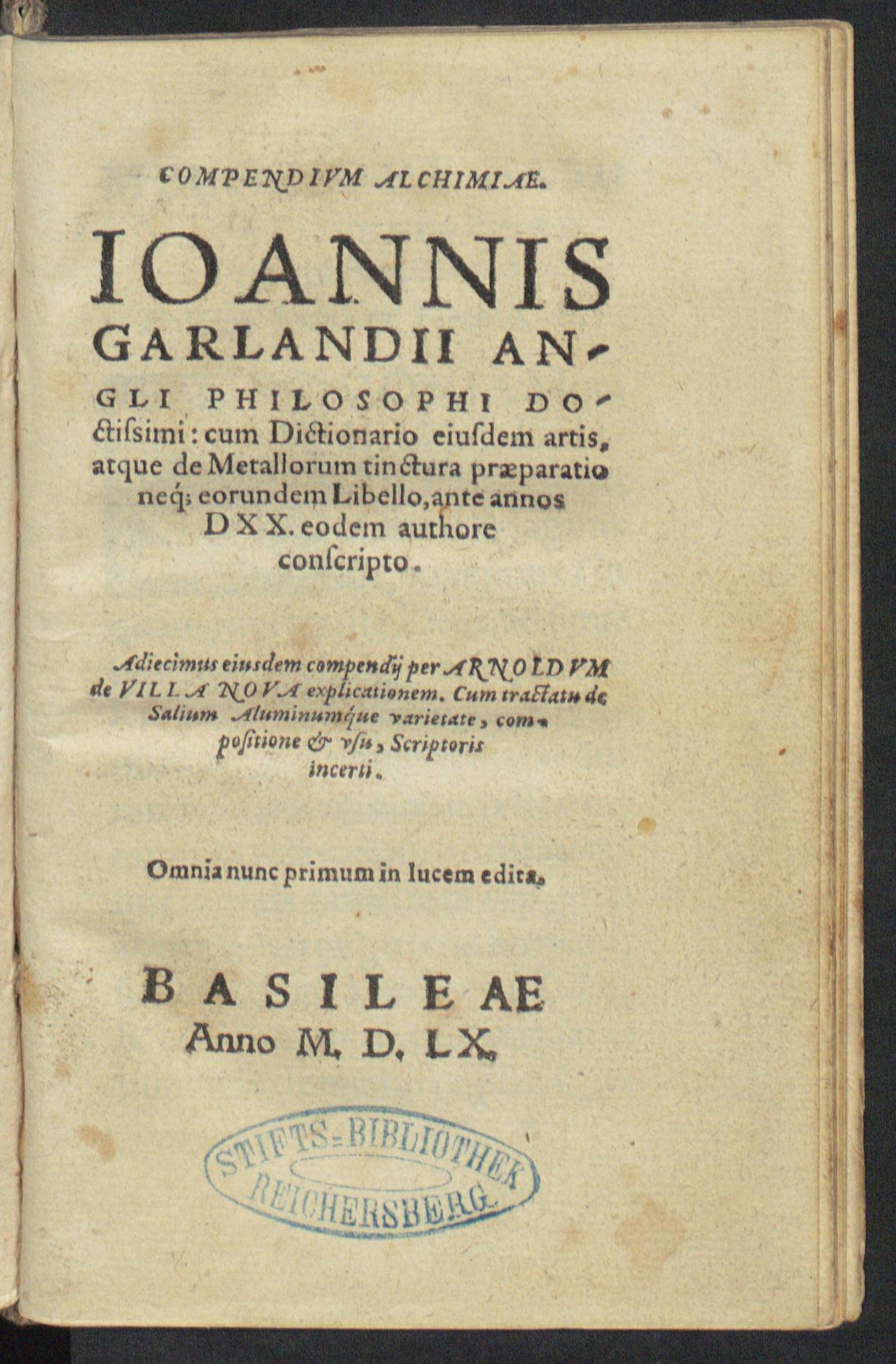
Compendium alchimiae Ioannis Garlandii Angli philosophi doctissimi ... : adiecimus eiusdem compendii per Arnoldum de Villanova explicationem, Hortulanus
Compendium alchimiae Ioannis Garlandii Angli philosophi doctissimi ... : adiecimus eiusdem compendii per Arnoldum de Villanova explicationemHortulanus1560Stiftung der Werke von C.G.Jung, Zürich
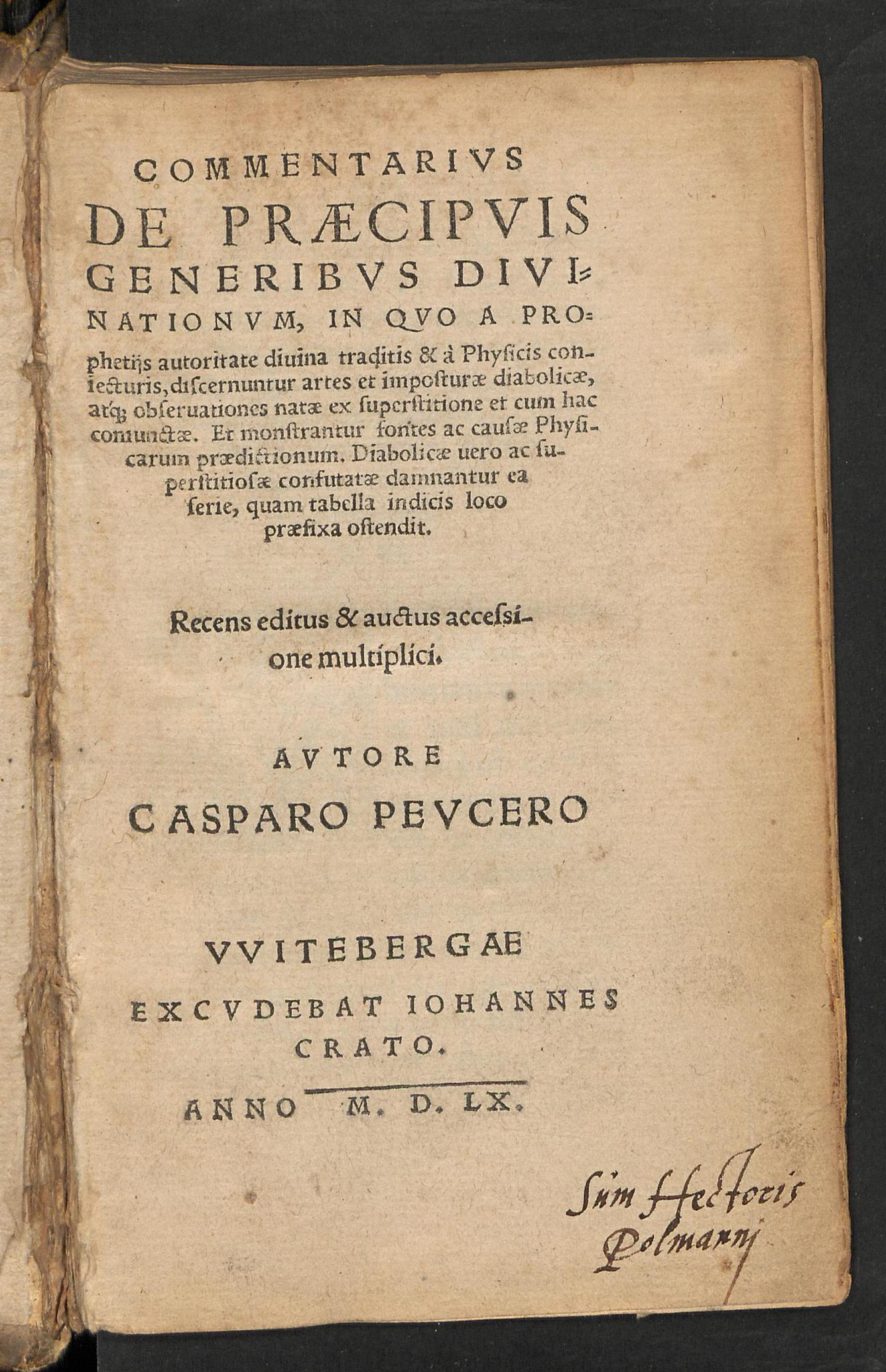
Commentarius de praecipuis generibus divinationum, in quo a prophetiis autoritate divina traditis & a physicis coniecturis, discernuntur artes et imposturae diabolicae, atque observationes natae ex superstitione et cum hac coniunctae ..., Peucer, Kaspar
Commentarius de praecipuis generibus divinationum, in quo a prophetiis autoritate divina traditis & a physicis coniecturis, discernuntur artes et imposturae diabolicae, atque observationes natae ex superstitione et cum hac coniunctae ...Peucer, Kaspar1560Stiftung der Werke von C.G.Jung, Zürich
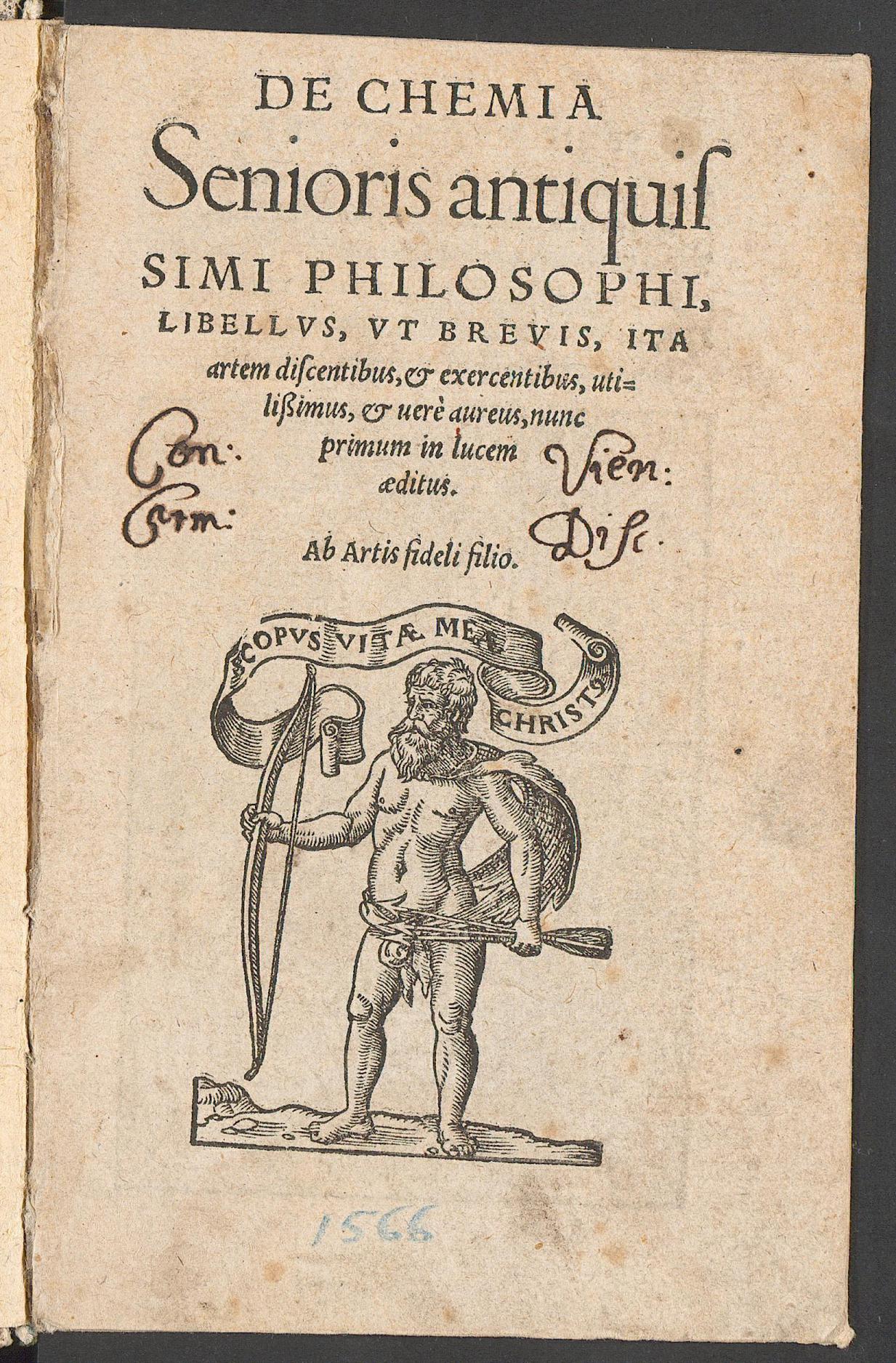
De chemia senioris antiquissimi philosophi, libellus, ut brevis, ita artem discentibus, et exercentibus, utilissimus, et vere aureus, nunc primum in lucem aeditus, Ibn-Umail, Muḥammad
De chemia senioris antiquissimi philosophi, libellus, ut brevis, ita artem discentibus, et exercentibus, utilissimus, et vere aureus, nunc primum in lucem aeditusIbn-Umail, Muḥammad1560Stiftung der Werke von C.G.Jung, Zürich

Also at Cleveland Museum of Art

576
Relief of Nyankhnesut Seated, Unknown
Relief of Nyankhnesut SeatedUnknownc. 2311–2281 BCECleveland Museum of Art
Stele of Shemai, Unknown
Stele of ShemaiUnknownc. 1960–1916 BCECleveland Museum of Art
Relief of Hatshepsut or Tuthmosis III, Unknown
Relief of Hatshepsut or Tuthmosis IIIUnknown1479–1425 BCECleveland Museum of Art
Talatat: Portrait of Nefertiti, Unknown
Talatat: Portrait of NefertitiUnknownc. 1353–1347 BCECleveland Museum of Art
Talatat: Portrait of Nefertiti, Unknown
Talatat: Portrait of NefertitiUnknownc. 1353–1347 BCECleveland Museum of Art
Talatat: Nefertiti Offers to the Aten, Unknown
Talatat: Nefertiti Offers to the AtenUnknown1353–1347 BCECleveland Museum of Art
Tomb Relief of the Chief Physician Amenhotep and Family, Unknown
Tomb Relief of the Chief Physician Amenhotep and FamilyUnknownc. 1279–1257 BCECleveland Museum of Art
Stele of the High Priest of Ptah, Shedsunefertem, Unknown
Stele of the High Priest of Ptah, ShedsunefertemUnknown945–924 BCECleveland Museum of Art

Similar picturesFound by visual likeness

4 pictures

Visual resemblances suggested by the model. A match does not establish a shared subject or historical connection.

The Capture of Samson, Peter Paul Rubens
The Capture of SamsonPeter Paul Rubens1609–10The Art Institute of Chicago
0.84
The Sacrifice of Isaac, Paolo Veronese
The Sacrifice of IsaacPaolo Veronese1585Museo del Prado
0.84
The Triumph of the Church, Peter Paul Rubens (Flemish, 1577–1640)
The Triumph of the ChurchPeter Paul Rubens (Flemish, 1577–1640)after 1628Cleveland Museum of Art
0.83
The Wedding of Peleus and Thetis, Peter Paul Rubens
The Wedding of Peleus and ThetisPeter Paul Rubens1636The Art Institute of Chicago
0.83

In the stacks

Not yet checked
3

Passages in the library’s own holdings that name this maker. The model ranked them; nobody has checked that the name means this person.

  1. principles of art history · heinrich wolfflin

    The baroque antithesis to Raphael and Diirer is here represented by Rubens’ Christ Bearing the Cross* (engraving by Pontius with a variant anterior to the picture in Brussels). The recessional movement most brilliantly developed, and made still more interesting by an upward movement. The stylistically new factor we are looking for certainly does not lie in the merely material motive of the direction of movement, but, as it is a question of a principle of present- ment, in the way in which the theme is handled, how every recessional element
    0.71
  2. principles of art history · heinrich wolfflin

    PAINTING 75 tion. It is not a question of the degree of recession in the space represented, but in what way recession is made effective. Even where the seventeenth century apparently indulges in pure compositions in breadth, a closer com- parison must prove the fundamentally different point of departure. The spiral into-the-picture movement which Rubens loves will certainly be sought for in vain in Dutch pictures, yet this system of Rubens’ is only one type of re- cessional composition. There need even be no plastic oppositions of foreground and background:
    0.70
  3. principles of art history · heinrich wolfflin

    The course of the development of art, however, cannot simply be reduced to a series of separate points. Individuals fall into larger groups. Botticelli and Lorenzo di Credi, for all their differences, have still, as Florentines, a certain resemblance when compared with any Venetian, and Hobbema and Ruysdael, however divergent they may be, are immediately homogeneous as soon as to them, as Dutchmen, a Fleming like Rubens is opposed. That is to say: to the personal style must be added the style of the school, the country, the race. Let
    0.69

Next

Made in the seventeenth century, like Diana and Her Nymphs Departing for the Hunt.

0:00–0:00