Pyxis (Container for Personal Objects), Ancient Greek

Seen

Not described yet.


Of

These are claims by the holder and by Wikidata, read 2026-09-04, and join nothing until an editor confirms them.

Holder's headings
beauty, rituals

Means

No reading yet.


Rights

Credit
Gift of Charles L. Hutchinson. CC0.
Licence
CC0-1.0
Evidence
api.artic.edu artworks api: is_public_domain=true on artwork 616 (read 2026-09-01)
Record
https://www.artic.edu/artworks/616
IIIF
manifest
Pyxis (Container for Personal Objects), Ancient Greek
Pyxis (Container for Personal Objects) — Ancient Greek430-420 BCE

Also by Ancient Greek

13
Statuette of a Female Figure, Ancient Greek
Statuette of a Female FigureAncient GreekEarly Bronze Age, 2600–2400 BCEThe Art Institute of Chicago
Altar, Ancient Greek
AltarAncient GreekGeometric Period (800–600 BCE)The Art Institute of Chicago
Bird on a Knob, Ancient Greek
Bird on a KnobAncient GreekGeometric Period (800–600 BCE)The Art Institute of Chicago
Bell, Ancient Greek
BellAncient GreekGeometric Period (800–600 BCE)The Art Institute of Chicago
Bow Fibula (wire), Ancient Greek
Bow Fibula (wire)Ancient GreekGeometric Period (800–600 BCE)The Art Institute of Chicago
Biconical Bead, Ancient Greek
Biconical BeadAncient GreekGeometric Period (800–600 BCE)The Art Institute of Chicago
Pyxis (Container for Personal Objects), Ancient Greek
Pyxis (Container for Personal Objects)Ancient Greek730-720 BCEThe Art Institute of Chicago
Hydria (Water Jar), Ancient Greek
Hydria (Water Jar)Ancient Greekabout 515-500 BCEThe Art Institute of Chicago

Within fifty years of 430-420 BCE

12
Kylix (Drinking Cup), Style of Douris
Kylix (Drinking Cup)Style of Dourisabout 480 BCEThe Art Institute of Chicago
Terracotta kylix (drinking cup), Hieron
Terracotta kylix (drinking cup)Hieronca. 480 BCEMetropolitan Museum of Art, New York, NY
Red-Figure Column Krater (Mixing Vessel): Apollo and Goddesses with Chariot (A); Komos (Revel) (B), Cleveland Painter (name vase; Greek, Attic, active c. 470–460 BCE)
Red-Figure Column Krater (Mixing Vessel): Apollo and Goddesses with Chariot (A); Komos (Revel) (B)Cleveland Painter (name vase; Greek, Attic, active c. 470–460 BCE)c. 470–460 BCECleveland Museum of Art
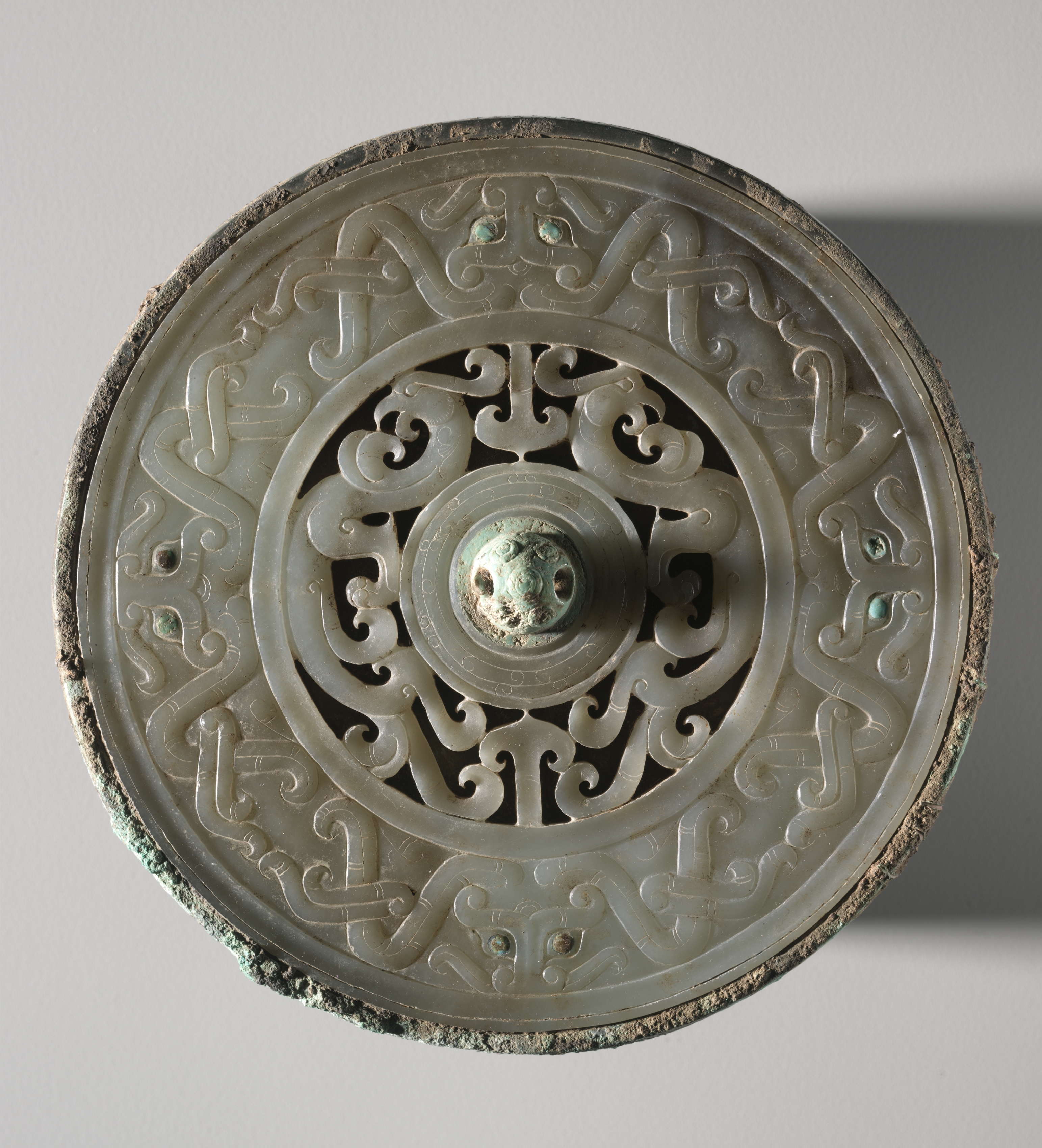
Mirror with Jade Disk Inset, Unknown
Mirror with Jade Disk InsetUnknown475 BCE–9 CECleveland Museum of Art
Helmet of the Italo-Chalcidian Type, Anatomical Cuirass, and Left Greave, Unknown
Helmet of the Italo-Chalcidian Type, Anatomical Cuirass, and Left GreaveUnknownlate 5th–4th century BCEMetropolitan Museum of Art, New York, NY
Terracotta lekythos (oil flask), Achilles Painter
Terracotta lekythos (oil flask)Achilles Painterca. 440 BCEMetropolitan Museum of Art, New York, NY
Fragment from Red-Figure Oinochoe (Wine Jug) or Hydria (Water Jar): Woman Holding Box, Shuvalov Painter (Greek, Attic, active c. 440–410 BCE)
Fragment from Red-Figure Oinochoe (Wine Jug) or Hydria (Water Jar): Woman Holding BoxShuvalov Painter (Greek, Attic, active c. 440–410 BCE)c. 425–420 BCECleveland Museum of Art
Mask, Condorhuasi-Alamito artist(s)
MaskCondorhuasi-Alamito artist(s)400 BCE–700 CEMetropolitan Museum of Art, New York, NY

Also at The Art Institute of Chicago

832
Ring with a Scarab Bezel, Ancient Egyptian
Ring with a Scarab BezelAncient EgyptianSecond Intermediate Period, Dynasty 15 (about 1650–1550 BCE)The Art Institute of Chicago
Fragment of a Stela of Neferhotep, Ancient Egyptian
Fragment of a Stela of NeferhotepAncient EgyptianNew Kingdom, mid-Dynasty 19, about 1240-1195 BCEThe Art Institute of Chicago
Funerary Papyrus of Tayuhenutmut, Ancient Egyptian
Funerary Papyrus of TayuhenutmutAncient EgyptianThird Intermediate Period, probably Dynasty 21 (about 1069-945 BCE)The Art Institute of Chicago
Cauldron, China
CauldronChinaWestern Zhou dynasty (1046–771 BC ), early 9th century BCThe Art Institute of Chicago
Coffin and Mummy of Paankhaenamun, Ancient Egyptian
Coffin and Mummy of PaankhaenamunAncient EgyptianThird Intermediate Period, Dynasty 22, reign of Osorkon I (about 924–889 BCE)The Art Institute of Chicago
Relief Showing the Head of a Winged Genius, Neo-Assyrian
Relief Showing the Head of a Winged GeniusNeo-AssyrianNeo–Assyrian Period, reign of King Ashurnasirpal II (883–859 BCE)The Art Institute of Chicago
Amulet of the Goddess Isis Nursing the God Horus, Ancient Egyptian
Amulet of the Goddess Isis Nursing the God HorusAncient EgyptianThird Intermediate Period, Dynasty 25 (about 747–656 BCE)The Art Institute of Chicago
Shabti of Wahibreemakhet, Ancient Egyptian
Shabti of WahibreemakhetAncient EgyptianLate Period, Dynasty 26 (664–525 BCE)The Art Institute of Chicago

Similar picturesFound by visual likeness

8 pictures

Visual resemblances suggested by the model. A match does not establish a shared subject or historical connection.

Alabastron (Container for Scented Oil), Ancient Greek
Alabastron (Container for Scented Oil)Ancient Greekabout 500-480 BCEThe Art Institute of Chicago
0.87
Terracotta lekythos (oil flask), Achilles Painter
Terracotta lekythos (oil flask)Achilles Painterca. 440 BCEMetropolitan Museum of Art, New York, NY
0.87
Terracotta loutrophoros (ceremonial vase for water), Unknown
Terracotta loutrophoros (ceremonial vase for water)Unknownlate 6th century BCEMetropolitan Museum of Art, New York, NY
0.86
Terracotta psykter (vase for cooling wine), Oltos
Terracotta psykter (vase for cooling wine)Oltosca. 520–510 BCEMetropolitan Museum of Art, New York, NY
0.86
Table clock, Bartholomew Newsam
Table clockBartholomew Newsam1580–85Metropolitan Museum of Art, New York, NY
0.85
Candlestick, Unknown
CandlestickUnknownca. 1720Cooper Hewitt, Smithsonian Design Museum
0.84
Red-Figure Lekythos (Oil Vessel): Athena Slaying Giant (body); Satyr between Maenads (shoulder), Berlin Painter (Greek, Attic, active c. 505–460 BC); Painter of Goluchow 37 (Greek, Attic, active c. 490–460 BC)
Red-Figure Lekythos (Oil Vessel): Athena Slaying Giant (body); Satyr between Maenads (shoulder)Berlin Painter (Greek, Attic, active c. 505–460 BC); Painter of Goluchow 37 (Greek, Attic, active c. 490–460 BC)c. 490 BCECleveland Museum of Art
0.84
Pledge glass with cover, Unknown
Pledge glass with coverUnknown18th centuryMetropolitan Museum of Art, New York, NY
0.84

Next

Ancient Greek made Pyxis (Container for Personal Objects), and made these too.

0:00–0:00